

For Lasagna With Better Flavor And Texture, Never Add This Staple Ingredient
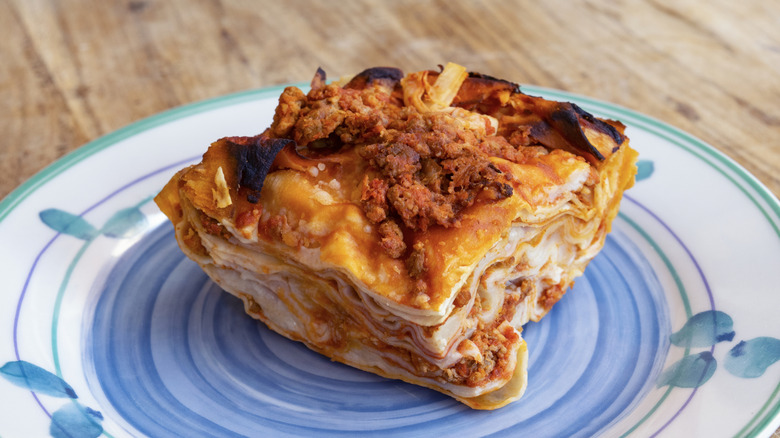
Lasagna is one of those dishes that inspires varied and fierce opinions, from how to season it to how many layers it should have, but mine is quite straightforward: Ricotta has no place in it. If you live in the United States, you'll be all too familiar with seeing ricotta in lasagna, but having grown up in Italy, lasagna for me is synonymous with béchamel. Any time I've tried a ricotta-based lasagna, I have actually found it works against what makes the dish so good in the first place. Instead of becoming a silky, cohesive baked pasta dish, the ricotta turns grainy when heated, ruining the texture. Unlike a sauce, ricotta doesn't really fully blend into the ragu or pasta, so it often remains in chunky pockets throughout the lasagna. And okay, perhaps some people enjoy finding separate layers of cheese, but I believe it ruins the harmony between the other ingredients.
I'll concede that plenty of people clearly love ricotta-based lasagna enough for there to be a case for it, especially if that's what you grew up eating, and because taste is subjective after all. But personally, I believe that if your goal is a lasagna with a genuinely smooth texture and a more unified flavor, then ricotta actually creates more problems than it solves.
It has to be béchamel for that perfect lasagna texture
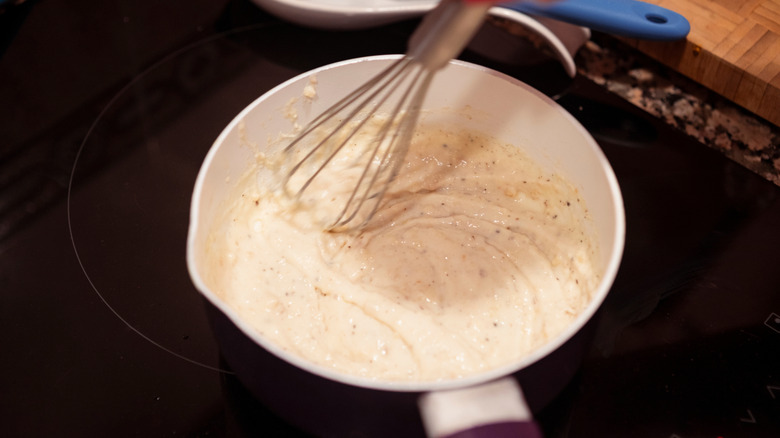
If you order lasagne alla Bolognese in Bologna, you're unlikely to find a single curd of ricotta — the original baked pasta dish is traditionally made with layers of pasta, ragù, béchamel, and parmesan. Although béchamel (or white sauce) itself is often associated with French food, it is originally from Emilia-Romagna, the region of Italy where lasagna originates, where it is a defining component of the recipe. Rather than acting as a source of cheesiness, the role of béchamel is more to bring some cohesion and creamy richness to the dish.
But this isn't an argument against cheese in lasagna in general. Many traditional lasagne alla Bolognese are topped with Parmigiano Reggiano, and many regional variations include mozzarella, while ricotta-based lasagna is most popular in the United States. Some recipes go a step further and call for other additions like cottage cheese in the dish — a suggestion that would horrify my Italian grandmother. If that's your preference, though, there's nothing wrong with it. I just think that if you've only ever known lasagna as a stack of pasta, sauce, and ricotta, then you should definitely try a béchamel-based version at least once to understand the style that many Italians consider the absolute classic.