

What's The Average Shelf Life Of Bottled Water?
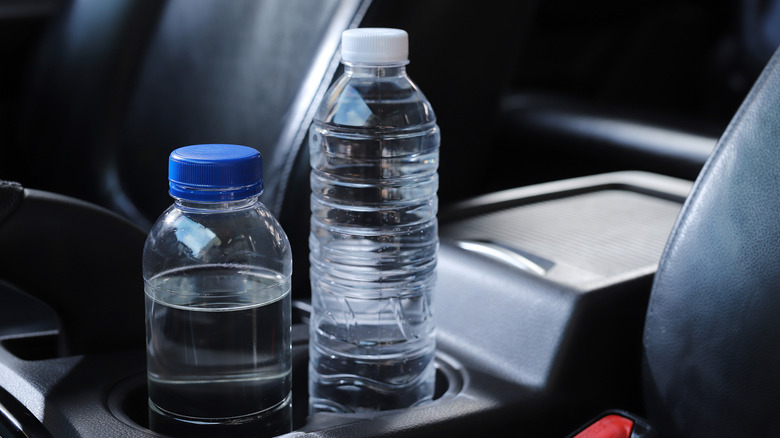
Water is essential for staying hydrated. No surprise there, especially considering that our bodies are made up of about 70% of it. That's why, to keep our bodies functioning properly, experts recommend drinking up to 104 ounces of water each day. However, if bottled water is your go-to choice over tap water, there are a few things to consider — especially how long it's actually good for,
Technically, plain bottled water doesn't expire. The U.S. Food and Drug Administration has never set an actual shelf life for it. On top of all, the International Bottled Water Association confirms it can be stored indefinitely when kept properly. However, bottled water manufacturers recommend drinking it within about two years of the production date to ensure the best flavor and freshness. And here's why: Water doesn't actually spoil, but the packaging it comes in does.
When it comes to bottled water, factors such as heat, sunlight, and storage conditions can affect the plastic container over time. This can alter the water's quality and taste. If you were wondering what can happen to your body when you drink plastic bottled water past its best-by date, the short answer is: you can increase your intake of microplastics. According to a 2025 study published in the Journal of Hazardous Materials, drinking bottled water daily can expose you to 90,000 extra microplastic particles annually. That's concerning, because microplastics can carry toxic substances like bisphenol A (BPA) into the system — a toxic substance linked to obesity, kidney disease, asthma, allergies, and even certain types of cancer. Over time, more of these substances will leach into water, hence the best-by date. The good news is that proper storage can make a massive difference.
Keep bottled water away from heat and sunlight
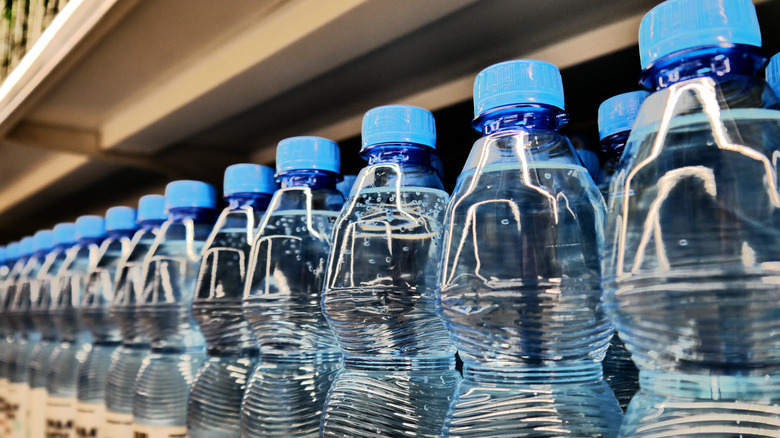
As with most packaged goods, proper storage is crucial. In simple terms, this means keeping the plastic bottles at room temperature and out of direct exposure to sunlight and heat. The fridge is a great storage alternative, and so is the basement as it's naturally cooler than the rest of the house.
But while these are the best places to store bottled water, the one spot you should definitely avoid is none other than the garage, which experiences temperature fluctuations, speeding up the breakdown of the plastic. In addition, it can also expose the water to toxic fumes from gasoline, cleaning products, and other chemicals, considering that single-use plastic is not totally impermeable. For the same reasons, don't use your car as a storage spot for bottled water.
When stored properly in a temperature-controlled environment, unopened bottled water can remain safe to drink past the two-year mark. On the other hand, if you've already opened the bottle, it might be smart to consider pouring the water into a glass bottle or container. Glass is non-porous. It is also resistant to chemical corrosion and environmental changes. This actually means that it will never release chemicals or microplastics into the water. Finally, after transferring the water into the glass container, don't just throw out the empty plastic water bottle. Why not use it for your garden instead? It would make a great DIY planter for herbs, veggies, flowers, and seedlings.