

The Foolproof Sauce You Should Bake Salmon In For 10x The Flavor
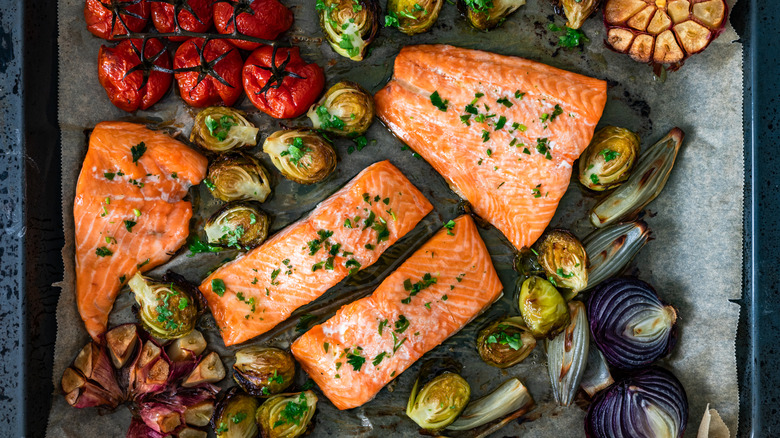
Building flavor doesn't always mean adding more ingredients. Sometimes, all you need is a handful of ingredients that complement each other and offer good contrast, such as the ingredients that make up honey mustard. It's the perfect combination of rich, sweet, and savory, so it works in all the right ways to add flavor to something mild, such as a salmon fillet.
Honey mustard is easy to make at home, and it's worth it to create your own ratio. It's just a combination of honey and mustard (such as Dijon), with a little mayonnaise often added for richness. Store-bought honey mustard can be overly sweet or too bitter, and since everything in it is essentially a household staple, honey mustard is better when it's homemade. To bake salmon in honey mustard, just add an even layer of the condiment across the non-skin side of the fish, ensuring that all parts are covered equally to get the same flavor in every bite. Then, you can either broil the salmon if you want a browned top and a softer underside, or bake it for more even cooking all around. For a little more flavor, you can also add simple seasonings to your salmon like salt and pepper.
There is some science to cooking salmon in honey mustard
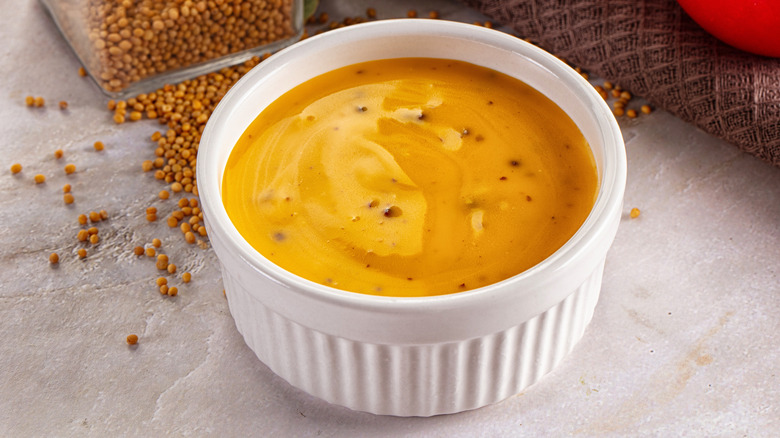
Besides just tasting great, there is actually some science behind why it's a good idea to cook salmon in honey mustard. Mayonnaise is high in fat, and as it cooks, the mayo breaks down due to something called the Maillard reaction. This changes the flavor profile of the condiment into something even richer, all while slowly building a crust over that salmon. The sugars in honey will caramelize, which is a heat response similar to the Maillard reaction and ultimately results in a deeper, richer flavor.
As for mustard, its intense flavor softens as it heats. Its pungency becomes a more relaxed flavor profile, so while it still works well alongside honey and mayonnaise, it will have a less intense bite when it's cooked versus when it's consumed at room temperature. All three ingredients boast different profiles when heated, but they all work well to add plenty of flavor to salmon without the extra prep work.