

What Happens To KFC's Leftover Chicken?
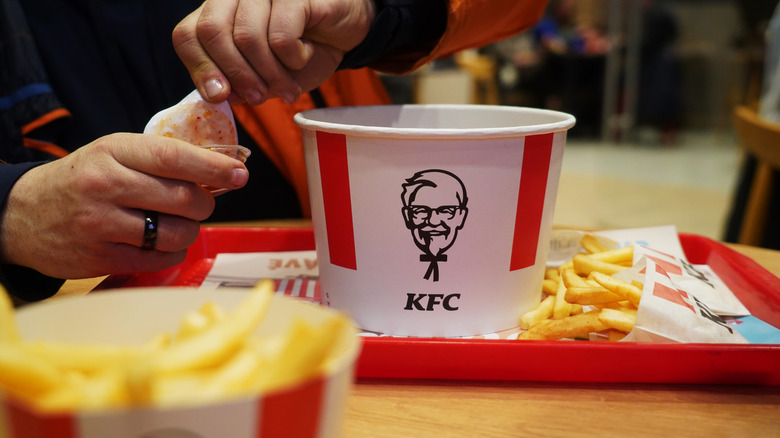
Food waste is a big issue in the United States. According to ReFED, a nonprofit working to reduce food waste, 29% of all the food produced in the country in 2024 was surplus, and under 1% of it was donated. There are a number of restaurant chains that donate leftover food at the end of the day, though how much each does this varies widely. When it comes to KFC, the chicken chain has an active donation program that provides leftover food to local communities, and the amount donated is encouraging.
According to its 2024 annual report, KFC restaurants donated more than 2.1 million pounds of unsold, surplus food to local hunger relief organizations for the year. This was accomplished through KFC's Harvest Food Donation program, which is run by the KFC Foundation. Since 1999, KFC restaurants have donated 92 million meals as a part of the restaurant's goal of assisting people in the community and reducing the amount of food going to a landfill. This program is powered by individual restaurants, employees, Harvest Food Donation, and the community.
Some sources indicate there is some wiggle room with how the food is handled, depending on individual stores. On Reddit, one person suggested, "The chicken must be wasted after a certain amount of time sitting, or else it could be a food hazard. It gets marked down into the inventory logs as thrown away and then, if it is not thrown away, there's all kinds of things that could happen from there."
More ways KFC restaurants handle unsold food
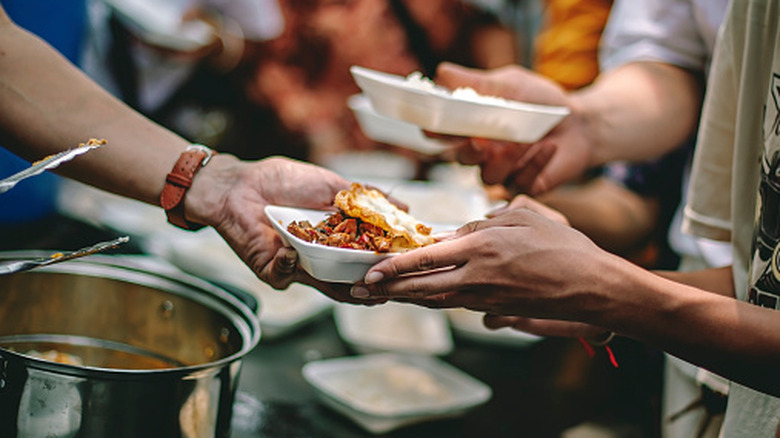
One of the ways KFC reduces food waste is by using software to forecast demand, however, there still can be leftovers. One individual on Reddit commented, "I worked a summer at KFC when I was a teenager. At the end of the night we would put on gloves and remove the chicken from the bones so it could be used in the chicken pot pies." In the same Reddit thread, another individual clarified, "I would always try and sell as much as possible at a discount rather than toss it out." Others report that leftovers are sometimes donated to food banks.
While donating leftover food is encouraged, food safety must be taken into consideration, too. There are criteria that must be met aligning with the FDA Food Code (and other regulations) for food to be donated, including food handling temperatures, proper labelling and storage, and the availability of safe distribution. However, some chains don't always donate — there's an unfortunate thing that happens with leftovers at Raisin Cane's and certain other restaurants.
Fortunately, the practice of donating food is common across a number of food industry leaders, including large chain eateries and grocery stores. If you're wondering what grocery stores do with expired food, many of them also donate unsold food to local food banks, while some that isn't safely reused is diverted from a landfill by being recycled, while some may still be thrown away.