

Steal Omaha Steaks' Beef Seasoning Tip For Ultra Flavorful Steak Crust
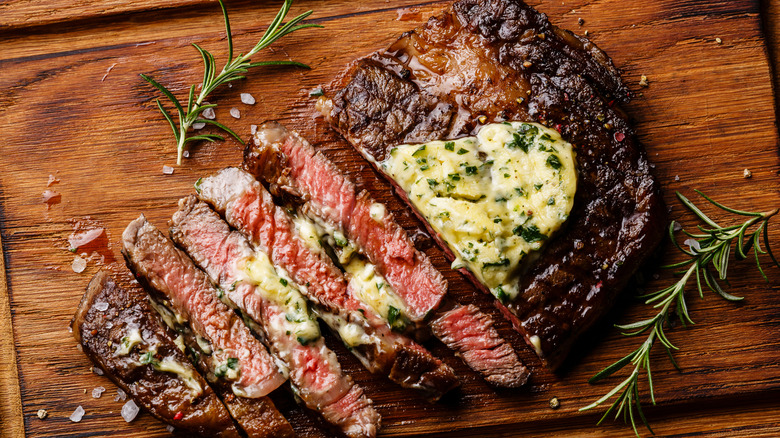
We don't know about you, but we'll never get tired of hearing tips on creating the perfect steak. And if you're just like us, you're in luck. Chowhound exclusively spoke with Mark Trimble, executive chef at Omaha Steaks, who told us all about the company's seasoning trick to boost the taste of a steak's crust. "I always recommend coarse kosher salt or large-flake sea salt, as the larger crystals help create a substantial crust while interacting with the meat's proteins to promote browning," he said. This is one of the reasons why table salt is a lackluster choice for seasoning steaks. "Freshly cracked black pepper adds a robust, savory bite and complements the rich flavor of the beef," Trimble further adds. But if you want a layer of complexity, he has another recommendation: "Dehydrated garlic or a touch of paprika can work beautifully, developing subtle toasted notes as the steak sears."
That said, Trimble's advice should go hand in hand with avoiding the common resting mistake that ruins your steak's crust: wrapping it in foil while it rests, as it traps steam. And doing so will throw his tip out the window. The moment when you season your steak also matters if you want a pleasant crust, as well as the cooking method. These two go hand in hand to create the steak of your dreams, and here's how to make it a success.
Ensure an irresistible steak crust
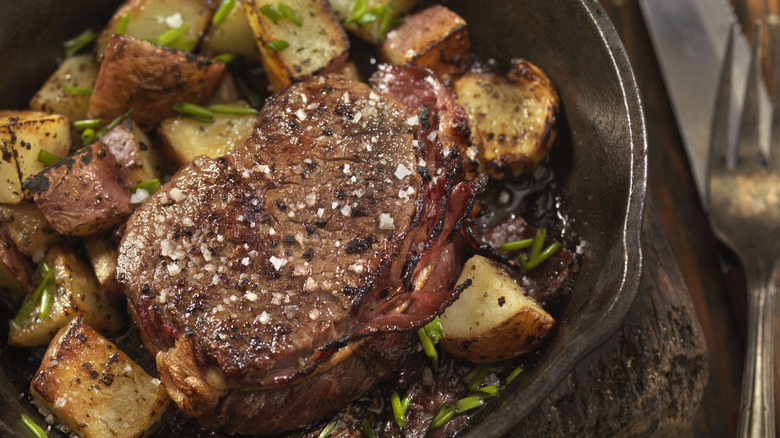
"There are two ideal windows: Either season the steak immediately before it hits the pan or grill, or season it at least 30 minutes — and up to 24 hours — in advance," Mark Trimble told us. This gives the salt enough chance to bring out the steak's natural moisture — a reaction that's needed if you want a satisfying sear — while providing ample leeway for the steak to soak it up again. The dry brining process, which makes a whole lot of difference for the meat, will also give it a nice, tender bite while maintaining a flavorful crisp, as salt can cause muscle fibers to weaken, allowing protein to degrade.
After dry brining, Trimble recommends doing a high-heat cast-iron sear to really seal the deal. "When that perfectly dry, seasoned steak hits a smoking-hot cast-iron skillet, the Maillard reaction kicks in immediately, creating a rich, deeply caramelized crust while locking in the steak's natural juices," he said. More specifically, high heat is around 500 degrees Fahrenheit.
To get an even finish, make sure to apply pressure onto the steak as it hits the pan. You can let the high heat do its magic for one to three minutes, and then flip it, making sure to do the same thing on the opposite side. To amp up the crispiness, you can even transfer the meat into a broiler after spreading plenty of butter on the exterior. And all that's left to do is enjoy and savor the sophisticated textures that swirl on your tongue.