

Make Watermelon Grow Sweeter By Switching To This Fertilizer Once Fruit Appears
We may receive a commission on purchases made from links.
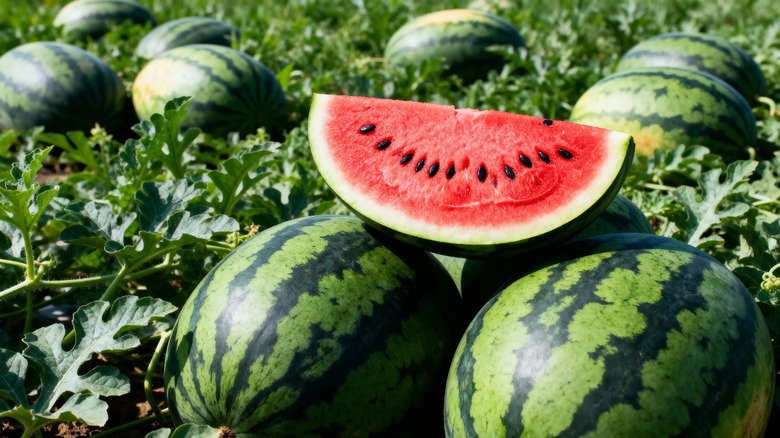
If you're tired of figuring out how to choose the tastiest watermelon at the store, growing your own is a logical next step. Despite watermelons being relatively easy to grow, proper fertilization plays a massive role in the final outcome. Get it right, and you harvest the sweetest, juiciest, tastiest watermelon you've ever tried. That's why gardeners are advised to use fertilizers with a higher potassium content.
A potassium-rich fertilizer supports fruit ripening and quality. Higher potassium levels can lead to sweeter fruit, stronger flavor, and likely better color and firmer texture. Meanwhile, fertilizers with highly soluble forms of nitrogen provide plants an instant nutrient boost. They are easily dissolved, immediately absorbed by the plant, and trigger fast leaf and stem growth. Gardeners can usually find them listed on fertilizer labels including ammonium (NH4), urea, and nitrate nitrogen (NO3).
However, applying them during the fruiting stage can come at the expense of your watermelons. "The response of the plant will be to go back into vegetative mode and limit the energy directed towards the fruit," Pieter Westerbeek Jr., Seminis Vegetable Seed territory sales manager and National Garden Bureau member, revealed exclusively to Chowhound. "Any fertilizer application that has highly soluble nitrogen should be avoided as fruit starts to size and mature." The Grow Co Ammonium Sulfate Fertilizer is one example of the type of product you should avoid.
Excessive watering can also affect a watermelon's sweetness
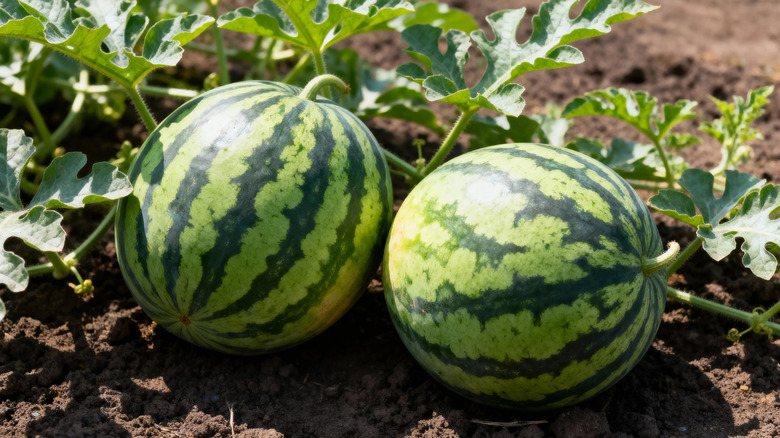
Before reaching for any kind of fertilizer, take a moment to check the label. Make sure it hasn't reached the end of its shelf life, and check whether its NPK (nitrogen-phosphorus-potassium) ratio suits the fruiting stage. A 10-20-30 fertilizer is a great choice once your watermelons begin producing fruit.
Pieter Westerbeek Jr. pointed out that apart from fertilizers, overwatering (a common gardening mistake that's ruining your plants) can dilute a watermelon's sweetness. "Too much water near maturity will speed ripening and limit sugars being put into the fruit," he stressed. Westerbeek further noted that excessive irrigation or heavy rain near fruit maturity can significantly lower sugar levels in the fruit as well. In addition, he explained that it can exacerbate any disease issue already present. For this reason, proper mulching and draining the soil can greatly minimize the impact of heavy rainfall on watermelon plants. "Similarly, excessive temperatures, especially at night, will limit the sugars available for the plant to put into the fruit." A simple trick for sweeter watermelons is to shade only the fruit during the hottest part of the day.