

What's The Average Shelf Life Of Gin?
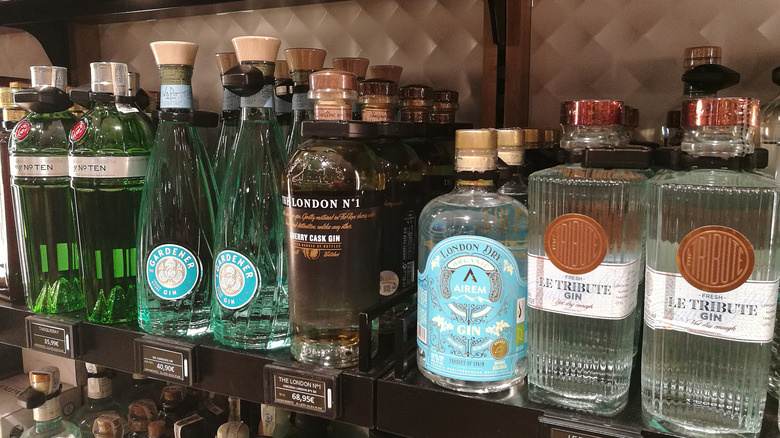
Decisions regarding gin usually revolve around things like which brand to buy or what gin cocktail to order from the bar. What you probably don't stop to think about is gin's shelf life. But whether or not alcohol expires is a perfectly logical thing to ponder, and there is some nuance to this question. To help you understand the shelf life of gin, there are some important things to keep in mind
When it comes to gin, the shelf life depends on whether or not the bottle has been opened. Unopened, gin can last decades, possibly indefinitely, as long as it is stored properly and the seal hasn't been broken. That means keeping it in a cool, dry, and dark place without opening it. Once that seal is broken, however, everything changes. It doesn't necessarily turn bad (the high alcohol content has the added bonus of preventing the growth of bacteria), but the flavor begins to dissipate over time. You're looking at about a year or two before you'll want to consider tossing the bottle and buying a fresh one if you want to enjoy the botanical notes you can expect from a good bottle of gin.
What happens to open gin as it ages
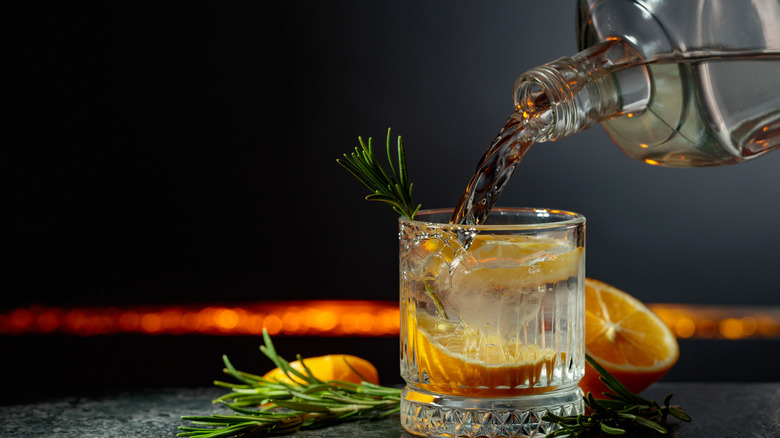
Gin doesn't age like a fine wine, getting better and better with time as it sits on your shelf. As long as it hasn't been opened, it should taste like it's supposed to when you finally break the seal, but as soon as you do, a process called oxidation begins to occur thanks to the oxygen you've introduced into the bottle. This slowly breaks down the botanical aromas and distinct flavors over the next couple of years. Warmer temperatures and direct sunlight speed up the deterioration, which is why storing gin properly is important. That doesn't mean that storing gin in the fridge or freezer will stop the oxidation entirely, but doing so will slow it down. (Plus, you'll have a nice cold gin for your next gin and tonic.)
Oxidation happens with all gins once they've been opened, but the kind of gin you have on your hands actually makes a bit of a difference. The botanicals used to flavor the gin and the distillation process used to make it affect how quickly the flavor can fade. Gins are made from a base of neutral spirit and are then flavored with different ingredients, ranging from light and citrusy to bold and spicy. After they've been opened and exposed to oxygen, those bold and spicy gins will hold up better. They will still lose flavor over time, but not as quickly as those made with lighter botanicals.