

The Best Way To Store Leftover Steak For Juicy Slices Later
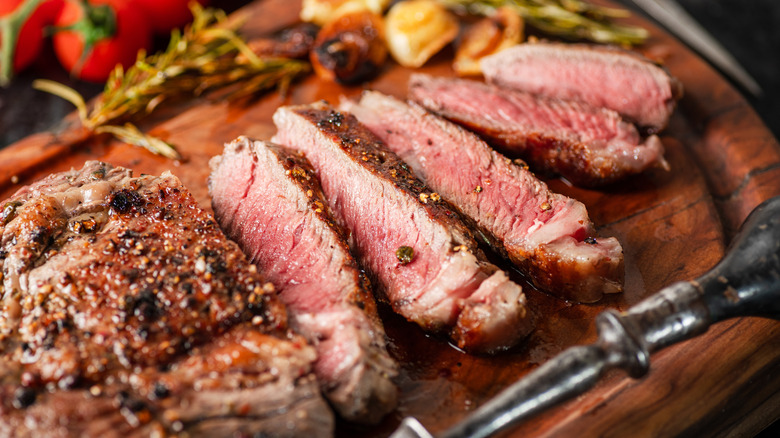
Whether you've cooked yourself the perfect steak or ordered it from a restaurant, you'll definitely want to save the leftovers — in the event that there are any. After all, steak isn't known for being cheap! But, just as it's easy to overcook steak (resulting in a tough-as-old-boots texture), it's also difficult to reheat even a juicy steak without it becoming dry. While much can go wrong during the reheating process itself — more on that later — the way you store your leftover steak is a key component, too.
The main two considerations for storing cooked steak are keeping moisture in and keeping air out. To accomplish both of these goals, you'll want to wrap the leftover steak tightly before placing it in an airtight container. While the ideal packaging would be a vacuum seal, many people don't have one on-hand. (However, it's a useful barbecuing tool, so if you spend a lot of time at the grill, we do recommend making one part of your kitchen repertoire!)
As a second choice, wrap the steak in a thick freezer paper before popping it into a plastic bag — making sure to squeeze all the air out as you zip the bag closed. Methods that are not recommended include aluminum foil, or parchment or waxed paper on their own, as they won't be effective at protecting your steak from drying out. (Parchment or waxed paper are workable if they're used as just one layer of a more complex storage setup — it's using them solo that won't do the job.)
Once leftover steak is properly sealed and stored, it can remain edible for about 3-4 days in the refrigerator. If you can't eat it quicker than that, put it in the freezer.
Cooking your leftover steak
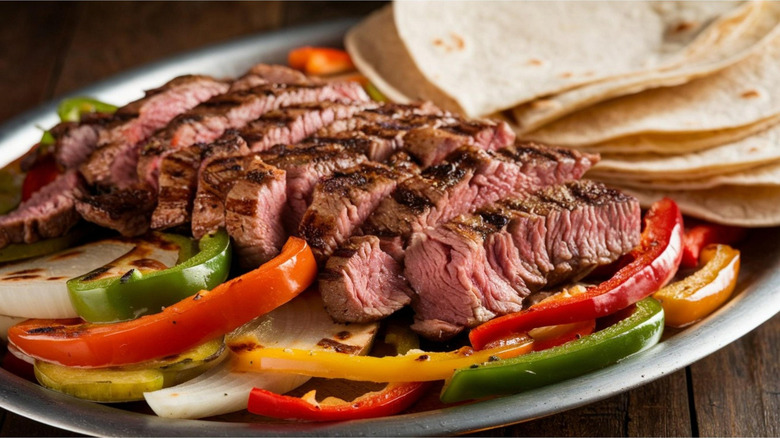
Once you've gone to the trouble of keeping your leftover steak as moist as possible, you'll want to cook it with intention, too. Whatever you do, don't just throw it in the microwave to reheat and expect it to come out well. If you must microwave it, turn the power down and cover everything with a damp paper towel.
But there are several better options than the microwave. Heating the steak in a pan with some butter or oil can do the trick — just be sure to keep an eye on it so it doesn't overcook. Similarly, you can cook it on low heat (about 250 degrees Fahrenheit) in the oven. This will take longer; and again, it can go from ideal to overcooked very quickly, so check in frequently. Other methods of re-heating leftover steak include an air fryer or sous vide, if you happen to have either of those appliances. For any of these methods, let the steak come up to room temperature before reheating it so it doesn't have to spend as much time in the direct heat.
If you're still concerned about the steak being tough, consider reheating it in some extra liquid — either butter or oil, as mentioned previously, or leftover steak juice from the initial cooking, broth, steak sauce, etc. And once it's been reheated, you don't necessarily have to eat it as a stand-alone dish. Adding the steak to something with its own moisture, like a well-sauced sandwich or fajita can help hide any deficiencies.