

For Restaurant-Worthy Pot Roast, Start Brining Your Beef
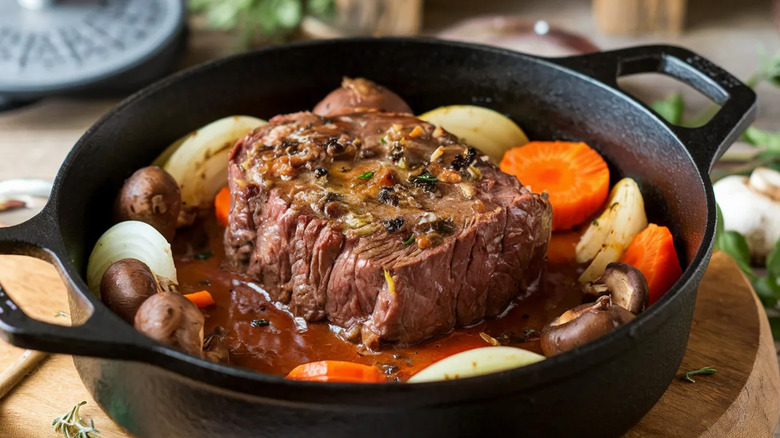
There are so many tips for cooking pot roast that it's hard to know which exactly is the best one. But if you want a restaurant-worthy result, this trick is one worth following: brine your beef — it makes an actual difference. Chowhound exclusively spoke with Isaac Bernal Carbajo, executive chef of the Permanent Mission of Spain to the United Nations in New York, who went over his process.
Brining your beef is what stands between pot roast that tastes homemade versus one that belongs in a restaurant. Carbajo specifically suggests using dry and not wet brine: "I prefer dry brining over a wet brine. A pot roast is already going to cook for hours in a moist environment, so adding extra water beforehand usually offers little additional benefit," he told us during out exclusive chat, which was translated from Spanish to English.
For your dry brine, you'll need a base of kosher salt, and use about 1% and 1.5% of it depending on how much your beef weighs. You can then add other seasonings like garlic or onion powder, thyme, rosemary, and black pepper to the mix. Additionally, you'll want to give your beef at least 12 hours, if not a whole day, to rest in the brine. This ensures the salt really penetrates the meat, adding not just flavor, but also giving it a juicier finish.
This process will solve the common issue with homemade pot roast, where the flavor only clings to the exterior of the meat. Meanwhile, restaurants manage to cut through the surface and actually pierce deep into the meat, which is why each bite is a burst of flavor. "For home cooks, it is probably one of the single most effective steps for turning a good roast into an exceptional one," says Carbajo.
Avoid these mistakes if you want to successfully brine beef
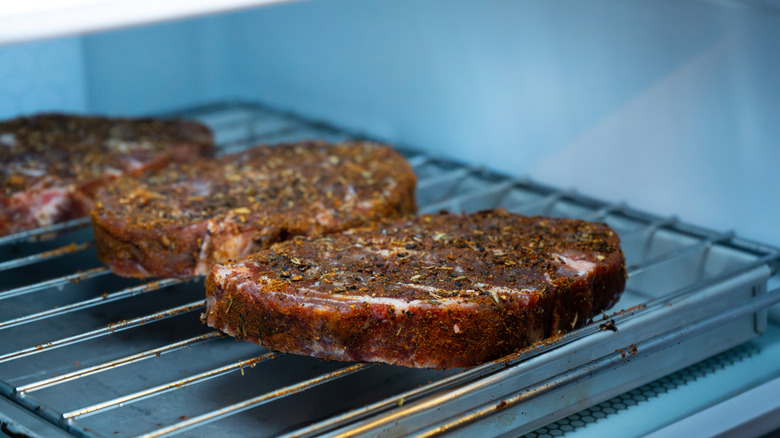
Just like how it's not always better to marinate food for longer, you should also avoid brining your beef for several days. The effect will be similar to curing meat, making it too salty for a dish like pot roast. It can also put a toll on the texture, resulting in a mushy consistency that's impossible to undo. Remember that good food is all about the texture, too, and not just flavor.
Since you're working with salt when brining, it's also easy to let the salinity of the pot roast get out of hand. "The finished roast can indeed become too salty if the salt that was added beforehand is not considered," Isaac Bernal Carbajo says. Accidentally making the meat too salty is probably the most common mistake any home cook makes. So, go easy on the seasoning or you might mess up your pot roast — it's easier to make a dish saltier than it is to make it less salty. Carbajo also advises switching to low-sodium stocks or broths if you're making the dish to steer clear of this pitfall. Ultimately, it helps if you think of it this way: "The goal of dry brining is not to make the meat saltier. The goal is to make it more flavorful, juicier, and to develop the depth of flavor that we associate with the best restaurant-quality roasts," Carbajo points out.