

Why Rhubarb Is Often Used In Desserts
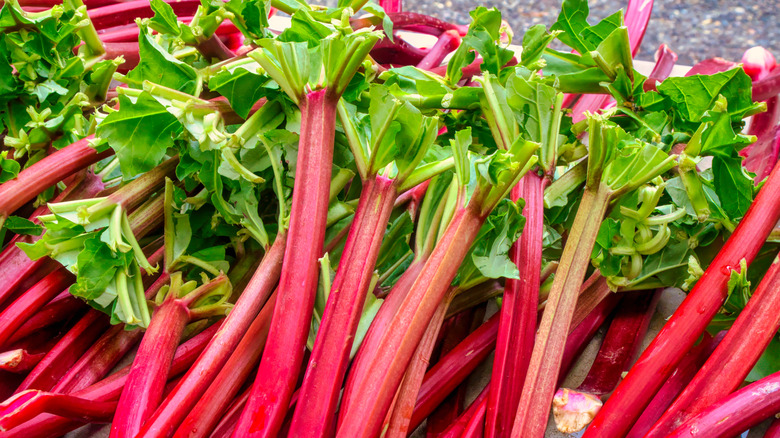
Pretty much every recipe containing rhubarb we tend to see is for desserts: pies, crumbles, jams, etc. While savory recipes do exist, sweets are definitely rhubarb's domain. If you've ever wondered why a piece of produce that looks like celery (except for its fuchsia hue) is so much more prevalent across dessert menus than in main dishes, the reason is its tartness. Rhubarb requires a good deal of sweetness to be palatable. But once it has sugar working alongside it in a recipe, the resulting contrast in flavor is amazing.
This ingredient is often utilized in desserts for its distinct sour flavor profile. Its inherent acidity is nicely balanced when used in sweet-leaning dishes. The concurrent sweetness and tartness happen to complement each other very nicely. Those unfamiliar with this veggie may be wondering what rhubarb is and how you should cook it. It's also worth keeping in mind that different varieties of rhubarb come in varied stalk sizes, color, and relative sweetness, which could all affect your recipe.
Some of the confusion around this type of produce is a result of the government lying to you about rhubarb, classifying it as a fruit in 1947 to skirt the higher import tariffs on vegetables. But even before the U.S. government categorized rhubarb as a fruit, it had long been associated with sweet recipes. It was known as the "pie plant," with a recipe dating as far back as the 1810s. Regardless of how it's qualified, rhubarb is a delicious addition to many desserts.
How to integrate rhubarb into homemade desserts
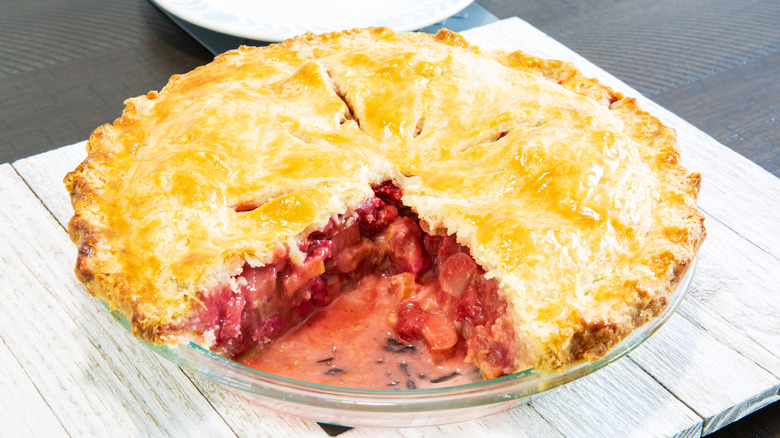
There is a wide range of desserts that incorporate rhubarb. Some are ones you may not have expected, like the dessert-adjacent rhubarb and cardamom oat muffins, for example. These take advantage of rhubarb's compatibility with many warming spices. In this case, cinnamon's sweet, woody notes and cardamom's floral, menthol flavor help to balance its acidity. In something like a rhubarb crumble, ginger is the perfect sharp, fiery match to rhubarb's intensity. Meanwhile, you might top a rhubarb coffee cake with a streusel featuring the sweet depth of nutmeg and pecans.
Rhubarb is also delicious in citrus recipes such as lemon cake, as citrus enhances its brightness. In fact, a hint of orange zest in strawberry rhubarb pie elevates the iconic dessert by complementing its sweetness and tartness. Serving it with vanilla ice cream or whipped cream helps to tame its intense acidity and add a smooth, velvety contrast to the fruit. Or, for a more floral twist, elderflower's lychee-like, tropical notes round out the intensity of the rhubarb in a crumble, cake, or even compote.
You'll find that some desserts call for macerating the rhubarb with fruits such as strawberries, cherries, and plums. At this stage, the sugar pulls excess liquid from the produce and creates a more powerful flavor in the final dish. You can also stew rhubarb with sugar for a simple, standalone treat or incorporate other ingredients before baking. As with so many other rhubarb desserts, it's great on its own or with a scoop of ice cream.