

This Underrated Way To Cook Cabbage Adds So Much Flavor And Texture
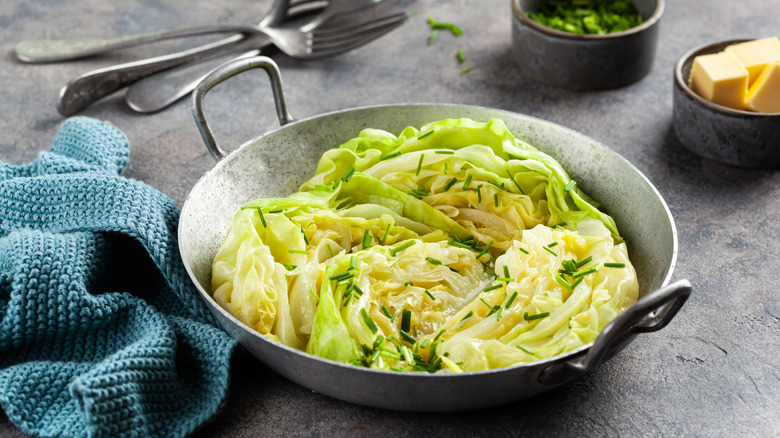
Cabbage is making a culinary comeback, and it's about time this cruciferous powerhouse landed in the spotlight. Packed with fiber, vitamin C, and anti-inflammatory properties, cabbage is also incredibly tasty and filling when prepared properly. The key is to tap into its natural deliciousness with the right combination of seasonings and cooking method. That's probably why dishes like bacon-infused Southern fried cabbage and spicy cowboy style cabbage are so popular. However, if you're looking for a simple way to infuse your cabbage with flavor sans all the complicated extras, smoking is most definitely the way to go.
Normally reserved for proteins, smoking is actually an incredible way to prepare hardy veggies like cabbage. Since smoking is done at lower temperatures than roasting (usually around 275 degrees Fahrenheit or slightly above), there's little chance of your cabbage turning mushy, even with the longer cook time of two to three hours inside the smoker. Not only does this method bring deep, savory goodness to every layer of this dense green, it also gently softens the layers of waxy, crisp leaves into tender, buttery perfection. You can expect each bite to be pleasantly al dente, with a mild, peppery earthiness under the more prominent smoke flavor.
Of course, this is provided you've prepped your cabbage properly, as very thin slices will go mushy no matter how carefully you prepare them. Instead, cut each head into 4 to 6 wedges, opt for nice thick slices, or even leave it whole to ensure it cooks to the perfect texture.
Prepping your cabbage for the smoker
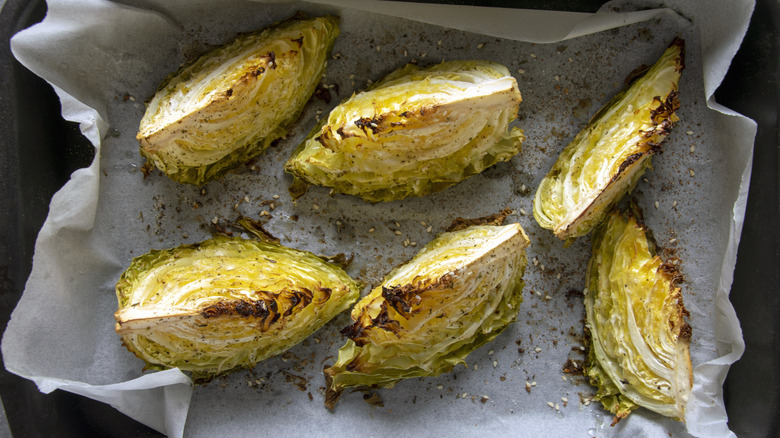
When choosing meat for the smoker, it's often recommended to pick cuts with plenty of lush, marbled fat that renders to produce a rich, tender texture. Since cabbage has no natural fat of its own, adding some is crucial to helping your cabbage soften and cook rather than drying out and becoming crisp and charred. There are lots of ways to do this, from simply brushing your cabbage with a layer of melted butter or olive oil to covering it in a latticework of bacon.
We suggest using beef tallow to braise or slow-cook cabbage, as it has a fairly high smoke point, and it becomes beautifully silky as it melts and sinks into whatever it's coating. It also has very little distinct flavor of its own, meaning it won't interfere with the seasonings and flavors you choose to add to your cabbage — of which there are many, many options to choose from.
Cabbage is delicious with a wide range of spicy, tangy, savory, and sweet flavor profiles, meaning you can mix and match your seasonings to align with the other dishes you may be serving. For instance, if you'd like to lean into a barbecue theme, try mixing some honey, hot smoked paprika, tomato paste, and smashed garlic into your beef tallow and rubbing it all over your cabbage before it hits the heat. Or, you might lean into Asia-inspired flavors with white miso paste, soy sauce, and sesame oil.