

6 Ingredients That Were Staple Items During The Great Depression
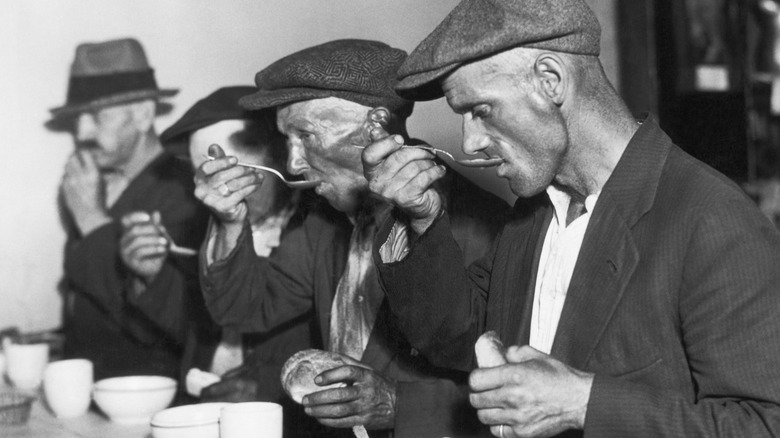
Shortly before World War II, the United States suffered one of the worst periods in its history to date. The stock market crashed in October 1929, tanking the economy and creating an epidemic of unemployment. The Great Depression made things difficult across all aspects of life, including everyday necessities like getting food on the table, and many people were forced to resort to desperate measures to ensure their families were fed.
Many struggling people also turned to thrift and innovation during this difficult period, using whatever ingredients they could get their hands on to create filling meals and stretch rations as far as possible. They discovered new ways to use pantry items (such as turning Spam into stew) and made the most of the vegetables and livestock they already had on hand.
Some Depression meals were quite fascinating, while others consisted of foods that we still commonly use today. We spoke to Elizabeth Nelson, Ph.D, associate professor at the University of Nevada, and looked into some research by other experts available online, to learn which simple ingredients were often utilized during this period.
1. Lard
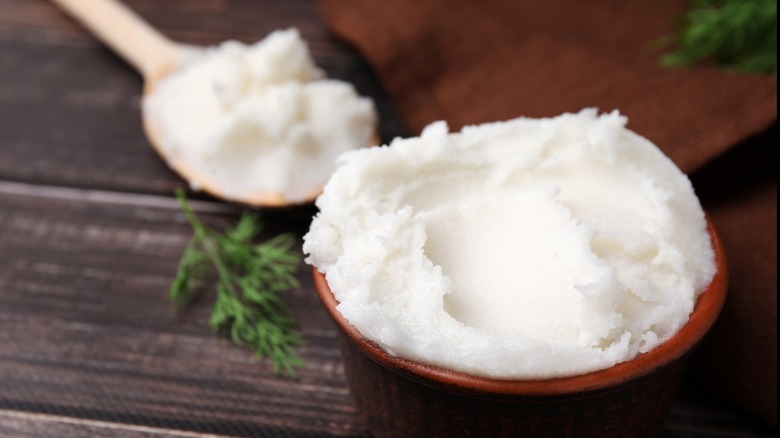
Lard was a common ingredient utilized by Americans during the Great Depression, and it's made by slowly rendering down pig fat after butchering. You could also use the fat leftover after straining to make "cracklings," or fried crispy pork bits, which could then help stretch meals. Additionally, cracklings could be eaten as a salty snack to help satiate hunger throughout the day.
While lard was often used for frying, it was also sometimes used for baking pastries or within other recipes in the place of butter, which typically cost more. Recipes such as the famous Campbell's tomato soup cake could've easily utilized this swap. Lard, in addition to sugar, flour, cinnamon, cream cheese, and a tin of Campbell's condensed tomato soup, came together to create this retro treat that didn't require eggs and only needed minimal spices and seasonings if they were available.
Of course, lard was easier to get for those who kept livestock. Elizabeth Nelson says, "Generally, families in rural areas were more likely to have chickens or maybe a pig," — although she also asserts that people who lived in towns and cities sometimes had chickens. While you can't get lard from chickens, you can get schmaltz (or rendered chicken fat), which was (and continues to be) a common alternative to lard or other types of cooking fats. However, even those who didn't have access to pigs or chickens could still purchase lard. "People living in cities in most cases bought what they could afford in stores," she adds. Lard prices dipped after the Great War and remained relatively stable during the Depression.
2. Cornmeal
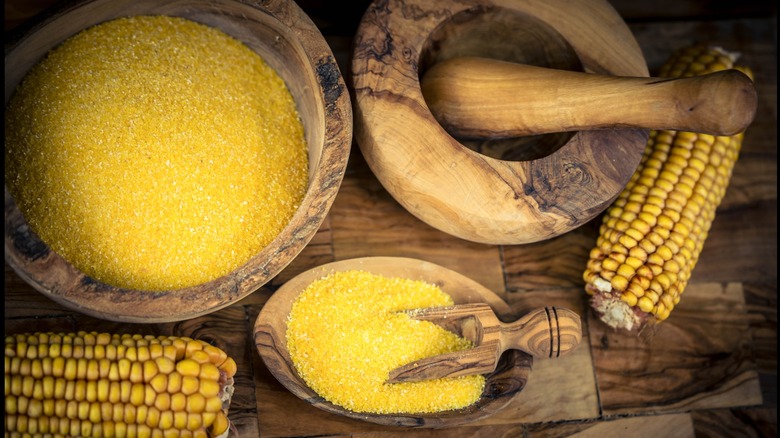
Another food item popular with Americans during this time period was cornmeal. This was a staple "especially in the South," says Elizabeth Nelson. When ground down into this mealy texture, cornmeal becomes very versatile and can also be referred to as polenta, grits, porridge, or even mush.
There were several ways that Americans incorporated cornmeal into their daily lives. It was often eaten for breakfast, served simply with milk, and could even be made into cakes or breads roasted over the fire. Even First Lady Eleanor Roosevelt kept cornmeal in her cooking rotation –- it was reported that she dabbled in a Depression-era supplement known as "milkorno", which was a combination of cornmeal and dried skim milk that provided nutrients during a time when nourishing food was scarce.
People also relied on cornmeal as a product that could bulk out meagre diets. In an interview with Inside Hook, food historian Andrew Coe describes one regional Depression-era eating habit that was called "'The Three M Diet.' This consisted of 'Meat' (and meat means salt pork), 'Meal' (which means cornmeal, so they would make it into cornbread), and 'Molasses.'" This diet was specifically eaten by cotton workers in the South, and often resulted in malnutrition.
3. Bacon
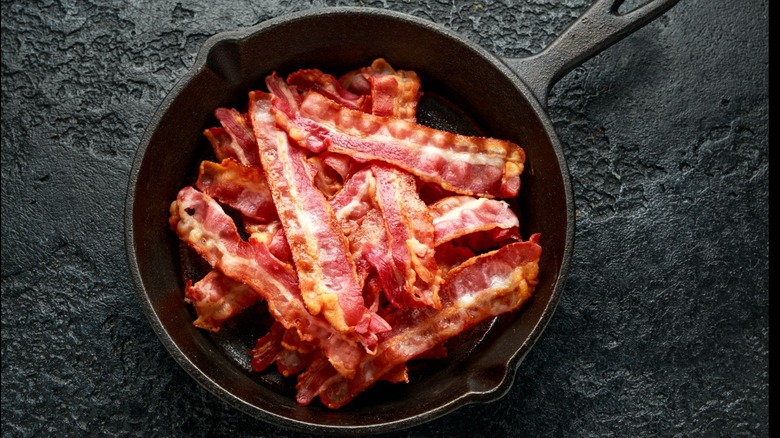
When talking with Elizabeth Nelson, she explained that the ubiquity of bacon during the Great Depression: "[It] kept longer than fresh meat [and] might have been used to flavor things." Due to other meats, such as beef, becoming scarce during the Depression, bacon was often substituted instead. Bacon could be added to soups along with beans and other staples, fried alongside dandelions to create a salad, and, on some occasions, it was used as a replacement for meatballs in spaghetti.
When butter was inaccessible, bacon grease (much like lard) could be used as a hearty substitute in baked goods. This leftover fat was even sometimes added to bread to create a bacon grease sandwich, ensuring that truly nothing went to waste. As a result, bacon was a highly efficient food to buy when working with a limited budget.
4. Potatoes
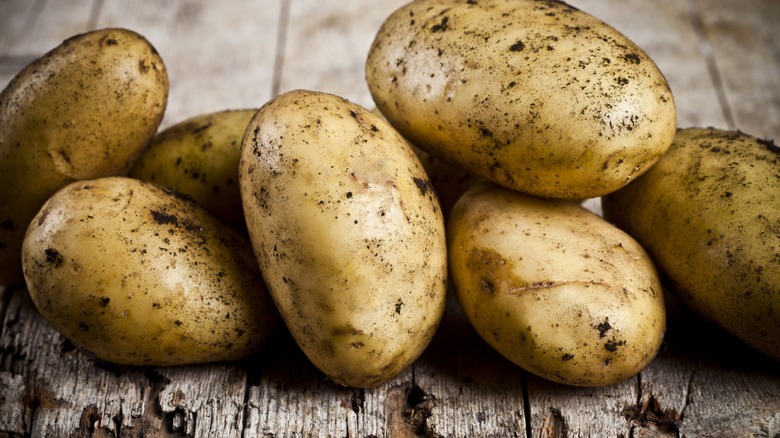
Potatoes were a well-loved staple in many Great Depression meals, and a typical Depression-era breakfast, lunch, and dinner might include potatoes prepared in various ways. Since these starchy vegetables were commonly grown at home, alongside other produce, they were quite accessible to many people. They were also a great way to keep bellies full during a time when food was scarce.
One of the most famous Depression-era recipes was a dish called Mulligan Stew, which was basically just a combination of vegetables, meat scraps, and anything else the family could scrounge up to toss into the pot, which Elizabeth Nelson said was a common practice during the time. Potatoes were a popular addition to this entree, as well as other soups, such as simple vegetable soup. Another dish called Spam stew contained an entire potato, garlic, celery, and a tin of Spam heated with water and seasonings.
Another common Depression-era dinner was the Poor Man's Meal, made famous by Clara Cannucciari on her Great Depression themed YouTube channel. "We ate potatoes every day [...] My father used to buy a sack of potatoes," she says, asserting how accessible and common the vegetables were. "Potatoes were a dollar a sack."
5. Gelatin
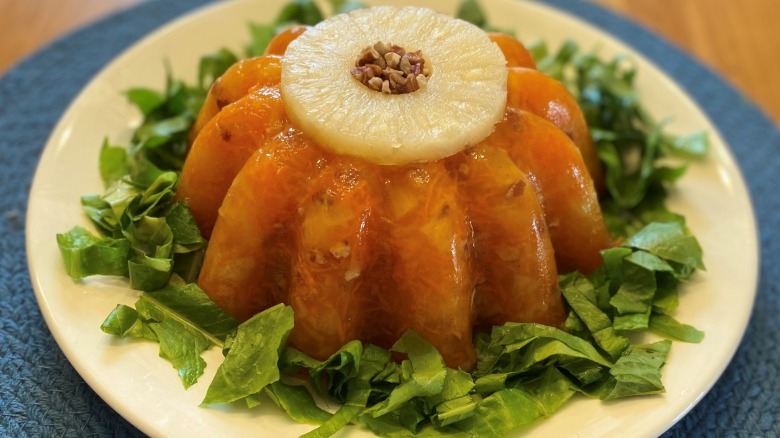
While gelatin was popular in the early through the mid-1900s, its frequent use (especially in savory meals) isn't quite as commonplace these days. Fairly cheap and simple, this Great Depression ingredient was often used to make desserts during a time when little comforts were rare and well-deserved.
It helped that the Jell-O brand, primarily recognized for its gelatin-based products, assisted the average home cooks by publishing recipe pamphlets that utilized this jiggly ingredient. That way, people could still create elaborate dishes at home in a way that would be seen as luxurious while still remaining affordable. Some of the recipes you might have seen at the time included the Roman Sponge, which was made with cherry Jell-O, vanilla, almond extract, cream, coconut macaroons, and nuts, or the Charlotte Russe Imperial, which contained lemon Jell-O, egg yolks, sugar, milk, vanilla, and cream. Though you're probably not as likely to whip up one of these desserts today, you can still try your hand at it with a fizzy Midwestern Jell-O salad.
That being said, gelatin wasn't only reserved for sweet treats. There were plenty of savory dishes that used gelatin as well, such as the infamous "Corned Beef Luncheon Salad," which contained items like canned peas and vinegar. Among the economical, sweeter recipes published in the pamphlets at the time were also savory options like the Spanish Jell-O Salad, which was made with lemon Jell-O, vinegar, pimientos, white cabbage, celery, and pickles. Other gelatin salads used mayonnaise as their primary ingredient, which would most likely turn a few heads today if it appeared on the average person's dinner table.
6. Canned goods
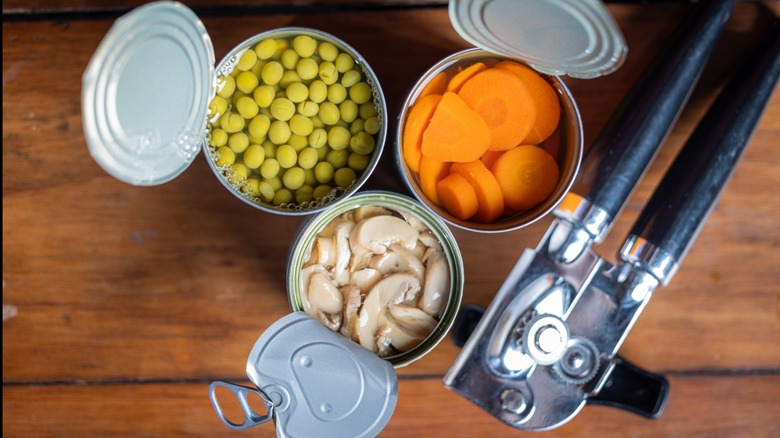
Canned goods are still a staple in any kitchen –- they're easy to stack for tight storage, and their longevity makes them cost-effective and prevents waste. Families during the Great Depression heavily depended on these pantry items for sustenance during difficult times.
Although today, fresh food is often favored over canned options, food historian Jane Ziegelman explains in an interview with NPR that this was not the case in the 1930s: "[Canned food] was the miracle food" because of its wide variety and the claims that it was more fresh than some other items you might be inclined to purchase (think things like meats and produce). Common canned goods in the Depression era included soup, beans, vegetables, and corned beef, which, as we now know, can all be combined to make one hearty Depression-era meal.