

Why Homemade Doughnuts Never Turn Out As Good As A Bakery's

Whether glazed, powdered with sugar, or filled with cream or custard, doughnuts are one of America's favorite snacks. U.S. citizens eat approximately 10 billion of these fried doughy morsels each year. Still, achieving a bakery-style texture and quality in your own kitchen is no easy task. Yet, there's a secret for bakery-worthy doughnuts with a crispy exterior. And according to Kaitlyn Venable, chef and director of culinary at Texas doughnut chain Shipley Do-Nuts, it comes down to temperature control and consistency.
In an exclusive talk with Chowhound, Kaitlyn Venable emphasized the importance of having the right equipment. "Invest in a reliable instant-read thermometer and use it throughout the process to check water, ingredient and oil temperatures," she stated. This kitchen tool is super easy to use and will give you better control over the cooking process. This is especially helpful for tracking the oil temperature, which should always stay between 350 and 375 degrees Fahrenheit. It is also the most important oil advice to keep in mind when frying your own doughnuts.
"Having a consistent tool takes any guesswork out of the frying and you can adjust the temperature quickly," Venable added. While you may not own all the dedicated doughnut-making tools you'd find at a bakery, a candy thermometer and a heavy-bottomed pot, like a cast-iron Dutch oven, can help prevent oil temperature swings during frying.
Other tips for making doughnuts at home
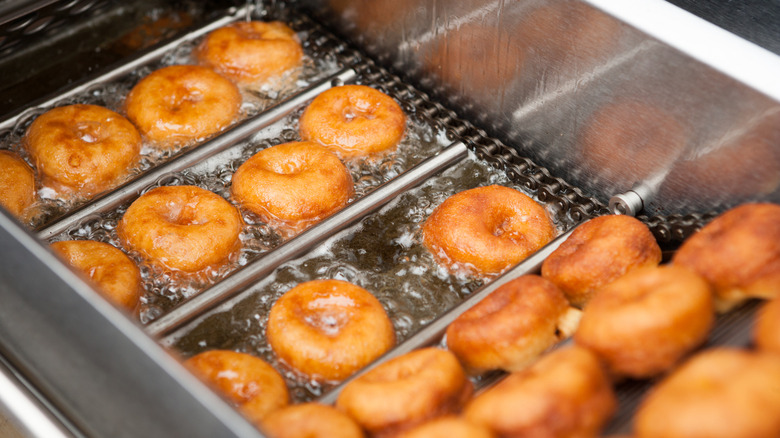
Kaitlyn Venable shared a couple of helpful tips for making tastier and better homemade doughnuts. For instance, adding a small amount of potato flour to the dough will help retain moisture and result in softer, more tender doughnuts. At the same time, proofing is another key step for light and fluffy doughnuts. If you're unfamiliar with the difference between proofing and fermenting dough, think of it this way: Fermentation happens during the dough's first rise, while proofing takes place after the doughnuts have been formed. The process occurs at room temperature and doesn't usually take longer than an hour.
If you exceed the recommended proofing time, the gluten network inside the dough becomes overstretched, compromising its structure. "There's a chance if they are overproofed that they could collapse. This means that they are more likely to absorb additional oil during the frying process, resulting in a greasy, deflated and disappointing donut," Venable explained.
That said, even if you've followed the right steps and your doughnuts have turned out beautifully, the work isn't over. There's still some glazing and filling to do, regardless of how tempting it may be to take a bite right away. "Be sure to glaze or ice donuts while they are still hot and then wait a few minutes before eating," Venable said, adding that filling works the other way around. "You'll need to wait until the donuts are cooled to room temperature before this process, so the filling doesn't melt inside the donut."