

Why Soda Makers Ditched Reusable Glass Bottles In Favor Of Plastic
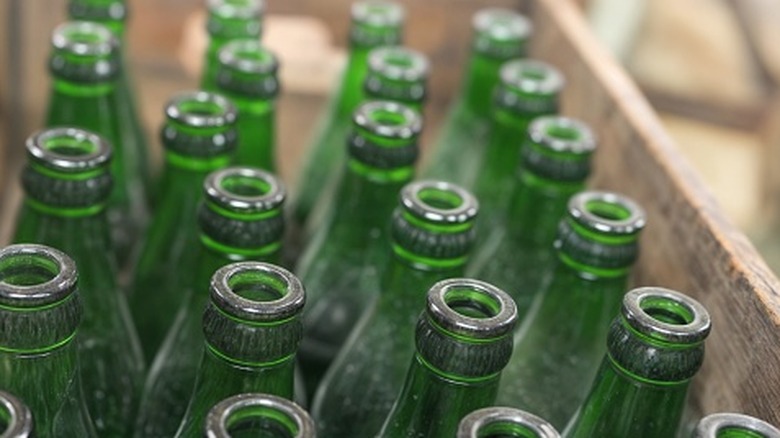
Coca-Cola is not only the current leader in soft drinks, but is also a pioneer in that industry — going back to 1899, when it franchised its product to regional bottlers so Coke could go beyond old-fashioned soda pop shops. Alongside Pepsi, it also led the transition from those reusable glass bottles to the single-use plastic bottles of today. There were several reasons behind the change to plastic, but every change was ultimately ruled by one pursuit: increased profits. And plastic accomplished that in several ways.
For starters, plastic was cheaper to produce compared to glass bottles. Even mass-produced glass bottles incurred heavy costs because they required more materials and more care during transport. Plastic bottles, on the other hand, could be manufactured at a faster rate and used fewer raw materials in production. Regional bottlers were happy with the switch because it reduced production costs and shipping costs, as plastic was lighter to transport and didn't need as much protection as glass. And finally, there was the bottle return system. An entire network of soft drink manufacturers, bottling companies, consumers, and refilling stations was made obsolete thanks to the perceived disposability of plastic. Beyond cost-cutting, other benefits of switching to plastic were used to sway the public in the transition.
Consumers couldn't resist the convenience of plastic
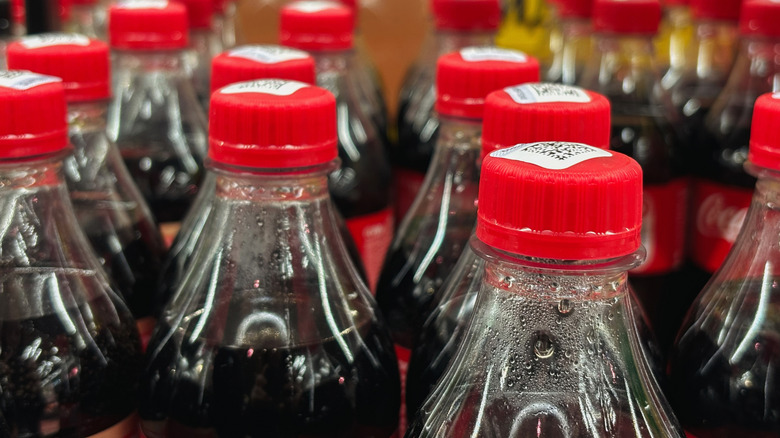
The bottle return system used before plastic bottles may have been costly to soft drink manufacturers, but it also demanded time and labor from each consumer. People stored glass bottles at home until the next time they returned to the store or drove to a return facility to get their bottle deposits back. Plastic bottles eliminated this chore, and a public not yet aware of the waste problem plastic would create was glad to remove it from their to-do list. The convenience and disposability of plastic bottles were too difficult to resist. Plastic bottles were resealable, could be stored for a longer time, were easy to take with you, and could be tossed away when they were empty.
As the harmful effects of plastic waste started to present themselves, any effort to return to glass was met with hard lobbying and an even stronger marketing push, putting the onus of recycling back onto consumers rather than corporations. Of course, we should bear some of this responsibility — try upcycling bottles instead of tossing them — but companies were eager to free themselves from the burden. By 1998, a mere 0.4% of soft drinks were sold in glass bottles (via CRI). Today, only 10 states have bottle deposit laws, and only a few soft drink companies offer a refilling service for their customers.