

The 10 Best Ways To Upcycle Plastic Bottles (That You'll Actually Use)
While single-use plastic is not the best choice for environmental reasons, in many homes, plastic bottles for water, milk, and other food ingredients do get used from time to time. Reusing them before putting them in the recycling bin is a great way to make things a bit easier in the kitchen.
There are many ways to repurpose your plastic bottles, and you don't need to be a DIY or craft expert to give them a go. In most cases, a pair of scissors or a sharp knife is all you need to turn would-be-waste into a handy kitchen hack. From ketchup bottles making morning pancakes an easier task to portioning out a serving of spaghetti, a little creativity is all it takes to turn an empty plastic bottle into something useful again. Let's take a look at some excellent ways to upcycle plastic bottles that actually useful.
1. Separate eggs
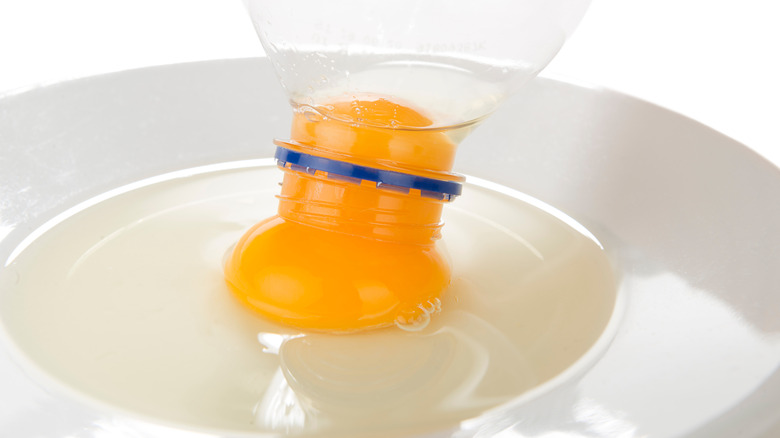
For every aspiring home chef, separating eggs can be a tricky skill to master. Keeping egg shells out of the mix can be difficult enough, but if you are making meringue or soufflé, it's imperative that no yolk infiltrates the whites. While you could buy an egg separator, there's no need to spend money and take up space in your kitchen cupboard with a single-use device — instead, you could use an empty plastic bottle to separate your eggs.
To try out this handy hack, crack an egg carefully into a wide bowl. Then, take an empty plastic water bottle and gently squeeze it, before placing it on top of the yolk and slowly releasing the pressure on the bottle. The yolk will be pulled into the bottle without breaking, leaving behind the pristine egg white. The yolk can then be dropped into a separate bowl and the process can be repeated for multiple eggs. In addition to it being a great time-saving hack when your recipe calls for several separated eggs, it's also a great way to let young children help with your baking ventures.
2. Portion out spaghetti
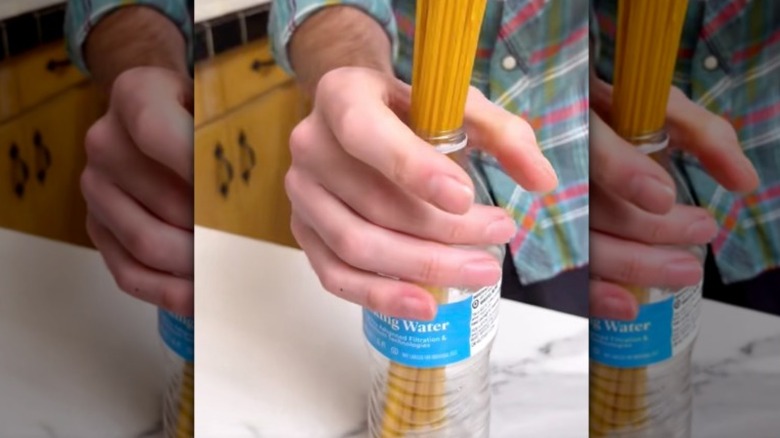
We've all been there: holding raw spaghetti, trying to work out exactly how much pasta is needed for the family dinner. Somehow, no matter how much you put back in the package, there still ends up being a mountain of cooked spaghetti.
What you need is a reliable, objective way to measure spaghetti, and an empty plastic water bottle is the perfect solution. The neck of a standard water bottle is fairly narrow, and the amount of spaghetti you can fit through it equates to roughly one adult portion of the pasta. To test this hack's worthiness, grab a handful of spaghetti that you would assume is a one-person portion and compare it to the mouth of the plastic bottle. It might surprise you how much is left behind in your hand.
If you are cooking for a large group, it's even more difficult to judge the quantity yourself, so spending a few extra minutes measuring out individual portions can save you cooking way more than you need. Once you have measured the perfect portion, check out these spaghetti cooking tips to make sure the final dish is beautifully cooked and delicious.
3. Store spices
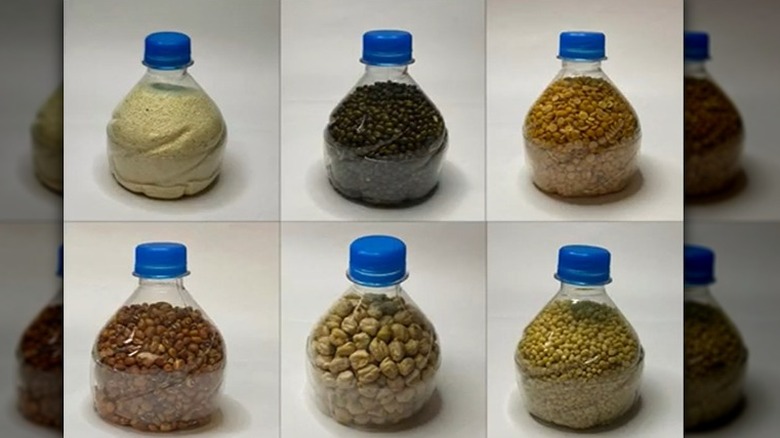
If you're looking for a convenient way to store your dried spices in your pantry or kitchen cupboards, you can repurpose plastic drinking bottles instead of buying expensive containers. Though a little preparation is required, it doesn't take long. All you need is a pair of sharp scissors.
While you could use the full size bottle, in the interest of saving cupboard space, the best option is to shrink the bottle down before your start. Cut off approximately the top quarter of the bottle and the section below the label, leaving a few inches of depth. Slide the top section into the bottom, and secure with clear plastic tape. Your miniature spice bottle is now ready to be filled.
If the bottle already has a pouring spout, you can leave it as-is. If not, you can either punch holes in the top to create a shaker, or leave the lid intact and simply unscrew it when you need to use it. This spice container is ideal for storing homemade mixes such as fajita seasoning or a barbecue rub.
4. Protect hands from oil splashes when frying
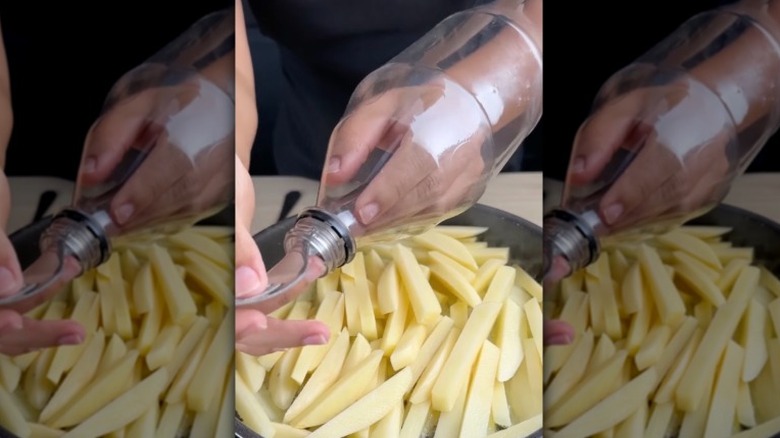
If you are a keen home cook, you will know the frustration of having hot fat unexpectedly jump out of the frying pan and onto your waiting hands. To avoid injury, you can put an empty plastic bottle to good use by creating a makeshift shield to fit onto your cooking utensil.
Start with a large plastic bottle, cutting off the top quarter of the bottle with a sharp knife or scissors. Then, choose your spatula (or other cooking utensil) and cut out a hole in the bottle lid that will allow it to fit through. Slide the bottle onto the handle, so that the plastic creates a barrier between the contents of the hot frying pan and your hand. While it is crucial to prevent the plastic from making contact with the flames or becoming too hot, as an improvised safeguard against hot oil splashes, it makes a lightweight and convenient option.
5. Create an herb garden
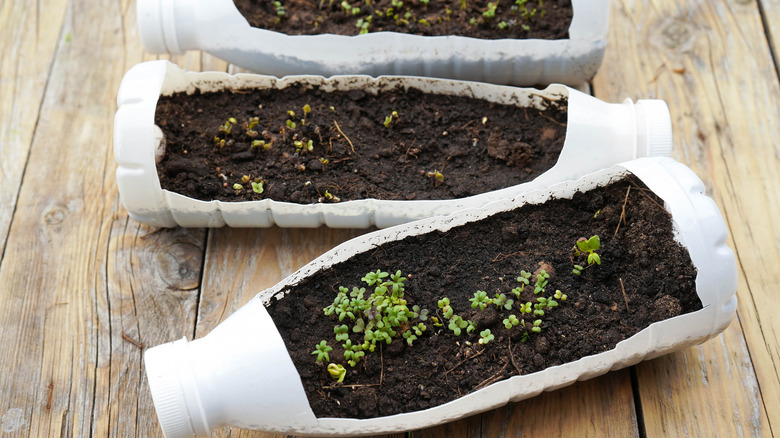
Fresh herbs are a crucial part of a home kitchen, and there is nothing better than picking leaves from those you have grown yourself. Not all of us have the luxury of growing a full garden, but with the help of empty plastic bottles, it's easy to grow a small selection of fresh herbs directly on your windowsill.
For a very simple version, you can simply cut a plastic bottle in half lengthways, then make a few drainage holes in the remaining side. Place a shallow tray or saucer under the bottle to catch any drips of excess water. Fill the halved-bottle with soil and plant your herb seeds of choice. Some herbs grow fairly quickly, and in the case of growing soft herbs such as basil, you should have a thriving plant ready for picking after just a few weeks.
6. Use ketchup bottles for pancake batter
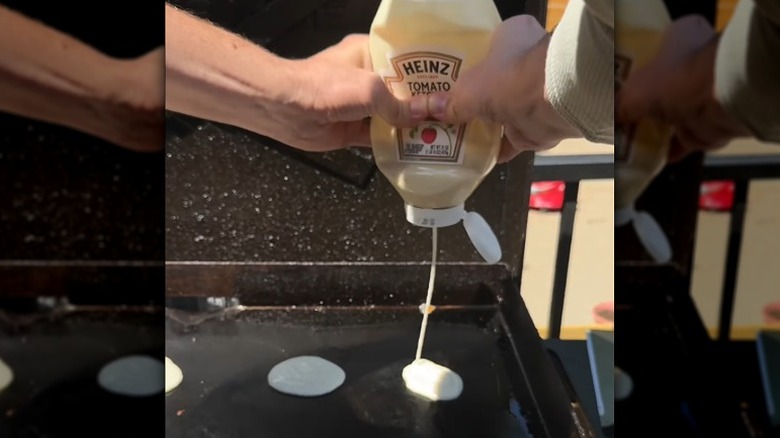
Ketchup bottles would usually be thrown straight into the recycling bin once emptied, but they actually have an ingenious upcycled use that could make your mornings simpler and cut down on mess. Next time you finish a bottle of ketchup, wash the bottle thoroughly and fill it with pancake batter.
Making pancakes is a fun task, especially if the whole family gets involved, but keeping it mess-free can be tricky. Batter dripping everywhere is not a good way to start the morning. But by storing it in a ketchup bottle, it can be portioned into the pan easily in just a few seconds with no mess.
The trick is to make the batter the day before when you have time to spare, and use a funnel to transfer it into the ketchup bottle to minimize mess. Keep it in the fridge overnight, and once your pan has heated sufficiently in the morning, simply squeeze the desired amount straight into the pan. You will get the exact portion you want. Since it contains raw egg, the mixture shouldn't be kept for more than four days maximum in the fridge, but chances are it will all be eaten by then, anyway.
7. Make a freezer pack
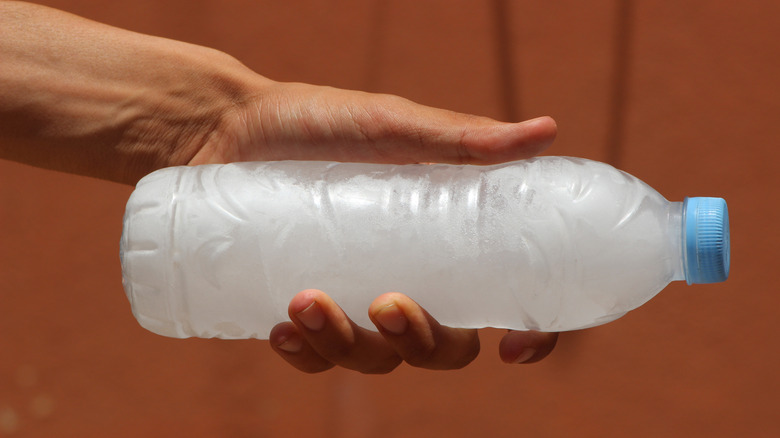
If you are packing a lunch for a hot day, it can be helpful to have a mini freezer pack to keep the contents cool. However, if you don't have one, you don't need to put up with warm sandwiches or salads; you can repurpose an empty plastic water bottle to help you out, instead.
Find a water bottle that fits in your lunch box well, and fill it with cold tap water at least a few hours before you need it. You should leave a gap at the top rather than filling the entire bottle, as water expands as it freezes, so the bottle could split if it is overfilled.
Once it has frozen solid, you can then add the bottle to your lunch box or cool bag, and it will keep your food cool for hours. Whether you are planning the perfect picnic or simply taking a prepared lunch to work, making a homemade freezer pack is a simple way to keep everything fresh without spending any extra money.
8. Store dried goods
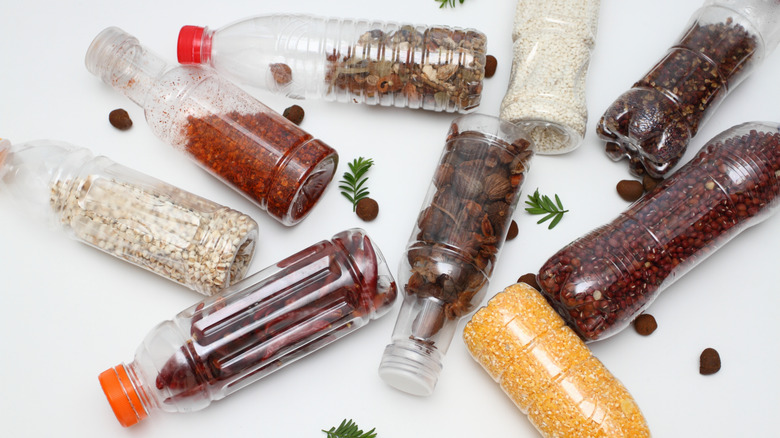
If you've ever lifted something out of the pantry only to knock over an open bag of rice, you will understand the need for sealed storage for dried goods. While most of us would love an Insta-worthy pantry with matching glass jars and bamboo lids, they don't come cheap. Instead, you can reuse empty plastic bottles of various sizes to keep your dried food fresh — as well as tidy.
There are a lot of plastic bottle types that would work well for this hack. Transparent bottles are great since you can see what's inside, and coffee creamer bottles come with a built-in pouring lid, meaning even less hassle when it comes to portioning out the ingredients. Thoroughly clean the bottle and peel off the label to reveal the see-through bottle underneath, then fill it with any dried goods such as oats or lentils.
Large bottles with screw top lids can also be used to store pasta, rice, or cereal, protecting them from moisture and extending their shelf life compared to keeping them in open packaging. You can even add custom stickers to your plastic storage bottles to make them look prettier without spending a lot of money on fancy containers.
9. Create a funnel
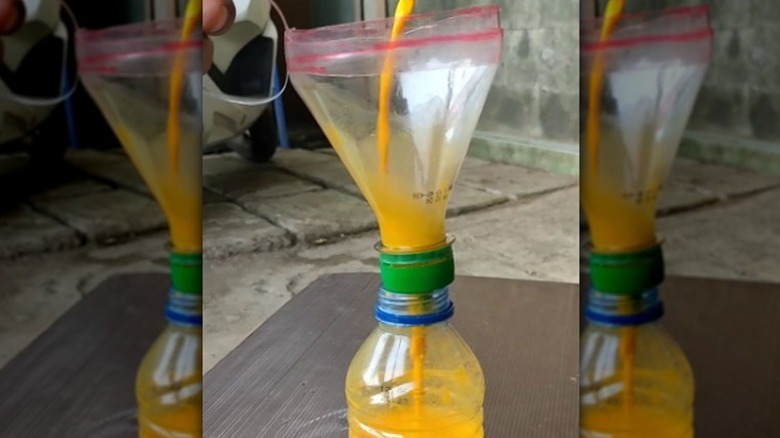
Transferring liquids or fine solids between containers can be one of the messiest jobs in the kitchen, and having a funnel makes it much easier. If you don't have one, you can make one with just an empty plastic bottle and a pair of sharp scissors or knife.
To create your improvised funnel, cut off the top of an empty plastic bottle. Place this small plastic piece inside the bottle or container that you are transferring to, and carefully pour your ingredients through the funnel. This works brilliantly for flour, sugar, cooking oil, and virtually any other liquid that you need to transfer.
Using different-sized bottles means you can create multiple homemade funnels for various ingredients. They will need to be replaced more frequently than a regular funnel, especially if used for sticky ingredients such as cooking oils, but if you have empty bottles headed for the recycling can anyway, it's a handy way to put them to use.
10. Seal food bags
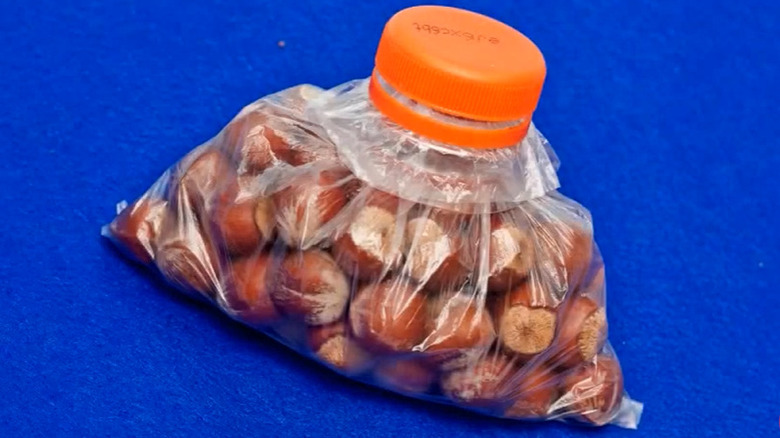
While the contents of open food bags should be transferred to air-tight containers to protect them, sometimes you just don't have the perfect jar. Resealing the food bag can be a quicker and handier option, and a used plastic bottle that still has its lid is a clever way to do it.
Using sharp scissors, cut the top of the bottle off just below the neck. Collect the top part of the food bag together neatly, and thread it through the bottle neck until you can pull it through the top. Affix the plastic lid to the bottle, sealing the bag and protecting the food inside from air and moisture. If you're prepared in advance, this can be a great hack if you are out and about, perhaps hiking or camping, and want to easily keep your food safe from any hungry critters nearby.