

Why Water Is Usually Bottled And Only Rarely Canned
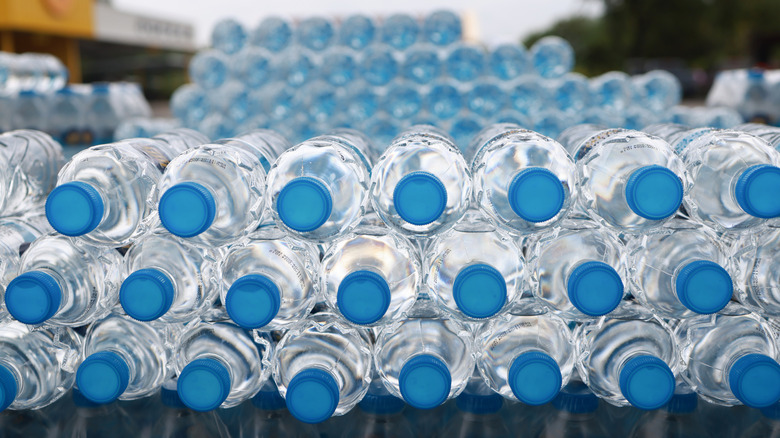
The water aisle is pretty synonymous with plastic. Whether it's a small 500ml bottle or a gallon jug, we tend to buy our water in plastic bottles, and it's been that way for decades. There is an emerging canned water market, but it still feels quite unusual, even quirky, compared to bottles. And really, that mostly comes down to cost and convenience.
Compared to cans, plastic bottles are lightweight, easy to hold, and fully resealable. And then there's also the sheer scale of it all. Many of the more common water bottle brands will produce enormous amounts of bottled water every single year, and using plastic bottles keeps those production costs lower. Sadly, aluminum cans are more expensive to produce than plastic bottles, and they also run the risk of being damaged and dented during shipping and storage in a way plastic doesn't. Having said all that, canned water has become more popular in the last few years, especially as consumers are becoming more uncomfortable with buying single-use plastic. And brands like Liquid Death are also working to make it feel trendy and cool to drink water from a can, which doesn't hurt, either.
While canned water solves some problems, it creates others
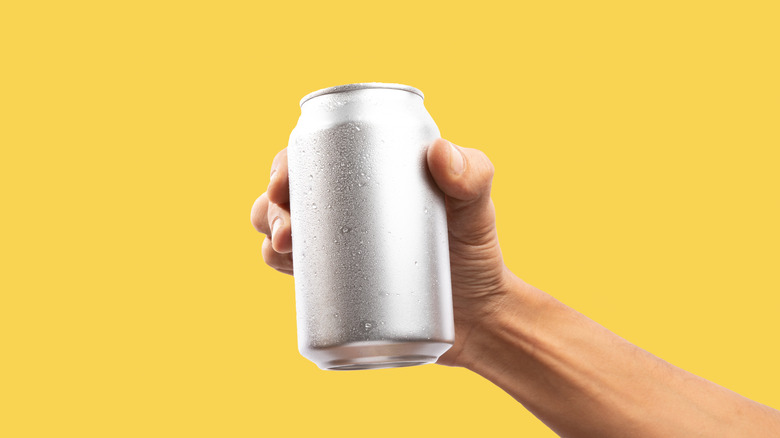
The thing people are most attracted to when it comes to canned water is the environmental element. Aluminum is usually easier to recycle than plastic in the United States, and it can often be reused more efficiently, whereas single-use plastic bottles are much less appealing in this day and age. There's also the desire to avoid microplastics, as water in a plastic bottle can absorb tiny plastic particles over time. But aside from that (and maybe the unfortunate reality that a percentage of bottled water is just repackaged tap water), bottled water hasn't had a lot of bad press over the years.
Canned water, on the other hand, still suffers from many of the issues that plastic solved years ago. The lack of reseal-ability is possibly the biggest one. Unlike cracking open a can of Diet Coke or a beer, which will typically be enjoyed in one sitting, water is usually something people carry with them. It's in their bags, in their cars, or being held as they go about their day. When it comes to convenience, it's hard to beat a bottle. And canning does affect flavor ever so slightly, too — many people don't enjoy that subtle metallic taste that canned water can have.
For now, bottles continue to dominate the water market. They are undeniably more practical while being cheaper for the manufacturer to produce. While canned water is slowly carving out its own lane, and we're intrigued to see how it goes especially in regards to sustainability, it still has a long way to go to catch up.