

How Marbling Can Show You If That Slab Of Prime Rib You're Buying Is Actually High Quality
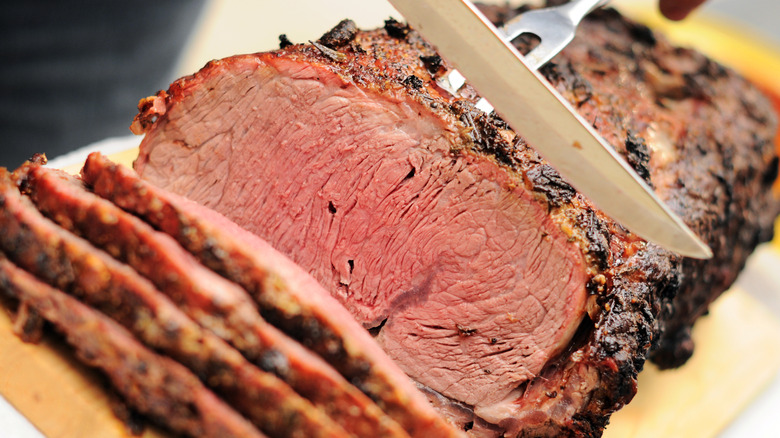
When you're trying to figure out how to buy prime rib at the grocery store, it's easy to get overwhelmed. Knowing what to look for is half the battle (a high-quality starting point is one of the factors that helps restaurants achieve perfect prime rib every time). Katie Flannery, COO of Flannery Beef, spoke exclusively with Chowhound about how marbling can offer clues that can help you pick a high-quality slab of prime rib.
Great marbling (strands of fat that run through the muscle of the roast) can stop your prime rib from drying out, which is one reason marbling is so important. "Think of it as self-basting from the inside," Flannery says. You'll want to check out the meat's USDA grade to get an idea of how much marbling you can expect. Prime has the maximum amount of marbling, Select has the least, and Choice is in the middle. While you certainly can choose a Prime roast, it's not always necessary to get something delicious. "The rib section is one of the best-marbled primals on the animal to begin with, because those muscles do almost no work during the animal's life. Even a Choice rib roast usually has decent marbling."
Why marbling isn't the end-all-be-all when choosing prime rib — and what else you should look for
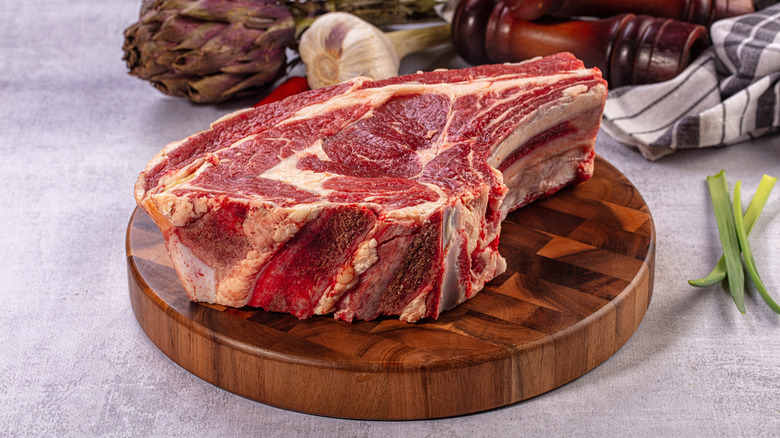
There are a few things to keep in mind when looking at the fat on a slab of prime rib to help you choose the best one. Katie Flannery explains that "A big, dramatic fat cap looks impressive in the case, but that's surface fat. It crisps up and bastes the exterior, which is great, but it doesn't tell you what's happening inside the muscle." She recommends that you pick up the roast and flip it over so you can see the thin white veins of fat that actually run up into the interior of the roast.
You'll also want to consider color, cap, and age. The meat should have a rich red hue all around. Anything that looks gray, brown, or has pale edges is not worth picking up. Pay attention to the color of the fat as well. It can be white or slightly yellow, but Flannery recommends staying away from roasts with waxy or gray-looking fat.
When it comes to the rib cap on bone-in prime rib, you want it to be thick and attached to the meat, not thin or heavily trimmed. Lastly, ask the butcher about the age of the roast. "A roast that's been dry aged even thirty days is going to eat completely different than a wet aged or fresh roast," Flannery says. "The flavor concentrates, the texture tightens in a good way, and you'll use far less seasoning." There are certainly quite a few things to think about when you're choosing a cut of prime rib at the grocery store, and following these tips to get started right can help you create a restaurant-esque result every time.