

How To Choose The Best Sirloin At The Grocery Store Without Fail
We may receive a commission on purchases made from links.
Sirloin is a great cut of steak for one big reason: It won't break the bank. It tends to be a less expensive cut, so it's a favorite when you want a steak dinner but don't want to shell out as much money for something like a ribeye or filet mignon. With that said, sirloin is less expensive because it's a leaner cut, meaning if it's not cooked properly, it could turn out tough. Some steakhouses even opt out of serving it altogether. Cooking the best steak starts with choosing the best one, but how do you know what to pick? To find out, we spoke to an expert.
"When choosing a sirloin, it is important to get one that is the right thickness," Brad Baych, professional butcher and author of "Primal Cuts: A Butcher's Guide to Selecting, Preparing, and Perfecting Beef," tells Chowhound. "You want it in the 1.25-inch range. This allows you to get a good sear on the steak." This is the ideal thickness if you're searing the steak in a pan on the stove. If you're grilling the steak, you could go slightly thicker. "Thickness is important because if the steak is overcooked, it can be a little tough," he adds.
Aside from the thickness, also take a look at the marbling. More is better, here. "Sirloins are pretty lean to begin with, so try to find the most marbled one you can," Baych says.
Tips for properly cooking a sirloin steak
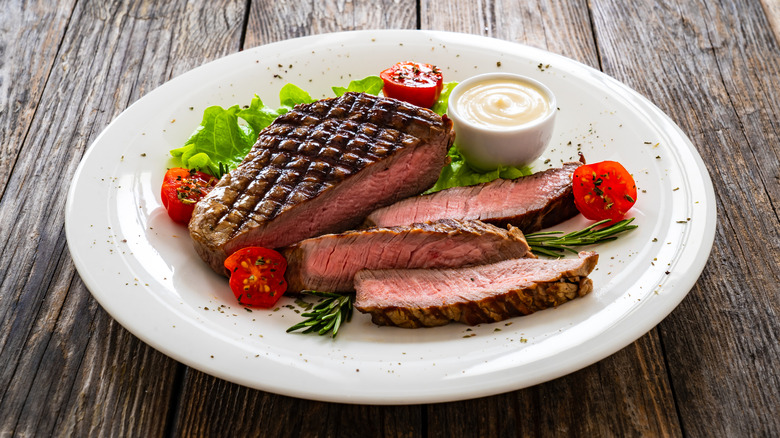
Once you've chosen a thick cut with as much marbling as possible, you want to make sure you do it justice while cooking. If you plan to pan-sear a steak, which is an easy method that can be done right on the stove, start with the right pan. Go with cast iron, which can handle the high heat of a good sear, as well as evenly distribute the heat to ensure each side of the steak gets seared to the same degree. You should always season a steak with coarse salt. As long as you salt the steak before it hits the pan, you'll get added flavor.
You might also want to finish the steak in the oven, which will ensure the interior gets cooked without over-charring the exterior; you can also use a reverse-sear method for cooking (oven-bake the steak first, then finish it by searing it in a pan). Most importantly, keep an eye on the steak's internal temperature; it's a good idea to use a meat thermometer. For medium-rare, cook the steak to between 130 and 140 degrees Fahrenheit. "Even though it kind of looks like a tenderloin steak, it isn't that tender," Brad Baych says. "Due to its leanness, if it is overcooked, it can get pretty dry."