

What To Look For To Buy The Freshest Bottled Beer Every Time
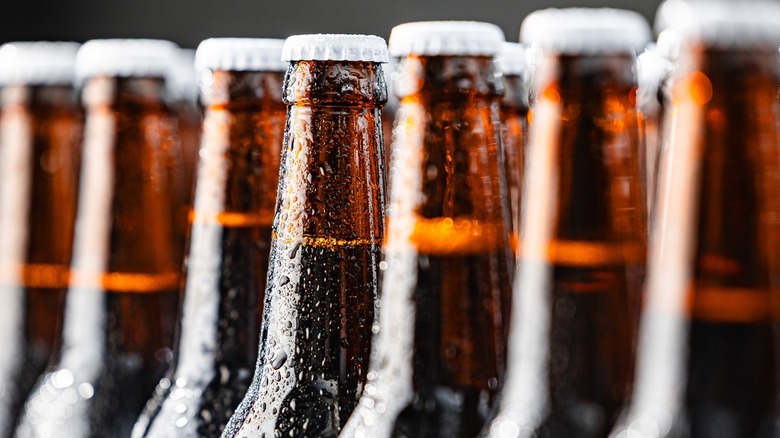
Beer doesn't stay good forever, though there's a solid chance you already knew that if you've ever sipped one you forgot about in the back of the fridge or popped open a bottle that spent an entire day sitting in the sun. Drinking beer past its prime won't harm you due to the alcohol content killing bacteria, but it just doesn't taste great. And while it's easy to look at expiration dates on other consumables, tracking down the freshest beer in the store is a different story. Look closely at bottled beer, and you might just see a print of numbers that look like an expiration date. However, these are more commonly bottled-on dates, which show when the beer actually went into the bottle versus how long it'll be fresh. Some bottles, like those from Molson Coors, also feature a series of letters and numbers that further illustrate the specific production batch.
Not all beers even come with these codes, though, thanks to an absence of regulations that demand it. So, look at the beer's placement too; a lot of stores tend to shift their oldest items to the front of shelves in order to try to move them faster. While there's no guarantee that you'll find fresher beer in the back of the shelf, it doesn't hurt to consider that during your shopping. It's also important to pay close attention to various other factors both in and outside of the bottle to make sure you're choosing the freshest beer possible.
Certain visual cues can help you determine the freshness of a beer
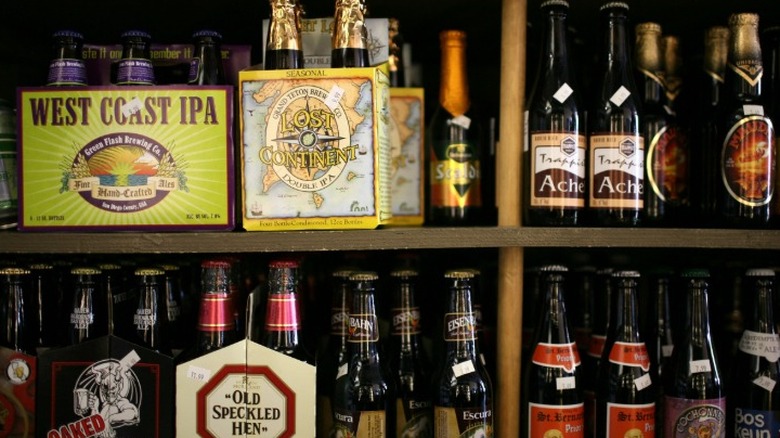
The best way to determine if a beer is past its prime is by tasting it, but unless you want to get banned from your favorite bottle shop, you can't just start popping caps and doing your own tastings before purchasing. Instead, consider that there are three things that turn beer from great-tasting to meh in addition to just time itself: oxygen, light, and heat.
For oxygen, look at the bottle caps for signs of damage — once the seal has been compromised, air leaks in and start oxidizing the beer within. You'll also want to avoid any beer that looks foamy in the bottle prior to opening (another sign of oxidation). As for light, the good news is those standard brown beer bottles help protect against that. However, beers in lighter-colored glass have shorter shelf lives and should definitely be consumed sooner rather than later.
Now, it is generally okay to buy beer that's room temperature provided it's been stored properly, but you definitely don't want a beer that's been heated up. So, avoid grabbing any beer that's been sitting near a heat vent or right next to a refrigerator. Heat and humidity can also cause physical damage to beer packaging, such as wrinkled or peeling labels. And, while some sediment seen inside the bottle is normal in certain beer styles like Farmhouses or aged stouts, it can indicate spoilage inside cleaner beer styles like lagers and pilsners.
Freshness standards vary by beer style
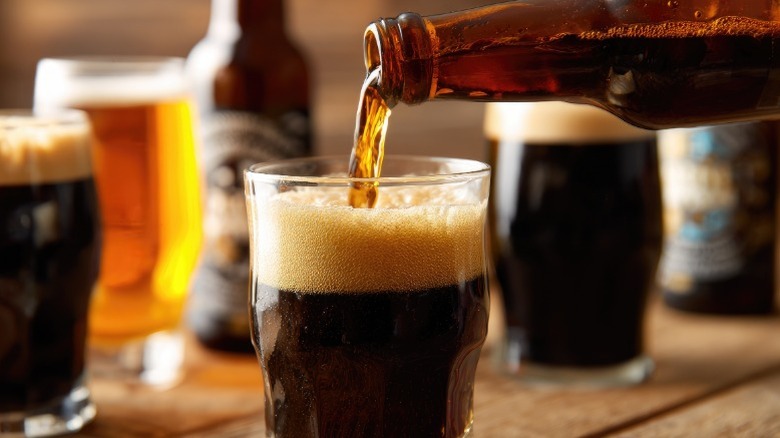
Beer style plays a huge role in determining freshness, so it's a good idea to have this knowledge under your belt before heading to the store. The IPA family tends to have the shortest shelf life, especially hazies or New England-style IPAs. For these, they're at their peak within the first month and then begin to notably decline in flavor and body after two to three months post-bottling. Lighter styles like lagers, pilsners, and wheat beers will last about twice as long, only really starting to decline after 120 days to 180 days. As for anything with lactose or fruit additions, these should be drunk ideally within a month and should always be stored in a fridge (lactose won't spoil per se, but room temperature will cause it to break down). These additions are still more common in canned beer than bottled beer, but the two containers provide remarkably similar shelf lives.
Darker beers have a lot more leeway in terms of freshness. Stouts, porters, and brown ales are generally good for a year or sometimes more, while other rarer-seen styles like barleywines, Belgian strong ales, barrel-aged imperial stouts, etc., are intended for cellaring. These brews condition further in the bottle and will mellow out nicely over time, staying fit to drink for years if not literal decades. So, definitely still keep an eye out for bottled-on dates, but don't panic if you see them sitting out unrefrigerated on store shelves with an older date.