

The Kitchen Staple You Use Every Day That Might Be Overdue For Replacement

We may receive a commission on purchases made from links.
There are two types of coffee drinkers: those who can have a casual cup here and there, and those who ... who are we kidding, most coffee lovers are anything but casual about it. If you drink coffee, the thought of going without it one morning due to a broken machine probably fills you with sheer terror. Luckily, there will be signs if your coffee machine is on the fritz — and that could mean it's possibly time to let it go.
First, keep in mind that most traditional coffee machines last on average up to five years — that's also about the the average lifespan of a Keurig coffee maker. However, very high-end espresso machines can last for much longer, even up to 15 years. One of the first things you might notice with a dying machine is a change in the coffee flavor. If you're brewing the same way you always did with the same type of beans, and suddenly your coffee is tasting weak, bitter, or burnt, it's not worth trying to use more coffee beans to get stronger coffee. Instead, it likely means that the machine is no longer reaching the ideal brewing temperature. Additionally, if it seems like it's taking your machine extra long to brew coffee or it's creating unusual steam, there may be buildup in the heating components. Other things to watch out for: leaks, unusual noise, or a burning smell. If you're dealing with issues like these, it's definitely time to treat yourself to a new machine.
What to try before replacing a machine
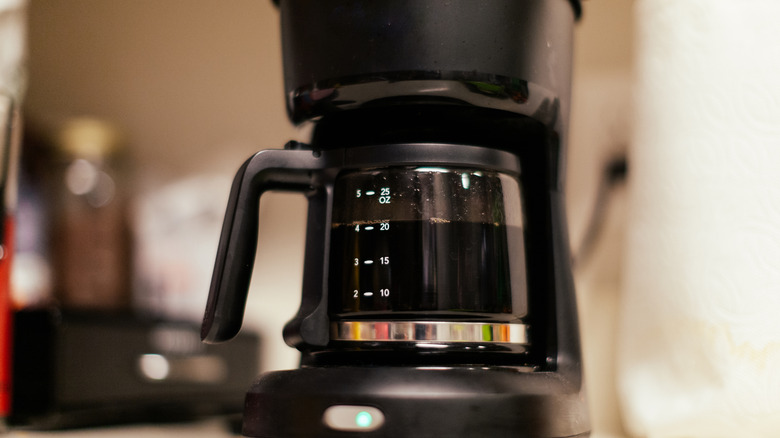
Before you rush into spending hard-earned dollars on a new coffee maker, you might want to see if you can extend your machine's lifespan. For instance, descaling can keep buildup from forming in your machine, so if you haven't been doing that regularly — every one to three months is ideal — it might be the problem. To descale, run a vinegar and water mixture through the machine, or buy a descaler like Bastion Descaling Powder Solution.
It's also a good idea to give the machine's removable parts a good cleaning — you should deep clean your coffee maker every three to six months. Wash the brew basket, drip tray, and carafe frequently to get rid of residue and bacteria. If you have a higher-end machine, keep in mind that many of them offer repair service. For example, Jura machines, while pricey, may have the option of being serviced within a couple hours, something you probably can't get with your average coffee pot. That said, it's always worth looking into what repairs may be available for your particular coffee machine, because it's likely to be cheaper than buying a new one. But if you need a new coffee maker yet don't like being wasteful, there are also surprising ways you probably never thought to use your old coffee pot — just get creative!