

One Temperature Misstep Can Ruin Chinese Restaurant-Style Stir-Fries
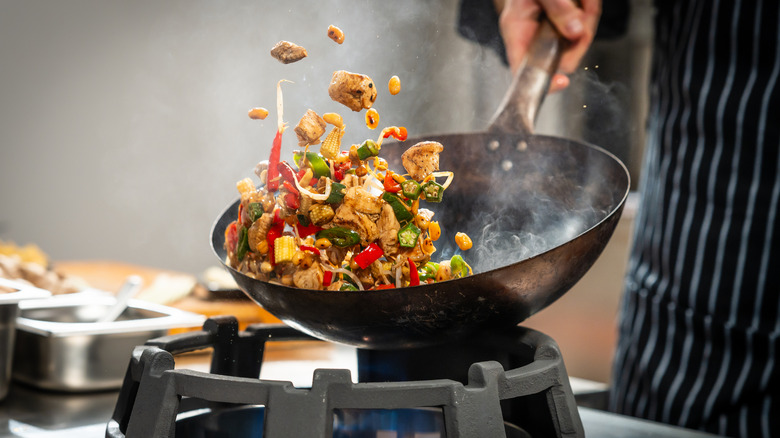
If you've been struggling with your stir-fries, the problem could come down to temperature. The truth is, a restaurant-quality stir fry lives or dies by heat. And the biggest culprit for messing up the temperature is a move many people make automatically: adding ingredients to the pan straight from the refrigerator. What seems like a very second nature move is a stir-fry killer. Cold food, when dropped into a wok, lowers the pan's cooking temperature almost instantly, which steams your food instead of crisping it.
Before you add anything to your pan or wok, you need to heat it properly. It should be hot enough that a drop of water on its surface beads and sizzles instead of dissolving — a phenomenon called the Leidenfrost Effect. When a surface is really hot like this, ingredients that hit it will have their all their water content quickly evaporated, leading to crispy vegetables and brown meat. But cold ingredients mess that up by lowering the overall temperature and allowing excess moisture to collect in the pan, which explains why you end up with soggy broccoli or protein without color.
If you ever wondered why Chinese restaurant stir-fries are always better than yours, it's because restaurant kitchens often use burners that are stronger than what might be found in a typical home kitchen. It can be hard for home cooks to recreate that level of heat, but you can control the temperature of the food you add to the pan by letting sliced vegetables, tofu, meat, and fish come to room temperature before cooking.
Warm ingredients for better texture and flavor
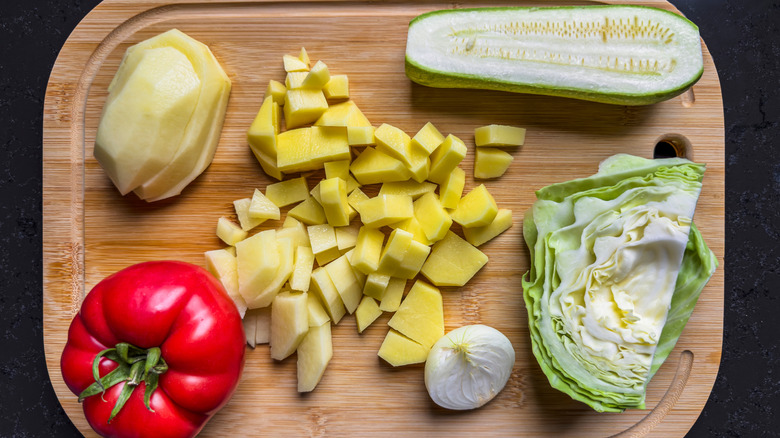
While temperature is really important for the right texture, it also affects more than just the crispiness. If the temperature of the pan becomes too low, it will also negatively impact how things brown and develop flavor. Furthermore, in addition to not throwing cold things into a hot pan, there are some extra steps you can take to ensure things fry off properly.
Firstly, you don't want the pan or wok to be overcrowded as that traps moisture and causes steaming. Many restaurants or chefs will actually work in small batches instead, frying by ingredient and starting with the ones that take the longest, as this ensures everything gets adequate contact with the cooking surface. Especially when you're frying high moisture ingredients, like making a shrimp and eggplant stir fry, these can quickly become watery if everything enters the wok cold and at the same time.
The same rule applies to adding the sauce and seasoning too. If you start throwing in things like soy sauce, sesame oil, and lime juice too early, that can also also cool the pan and create excess moisture and steam which prevents everything from properly searing. Make sure your veggies and protein are nice and crispy before you add in any extra colder elements. This is the most important step to getting that crisp and glossy finish you normally associate with a stir fry from a Chinese restaurant.