

Here's The Average Lifespan Of A Quality Set Of Steak Knives
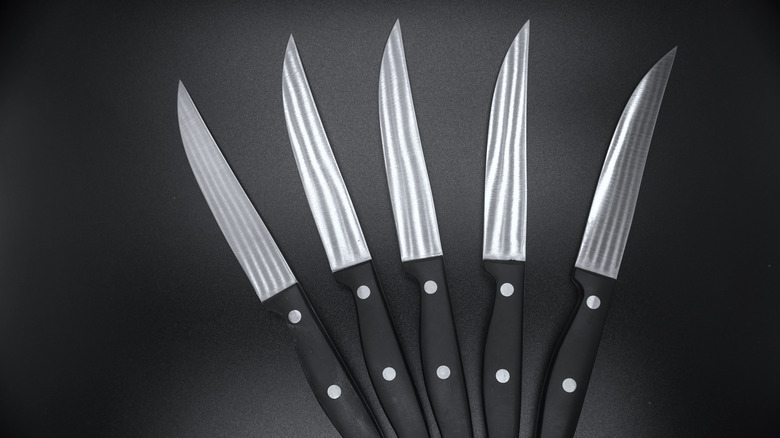
Once you actually buy a quality set of steak knives, you'll realize just how useful they can be. The sharp knives offer superior precision and control, gliding smoothly through all kinds of meats, and they're very dependable and sturdy. But how long do they actually last? If you take good care of them, a quality knife set can be your ride or die for up to three decades — sometimes even more. So, they can last as long as a high-quality chef's knife if you take care of them properly, and probably even longer as they don't get used as much. Going for serrated steak knives ensures better longevity because their teeth pierce through the meat without the whole knife having to do so, which helps conserve their gullets. But, side note: This isn't to say that non-serrated ones don't have their appeal; they're perfect if you need a smoother slice.
Without proper maintenance, however, the quality and even the type of knife won't matter. To ensure they last long like a family heirloom, make sure you're taking care of them properly. Sharpening, for one, should be observed. Not only does it help with longevity, it also promotes safety. You can definitely do it at home at least once a year and sharpen a knife with a whetstone for finely honed precision, but serrated types can be tricky, so it might be best to leave that to the professionals. Handwashing is much recommended, as it's more gentle than a dishwasher. Proper storage is also important; something like a magnetic knife strip is safer and ensures the knives don't constantly bump into objects.
Signs your steak knives need to be replaced
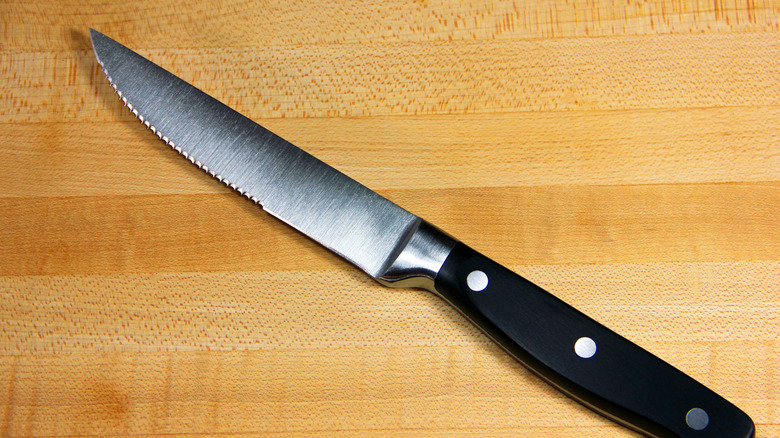
Say, you observed every proper maintenance tip you've seen online, and even remembered by heart how a chef keeps their knives in top shape. But, your steak knives still aren't performing as they did when you first got them. While quality steak knives can last for years, sometimes one can reach its end of lease earlier — it's just the way it is sometimes. A wobbly handle is a clear sign that you have to buy another one; it's just an accident waiting to happen. Additionally, once it exhibits a concerning amount of rust — especially if it stays stubborn even after cleaning — it can cause the blade to become dull. But it also has safety red flags, too, as rust can transfer to your meals.
Make sure to inspect your blade from time to time. Once it develops cracks that can't be missed, and remains so even after being honed by an expert, throw it out as soon as possible because it might break the next time you use it. A dull steak knife is another sign. You can and should sharpen it, but if it stays dull after doing so, it's time to say goodbye. No amount of sharpening can revive the blade.
But sometimes, even if your steak knives aren't exhibiting signs that they need to be replaced — the urge to find a better-performing blade is a good enough reason. There might be newer ones in the market with an even more exceptional performance, and an upgrade is never a bad thing.