

Does Toasting Bread Really Produce Carcinogens?

Sweet, nutty, and wonderfully crisp, toasted bread is a staple in every U.S. kitchen. Whether turned into the best PB&J sandwich of your life, topped with Greek yogurt and fresh berries, or enjoyed on its own, it's the ultimate comfort food. True fans even know the exact number of seconds it takes to perfectly toast a piece of bread. However, Swedish researchers stunned the world in 2002 when they revealed that toasted bread comes with a hidden risk. The reason was a carcinogenic chemical known as acrylamide.
Acrylamide is created through a chemical process called the Maillard reaction (this is the exact same reaction that gives toast its signature golden-brown color and malty flavor). It's formed once starchy foods are exposed to high cooking temperatures above 250 degrees Fahrenheit. Nigel Halford, PhD, a professor at the Shanghai Academy of Agricultural Sciences, said in an exclusive conversation with Chowhound that this is a complex, multistep reaction between simple sugars such as glucose, fructose, and maltose, and free amino acids. "However, when one particular amino acid, asparagine, participates in the later stages of the reaction, acrylamide is formed," Halford told Chowhound.
But acrylamide is not only limited to toast. "Acrylamide is also present in untoasted bread, biscuits, breakfast cereals, and snack products, as well as coffee and fried potato products (chips, crisps, and roast potatoes)," Halford continued. Black table olives can also contain different amounts of acrylamide. Even prune juice makes the list — small amounts of acrylamide can form as plums are dried into prunes.
You might consider cooking toast to a lighter golden-brown color
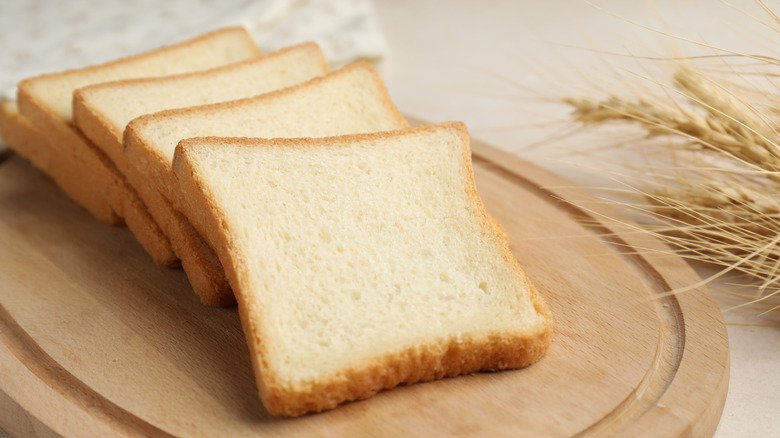
The longer bread is toasted or the darker it becomes, the more acrylamide it is likely to contain. And according to Nigel Halford, scientists have definitely linked the substance to cancer in rodents. Still, whether it is actually dangerous to humans remains a matter of debate. "The UN/WHO Joint Expert Committee on Food Additives (JECFA) has described the levels in food as a 'concern' and has advised that levels should be reduced," Halford emphasized. He added that the EU's Contaminants in the Food Chain (CONTAM) Panel has adopted the exact same stance.
When ingested, acrylamide is converted into an active epoxide called glycidamide. Glycidamide is believed to be the metabolite responsible for acrylamide's carcinogenic effects, because it binds to cellular DNA. Once that happens, this substance can alter the genetic material through a process called adduct formation. "For me, it is sensible that levels in food are reduced as much as possible: the term ALARA (as low as reasonably achievable) is often used by industry," the professor continued.
When asked for practical ways to reduce exposure to acrylamide, Halford highlighted that toast can still be part of a healthy diet. "Firstly, there are lots of health benefits associated particularly with wholegrain bread," he explained. However, he noted that avoiding burning or excessive browning can make a massive difference. "As far as acrylamide goes, cooking foods like toast or roast potatoes to a light rather than dark brown color is a sensible action that people can take in the home," he pointed out.