

Grow The Healthiest Basil With These 14 Tips
We may receive a commission on purchases made from links.
No summery Italian dish is complete without an obligatory basil garnish. This slightly peppery and anisey herb is the key ingredient in a refreshing Caprese salad, alongside plump tomatoes and milky mozzarella, and is a must-have in pesto, a beloved Italian sauce. Salads, spreads, and more can all be made tastier when you bring basil into the picture. However, there is one caveat: Basil is wicked expensive if you buy it from the store, especially in large quantities.
If you're looking to save money on pesto (or really any recipe that calls for the herb), we'd recommend you grow your own. Besides saving a couple of bucks on store-bought basil (which, let's face it, doesn't always stay fresh for long, nor does it have the same quality as what you can grow yourself), it'll also give you an endless supply of the herb ... provided you know how to grow it correctly.
To get the ins and outs of growing basil, we spoke to two experts: Nicole Johnsey Burke, author and founder of Gardenary, and Tammy Sons, founder and CEO of TN Nursery. They shared not only their best advice for plentiful basil harvests all season long, but also how to read your plant to better meet its needs and keep it healthy.
1. Don't plant your basil too early in the season
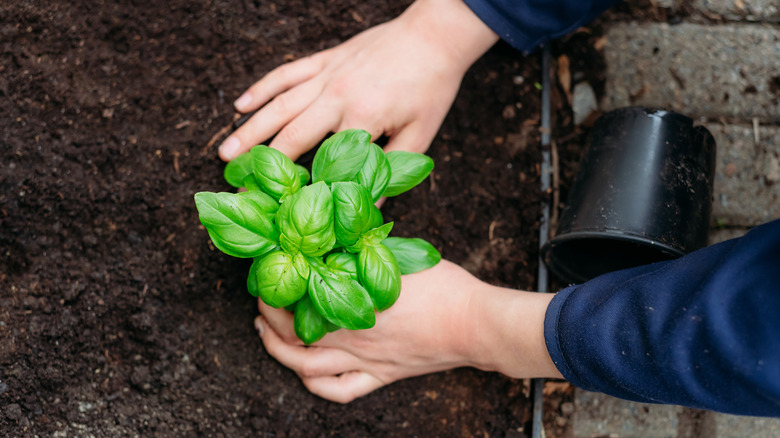
When the weather warms up and stores start stocking mulch, gardening gloves, and seeds, you may feel inclined to start your gardening season ASAP. However, planting tender plants, like basil, too early is one of the biggest mistakes you can make with the herb.
"Basil is a true heat lover," says Gardenary's Nicole Johnsey Burke. "Many gardeners are eager to start growing basil as soon as possible, but cold temperatures stress these plants fast." She explains that many gardeners may be surprised by how cold-sensitive the herb actually is. While some plants thrive in the cold, including lettuce, chard, and green peas, basil is not a fan, meaning that leaving it outside on chilly nights can spell disaster.
Burke says that basil prefers both soil and air temperatures consistently above 50 degrees F, though its sweet spot is between 70 and 90 degrees F. "A single night below 50 can cause blackening and damage. I always wait until nighttime temperatures are reliably above 55 before transplanting basil outdoors," she says. If you are eager to start your plants, you can always shelter them indoors at night, then move them outside to catch the sunshine during the day.
2. If you're a beginner, stick to Genovese or sweet basil
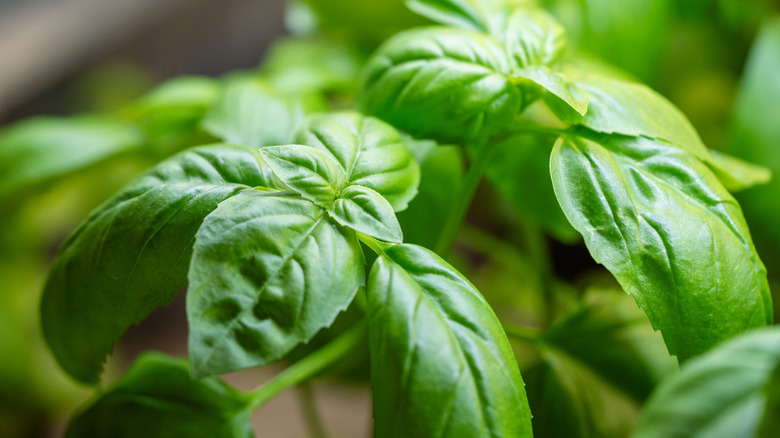
Okay, so you want to grow basil in your garden this year. But what kind of basil? Well, aside from fresh and dried, the latter of which you can find in the spice aisle at the store, there are many varieties to choose from. If you've eaten pesto, you've likely eaten Genovese basil, a sweet variety known for its clove-y undertones that are equal parts spicy and complex. However, if you have ordered a bowl of phở, you may have been served Thai basil, which has a very strong and almost citrusy flavor. There's also Greek basil, lemon basil, and other varieties.
As with any plant, some types of basil are easier to cultivate at home, especially if you're a beginner. Both of our experts recommended starting with sweet and/or Genovese basil. "Sweet basil is the classic for a reason. It's reliable, widely available, and forgiving compared to some of the more temperamental varieties," says Nicole Johnsey Burke. She likens Genovese basil to its "close cousin" and mentions its ties to Italian cooking. After you become a more confident gardener, you can explore beyond these two varieties. "Once you've got a feel for basil's needs, Thai basil and lemon basil are fun to experiment with," says Burke.
3. Consider growing your herbs hydroponically rather than using soil
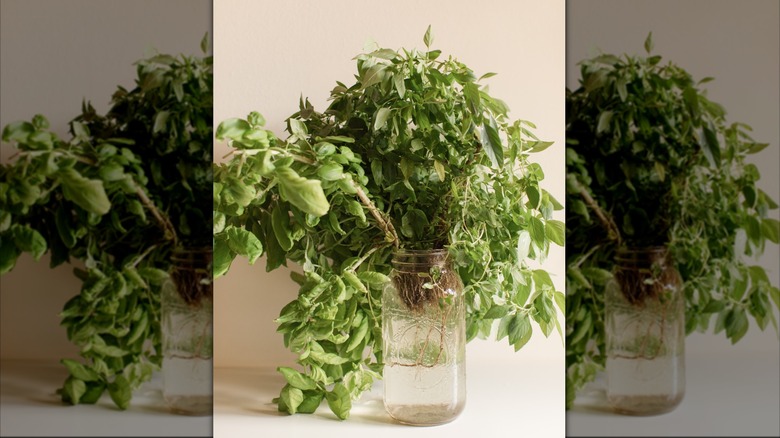
Growing basil hydroponically is far from as technical as it seems. The name basically means the plant is suspended in water rather than a traditional growing media — like soil. It eliminates the risk of soil-borne pathogens and allows you to grow your plant year-round, since you are often supplying artificial light and nutrients to support its growth. Many people use AeroGardens for this, as you can add fertilizer and start seeds in the little containers they come with, allowing you to keep an eye on them as they sprout and grow. Plus, depending on the size of your AeroGarden, you can also grow multiple types of herbs , like parsley or thyme, at the same time.
Tammy Sons of TN Nursery highlighted some of the benefits of hydroponically growing basil. "You see, overwatering is the cardinal sin with basil, particularly if you are using a pot that doesn't have adequate drainage. Going hydroponic takes the guesswork out of that sort of thing," she says. "With good light and some warmth, you will be rewarded with quick, flavorful growth."
4. Weigh your growing options when planting
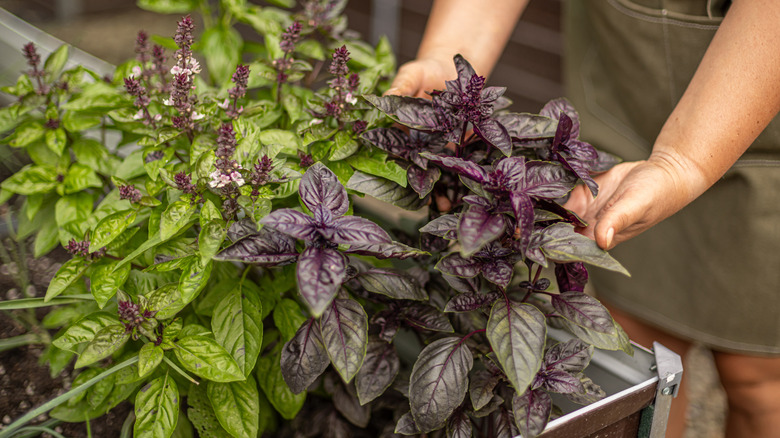
If growing basil hydroponically is out of the question (it can be an expensive setup for just a few plants, if we're being honest), you might have to settle for one of three settings to grow your basil: in a garden, in a pot, or in raised beds. Each of them has its own perks and drawbacks, so you'll need to weigh them and make a decision as to what to do.
"All three can work, but I definitely prefer basil in raised beds. The soil drains well, warms up faster in spring, and basil absolutely thrives in that environment," says Nicole Johnsey Burke. Unlike sunken bed gardens, raised beds can ensure proper drainage and are at an accessible height for gardening, making them a preferred spot for many (you can even DIY them). However, some folks may only have limited space available to grow herbs like basil, which is where container gardening can be valuable. Pick the right method that works for your space.
5. Choose a large pot
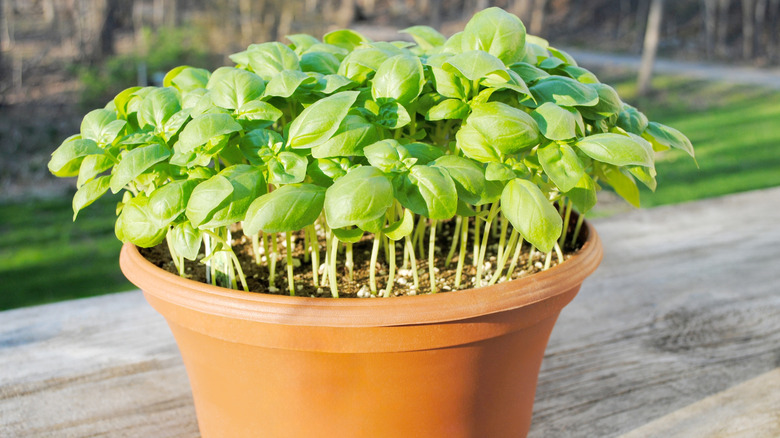
Basil is a bit of a prima donna. It likes things hot, and it is claustrophobic. As such, planting your seeds in a large enough pot is key to ensuring healthy basil. There are many reasons why giving your basil plant more than enough space is a good idea. Nicole Johnsey Burke explains that basil has a very large root system — which you may not be able to tell from the leafy top of the plant — and it prefers consistent moisture. When you plant your basil in a smaller container, it has to compete with the rest of its root system for enough moisture, nutrients, and other growth-limiting compounds.
"My best tip when growing basil in containers is to go bigger than you think you need," she says. "A [6-inch] pot might look cute, but your basil will be root-bound and stressed before summer even gets going." Instead, she recommends buying a 10- or 12-inch pot to plant the basil in and also suggests adding drainage holes to the bottom. We also recommend adding a plate underneath your pot, especially if you are keeping your plant inside, to prevent spills.
6. Give it adequate light
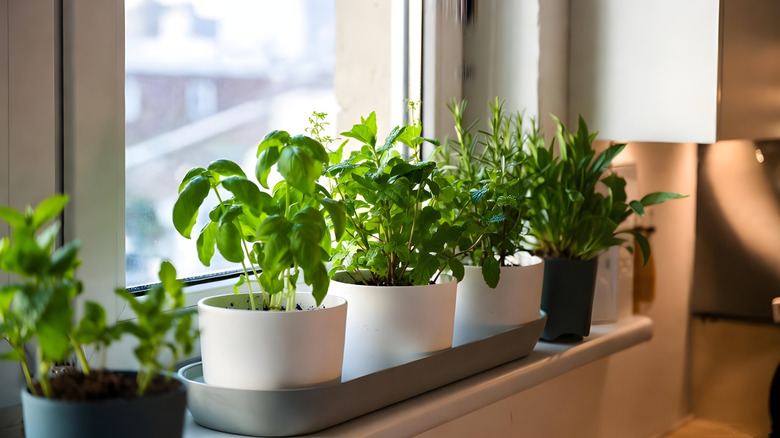
Basil likes what it likes, and if you don't follow its very particular growing preferences, you might not have anything for the crispy Thai basil beef you've been pining to make for dinner. We know that it enjoys hot weather, but it also has a penchant for sunlight.
"If you are growing indoors, put it under some decent grow lights or right next to a south-facing window where it can get its [six to eight] hours of sun," says Tammy Sons. However, even that might not be enough. "A sunny kitchen windowsill or glass patio door can work, but honestly? Most indoor basil is light-starved," says Nicole Johnsey Burke. "This is not a shade-tolerant herb." Instead, Burke recommends using a small supplemental light to help the plant grow or placing it outside during the day if you can — just make sure to bring it inside on those chilly nights.
7. Prioritize proper drainage
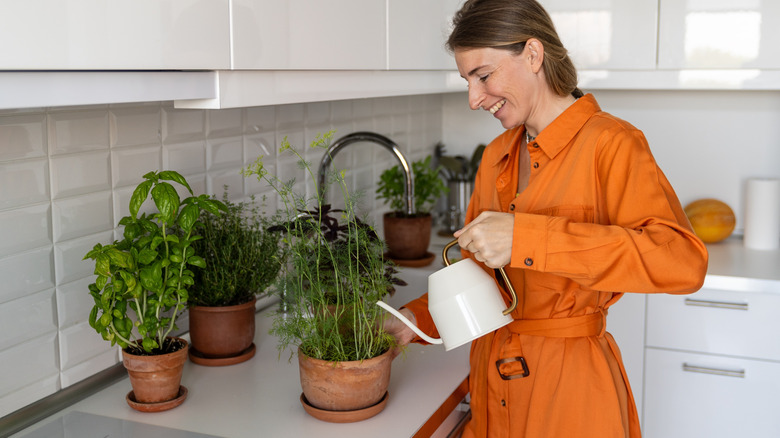
One of the most important things to consider when planting anything is drainage. "Basil doesn't tolerate staying overly wet, no matter where you plant it," says Nicole Johnsey Burke. Tammy Sons agrees. "You see, overwatering is the cardinal sin with basil, particularly if you are using a pot that doesn't have adequate drainage," she says. When you water basil too much, you are essentially suffocating it, as its root system is how it absorbs oxygen. Extra water can also put the roots at risk of mold or make them more susceptible to fungus or pathogens.
Besides drilling drainage holes in your pots, you should also consider the soil you use, whether you're using a raised bed, a pot, or a conventional garden. "Loose, well-draining, organically rich soil is what basil loves," says Burke. "If you're filling a container, use a high-quality potting mix rather than garden soil, which can compact and suffocate roots in pots." How often you need to water your plant depends on the medium and where it's located, so be sure to feel your soil before adding extra water.
8. Consider companion planting
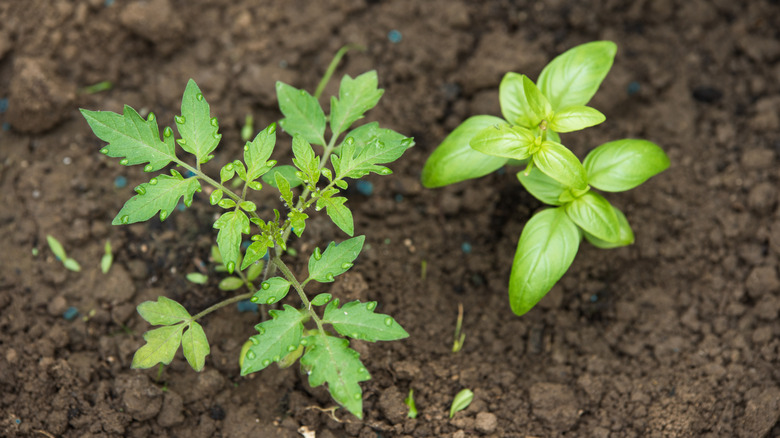
Teamwork makes the dream work, right? While there are certain plants you should never plant next to basil, it turns out that planting basil alongside good company, such as garlic or tomatoes, can benefit both plants. "Basil and tomatoes are the classic pairing, and I believe in it completely. I have watched basil help deter pests around my tomato plants season after season," says Nicole Johnsey Burke. Basil deters pests from the tomatoes and can even improve the fruit's flavor. In turn, the tomatoes' height helps shield the basil from intense sunlight and moisture loss. You don't have to plant them right next to each other to reap their benefits; even a foot of distance between the two will still allow for a mutually beneficial relationship.
That's not the only pairing worth trying, either. "Peppers are another great neighbor. Basil does well near most vegetables, and it provides natural pest control benefits," says Burke. Plus, when you companion plant, you have all of the ingredients you need for a tasty salad ready to go.
9. Use the leaves as a proxy for plant health
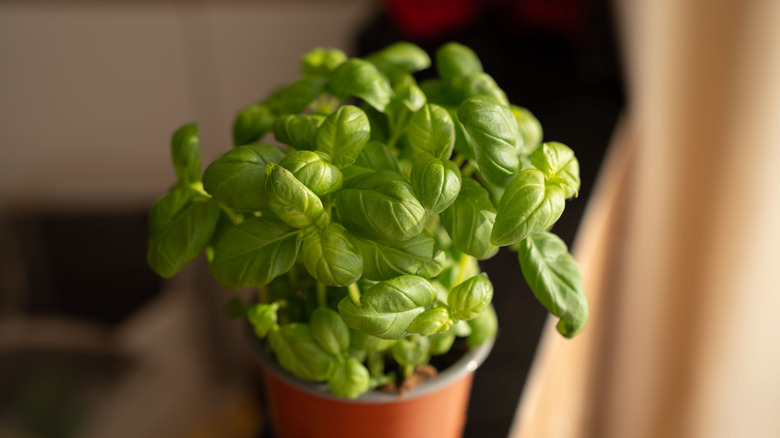
We wish plants could tell us what's wrong or when they're feeling under the weather. Oh wait, they can — just look at their leaves. "Yellowing leaves, especially on the lower part of the plant, are usually the first signal that something is wrong and your plant is struggling," says Nicole Johnsey Burke. Of course, you'll need to get a little more specific and narrow this down, but this is a good proxy to look out for if you're wondering how your plant is feeling. Also, be on the lookout for signs of pest damage or dark spots, which can indicate an infection, sunburn, or cold shock.
There are other ways to tell that your plant might need a different living arrangement, per Burke. These include wilting, which can indicate that either the plant's roots are compacted or rotted, and leggy stems, which happen as the plant tries to grow closer to the light. You might be able to repot the plant or move it to a different location, which are relatively easy remedies — provided that you catch them early.
10. Apply an organic fertilizer as needed
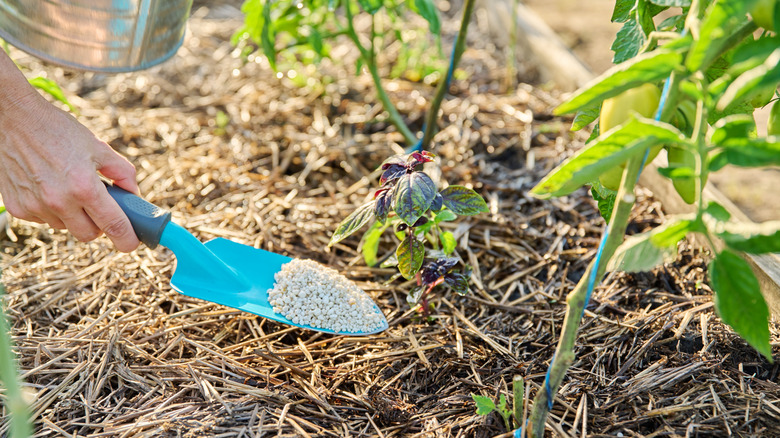
For all its peculiarities, basil is relatively self-sufficient in the nutrient department and may not require much fertilizer. "If your soil is rich with compost from the start, basil does not need much additional feeding," says Nicole Johnsey Burke. She does note that basil grown in a pot may benefit from adding organic fertilizer every few weeks, as pots may not retain nutrients as well as beds. "I always recommend organic options. A seaweed or fish emulsion fertilizer works beautifully for herbs," she suggests.
She also offered suggestions for fertilizers to avoid. "Avoid heavy nitrogen fertilizers, which push leafy growth at the expense of flavor. The goal is a balanced, healthy plant, not the biggest plant on the block," she says. Moreover, some potting mixes already contain fertilizer, so be sure to check before planting to ensure you aren't giving your basil too much of a good thing.
11. Keep an eye out for pests
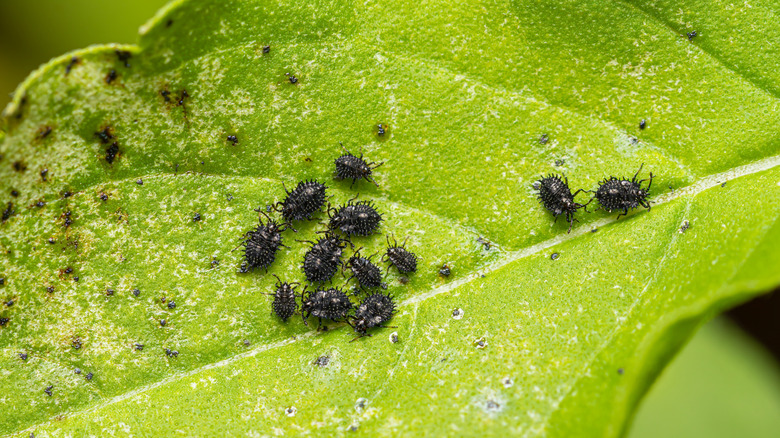
You're not the only thing looking to eat basil leaves. Pests, bugs, and other critters can also chow down on your leaves, diminishing the harvest and stressing your plant. Nicole Johnsey Burke outlined some of the most popular pests for this herb. "Aphids and Japanese beetles are the most common culprits. I have also dealt with spider mites during very hot and dry spells," she said. Aphids are very small and suck the sap right out of the leaves. While a few of them may not be anything to worry about, their population can quickly explode and leave you with an infestation of monumental proportions. Japanese beetles, meanwhile, are one of the most common basil pests. They tend to eat the rest of the leaf and leave behind the veins, munching on your plants all summer long. Slugs and snails can also be intrusive garden pests — though they can be removed with a beer trap, which will keep them out of your garden for good.
Johnsey Burke also offered potential remedies for these pests. "My first line of defense is always a strong stream of water to knock pests off the plant and remove heavily affected areas," she says, noting that this trick works well for aphids. However, this may not do it for some heavily infested plants. "A large infestation takes more effort, and you might need to escalate to insecticidal soap," she says.
12. Pinch leaves off early and often
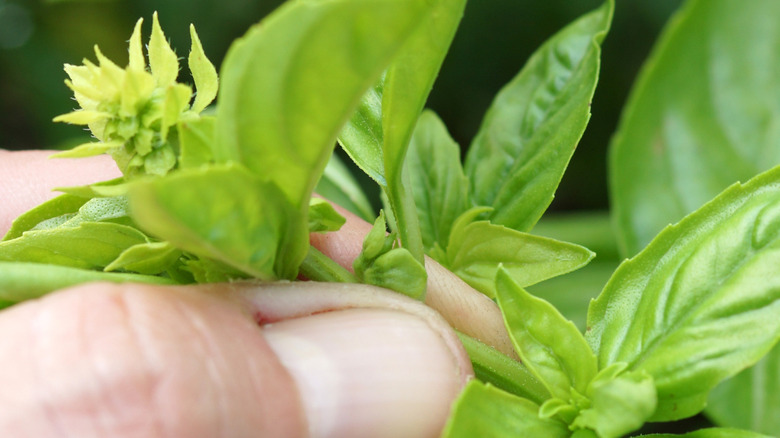
Pruning is one of the most important things that you can do for plant health — even if it seems counterintuitive. After all, you want your basil plant to grow and give you plenty of leaves, so why would you stifle it by pinching off certain parts?
"This is the one thing I wish every basil grower knew from day one," says Nicole Johnsey Burke. "When you pinch basil, you are essentially telling the plant to branch out and produce more leaves instead of rushing toward flowering." She explains that when you pinch off the leaves growing directly above a leaf node (where the leaves grow from), you help two more stems grow, effectively doubling your basil leaf harvest.
Pinching your plant is not a one-and-done deal, either. Burke cautions against doing it only after the plant appears overgrown. Rather, it's important to pinch and harvest the leaves before the plant has a chance to flower. This is because the basil plant will divert its energy from growing large leaves to growing flowers (meaning smaller leaves), which can make the few remaining leaves bitter. "It's not the end of the world, and you can still use the flowers in cooking and salads, but for the best-tasting basil throughout the season, you want to delay flowering as long as possible," she says.
13. Harvest your plant from the top down
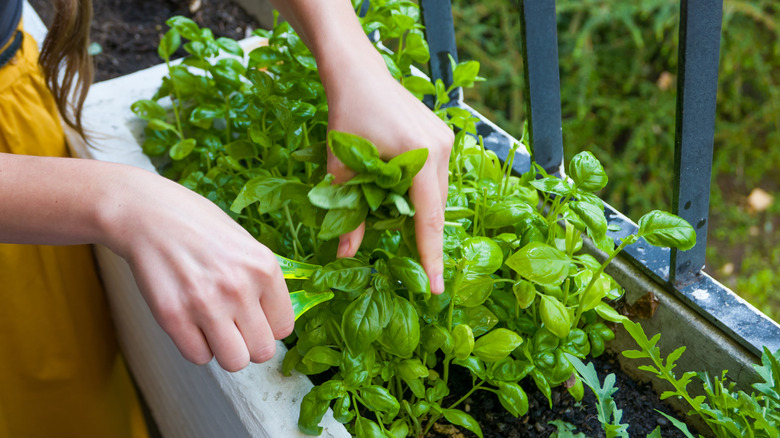
After you've gone through all the trouble of rearing and waiting for your plant to bear viable leaves, it's time to enjoy the fruits (er, leaves) of your labor. However, there is a right way and a wrong way to harvest fresh basil. Nicole Johnsey Burke recommends harvesting only from the top of the plant, cutting above a set of leaves. "The more you harvest from the top, the more the plant branches and produces new growth," she says. She says you should avoid harvesting basil from the bottom of the plant and avoid taking more than a third of the leaves at a time. The leaves are what allow the plant to make food via photosynthesis, so you can end up stunting its growth if you overharvest it.
Like pinching the plant back, you'll want to do this early and often. "I tell my students to think of harvesting basil as pruning, because it is. You are shaping the plant with every cut. Frequent, light harvesting throughout the season keeps basil bushy and more productive," Burke says. That said, your strategy may change depending on the season. Basil is an annual, and if you plant it outside, the flavor will decline as the nights get colder. So, later in the season, you may want to pinch less and harvest more to maximize your plant's yield before it's too late.
14. Store your basil leaves correctly once harvested
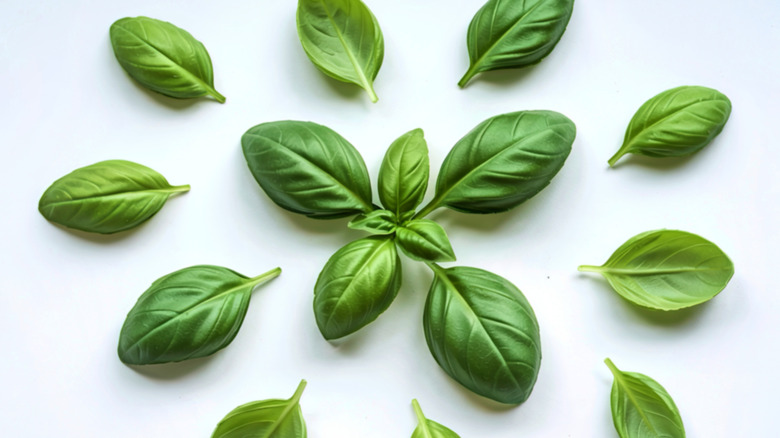
Once you have harvested the basil from your plant, make sure you store it properly so it doesn't mold or go bad. "Do not refrigerate fresh basil. Cold temperatures can turn it black," says Nicole Johnsey Burke. Instead, she recommends treating your basil sprigs like you would fresh-cut flowers: Drop them into a glass of water on a countertop and cover them with a plastic bag. She says this will keep them fresh for a few weeks.
That said, you can also tailor your storage method based on how you plan to use the leaves. "For longer storage, I love making a big batch of basil oil or pesto and freezing it in ice cube trays," she says. You can drop a couple of these cubes into a cold glass of lemonade for a herby twist, or toss them into a soup as you're preparing it for a bright, summery blast of flavor. You can also freeze whole leaves by blanching and drying them; use wax or parchment paper between the layers to prevent them from sticking.