

Cook With Stainless Steel Like A Pro Using This Easy Testing Tip
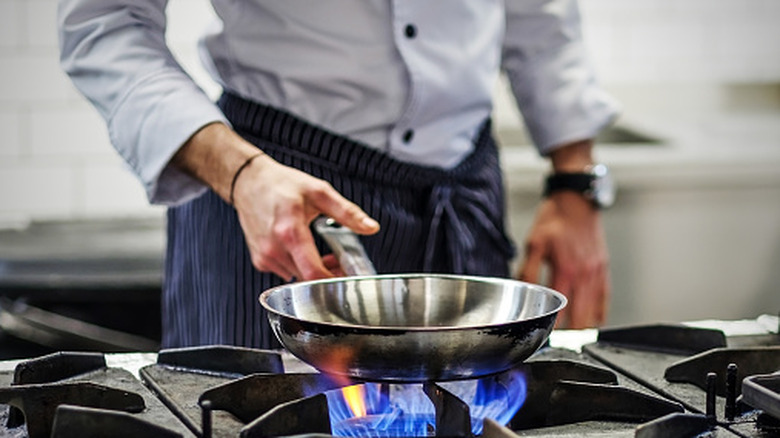
Whether you cook daily or only turn on your oven for special occasions, every home cook should have a set of stainless steel pans. They're durable, usually dishwasher-friendly, and much easier to care for than other kinds of cookware, such as cast iron, copper, and enamel. Unlike these materials, stainless steel doesn't need to be seasoned or polished — you can simply cook, wash, dry, and repeat for years to come. Additionally, if your set didn't come with a nonstick pan or you're not into Teflon, it's also fairly easy to turn your stainless steel pan nonstick with one simple trick.
A go-to stainless steel technique involves warming your pan over medium heat and flicking a drop of water into the pan every few minutes until the drop coalesces into a perfect little dome that scuttles across the heated surface before evaporating. This is called the Leidenfrost effect, which indicates your pan is hot enough to cook with. It means it's ready to transform the moisture inside your food into a thin vapor barrier that allows it to glide over the inside of the pan.
This preheating process also gives the metal time to warm and expand, closing any microscopic fissures in the stainless steel's grain. Starting food in a cold pan would cause the surface of the food to be pulled into those cracks instead. That's why you want to hear your food sizzle when it hits the pan — it's an audible indicator that your cookware is at the right temperature to sear your food without it either sticking or burning.
Achieving the Leidenfrost effect like a pro
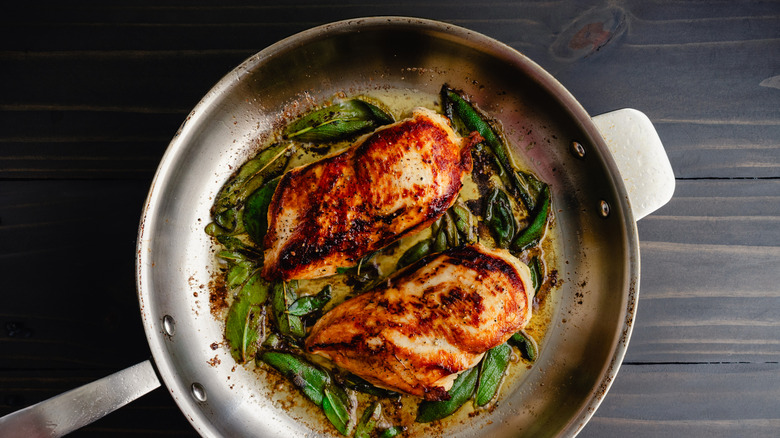
The key to cooking with stainless steel properly is patience and keen observation. As mentioned, you're waiting for water dripped into the pan to immediately gather into a perfect little dome that skates across the surface. Immediate evaporation means the pan is too cold to be nonstick, while droplets that separate and scatter sizzling trails behind them indicate the pan is too hot. In the first case, you should simply wait a few seconds and test again. In the second case, you should reduce the heat a little and wait a minute or so before retesting. At this point, you can add your cooking fat, like butter or olive oil, if you choose to use any. You don't technically have to use fat with the Leidenfrost effect, but it does add flavor to your food and add more glide to the pan.
Though proper heating is the best way to ensure your food cooks properly without sticking, you can also wipe down the inside of your cold pan with oil or another fat if you're in a hurry or are having trouble hitting that sweet spot. The oil will also form a barrier for your food to sit on, but as it evaporates, your food may start to stick. If this happens, add a tiny splash of liquid to your pan and cover briefly to encourage steam production. The steam will help soften and lift browned food from the bottom of the pan.