

How Long It Actually Takes For Instant Ramen To Expire
It helps to keep a stash of instant ramen in your pantry as an emergency snack because it has a dependable shelf life. But, of course, it's not completely indestructible. Chowhound exclusively spoke with Dr. Kezia Joy, registered dietitian nutritionist and medical advisor with Welzo, who told us how long it takes for it to expire.
First, she talked about the best-by dates and how they aren't a measurement of whether or not it's still good to consume. "Best-by dates on most instant ramen products indicate how long a package of instant ramen will be at its peak quality," she said. "They do not provide specific safety expiration dates. ... As long as the package remains unopened, even after the printed date, many brands state that their product should remain safe to eat and usable as long as it has been stored correctly and maintains a seal."
Even though instant ramen is shelf-stable, that doesn't mean it doesn't expire, so make sure it's properly stored. There are many telltale signs that instant ramen is no longer safe to consume; knowing them ensures your comfort food won't give you any issues, and helps you avoid making everyday food safety mistakes. To check if it's still safe to consume, shift your focus to these context clues and how the packaging looks rather than the date.
Signs instant ramen should be thrown out
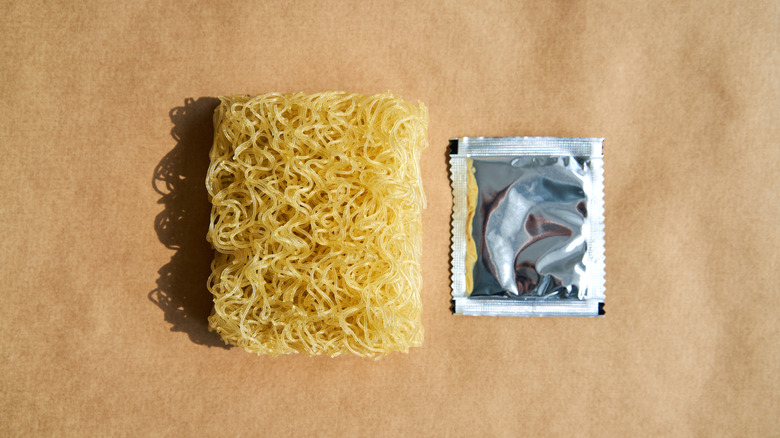
Short answer: If instant ramen is starting to look and smell weird, throw it out. Long answer: "Consumers should dispose of their instant ramen if the packaging is swollen, torn, wet, or has signs of insect or mold infestation," Dr. Kezia Joy said.
Bloated packaging usually means one of two things: The internal air pressure is higher than the air pressure outside the package (which is harmless), or bacteria have permeated inside (which makes it unsafe to consume). Bloating is a common occurrence in vacuum-sealed containers, but instant ramen isn't totally out of the woods. Even milk cartons start to look bloated when they're already spoiled.
"Any unusual odors, oily residue, or clumping (solidified) noodles or seasoning pouches could indicate that the product is spoiled," Dr. Joy added. If you think your instant ramen is suspicious, you might be right — it's always better to throw food away than risk getting some type of food poisoning. As a final word of advice, Dr. Joy also shared that "All shelf-stable products should be inspected before consumption, especially those with an expiration date far in excess of what was printed on the packaging."