

7 Vintage Grocery Store Features Boomers Remember Fondly
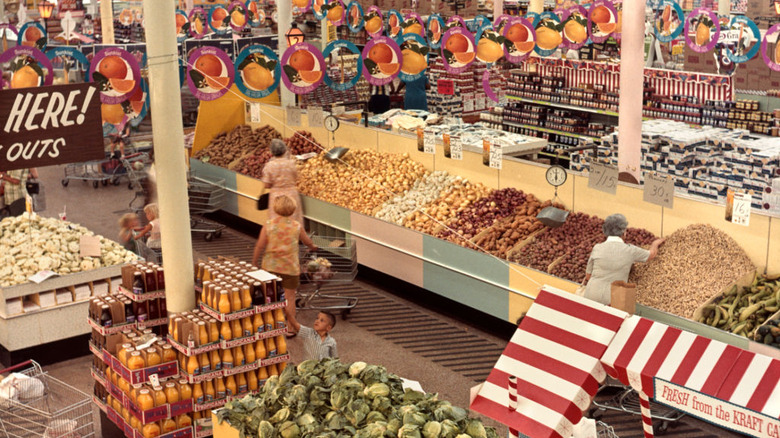
When you walk into a grocery store today, it's perfectly acceptable to move through your entire experience without interacting with another human. From using apps to help you save money on groceries to using a self-checkout (and following proper grocery store self-checkout etiquette rules, of course), modern grocery shopping can be a pretty impersonal, streamlined, in-and-out experience. This wasn't always the case, however — grocery shopping in the past looked far different than it does today.
For those of us who weren't there, it's tough to imagine what grocery stores were like back in the 1940s, '50s, and '60s. Barcodes had yet to be used in stores, electronic payment didn't exist, and self-checkout wasn't even an idea. Heading out for a weekly shopping trip back then was a far cry from the app-driven, digitized experience we get in modern grocery stores, and there are quite a few aspects of shopping from back in the day that boomers remember fondly. Let's take a look at the memories that boomers reminisce about when they remember grocery trips.
Prices were typed into the cash register by hand
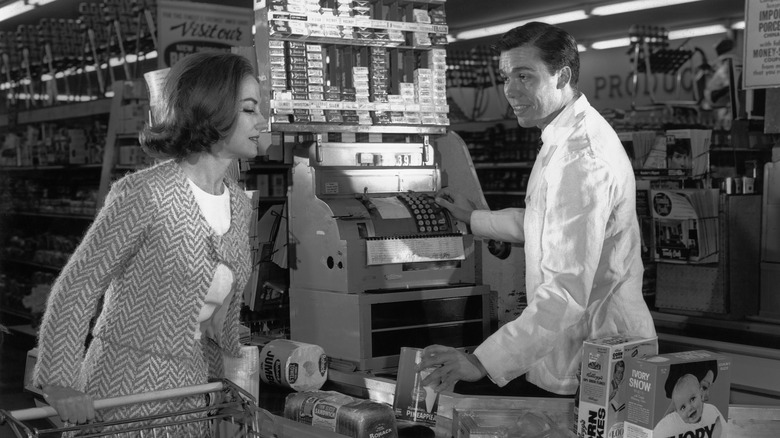
It's tough to imagine food items in a grocery store without a barcode (especially at Aldi, where the bar codes are seriously big), but they weren't really a thing for quite a while. Barcodes were invented in the 1940s, but weren't used in grocery stores until the '70s. Boomers remember cashiers looking at price tags on items and typing prices into the cash register, creating a very slow-paced experience.
Cash or (sometimes) check were the only accepted forms of payment
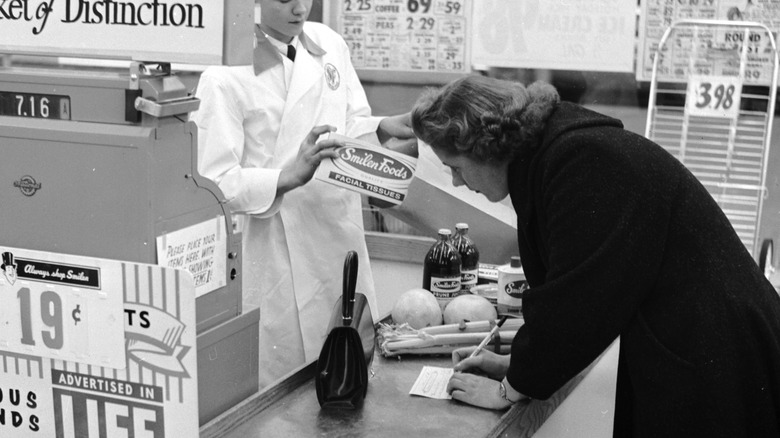
Boomers remember the days of bringing cash or writing out a check at the grocery store, when paying with a debit or credit card simply wasn't an option. Some say they first remember seeing the option of using a credit card at the grocery store in the 1970s, while others say it didn't become an option in their area until the '90s.
Paper bags were the only option to carry your groceries home
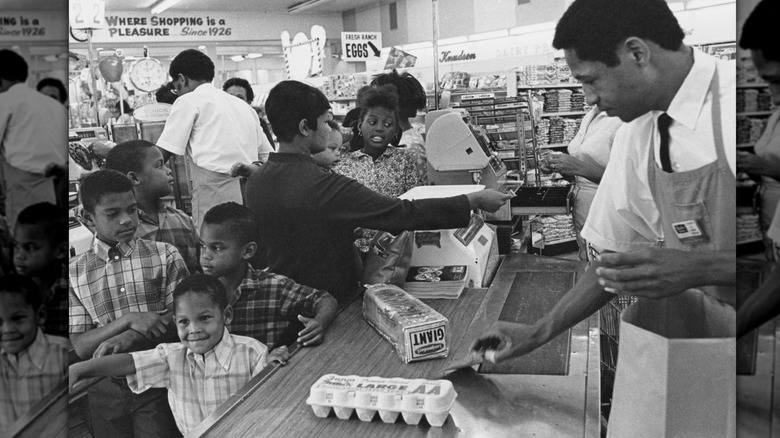
In today's grocery stores, cashiers often ask if you'd prefer paper or plastic bags. However, back in the day, paper bags were typically the only option. Europe hopped on the plastic bag trend in the mid-'60s, but the switch didn't start to happen in the United States until the end of the '70s. It's strange to imagine, but some boomers even remember plastic bags being touted as a more environmentally friendly option than paper.
Milk came in glass bottles or paper cartons
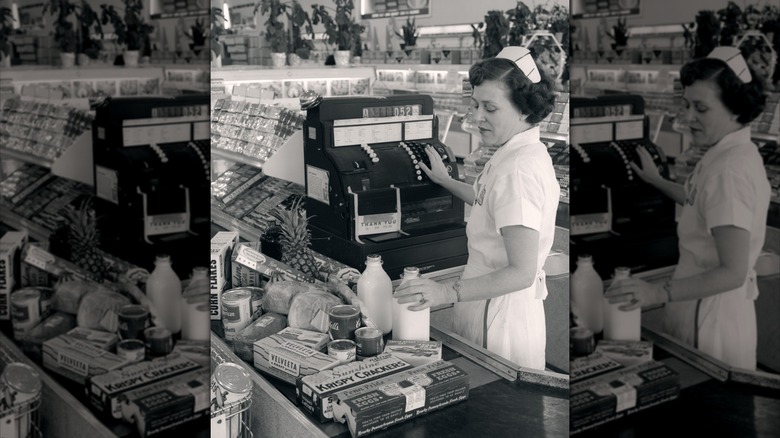
Boomers saw the evolution of milk packaging throughout the 1960s. Glass bottles were replaced by wax-coated paper milk cartons in the late '40s; and in 1964, plastic milk jugs were introduced, which began to take the place of both glass bottles and paper cartons.
S&H Green Stamps were treasured shopping rewards
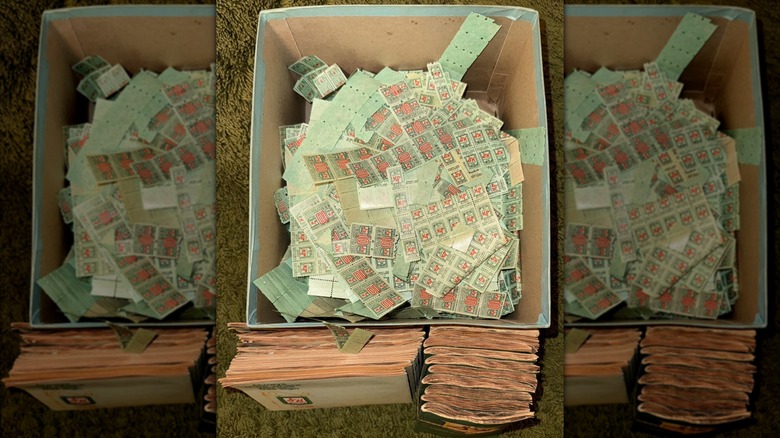
S&H Green Stamps were the 1960s version of collecting grocery rewards, and were at the height of their popularity during this decade. Shoppers earned stamps for purchases, and would lick-and-stick the (gross-tasting) stamps into a small booklet. Green Stamp collectors could redeem full books at a brick-and-mortar store or through an online catalog for household items.
You could grind your own coffee beans in-store
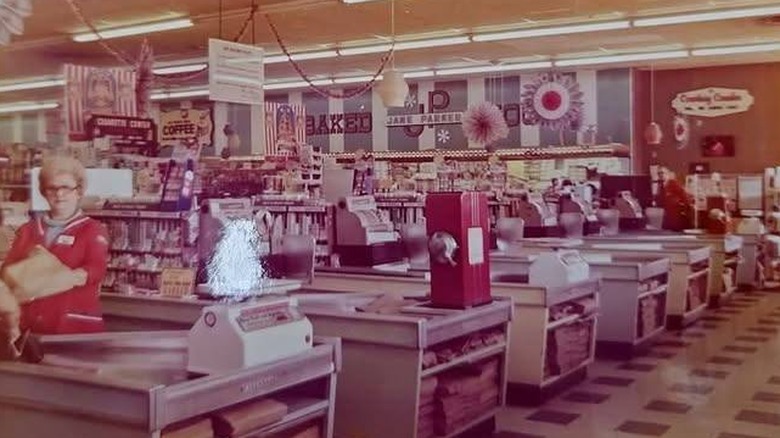
Whether they were placed at the end of the checkout lane or in the coffee aisle, many grocery stores used to have in-house coffee grinders, allowing shoppers to grind up their beans before taking them home to brew. Boomers remember the scent of freshly ground coffee wafting through the air when they got close to the machine.
Checkouts had dedicated baggers who went the extra mile
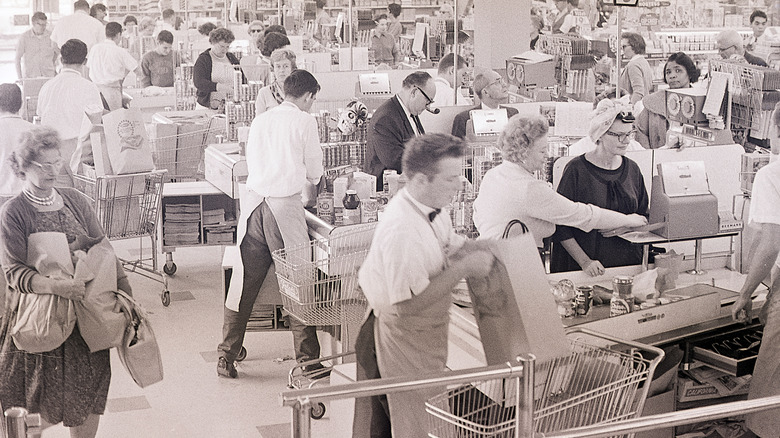
In the 1960s, you didn't bag your own groceries — stores had dedicated baggers to do it for you. They would often even help you load your groceries into the trunk of your car, according to boomers commenting on a reminiscent post on Facebook. Tips were often given to "bag boys" as a courtesy.