

Top-Tier Pantry Organization Starts With This Important Question
We may receive a commission on purchases made from links.
Properly maintaining your home's pantry can stave off all manner of home cooking mishaps. All of those carefully chosen items can save dinner when you don't have time to stop at the supermarket, or help you bake homemade goodies whenever the mood strikes. But you need to really ask yourself just what kind of pantry you're dealing with to come up with an organization system that works. Maybe you've got a walk-in plucked straight from TikTok interior design fantasies. Maybe your pantry is minimized to a single cabinet, or even a couple of shelves. No matter the size or style, you can still optimize the space for your household's needs.
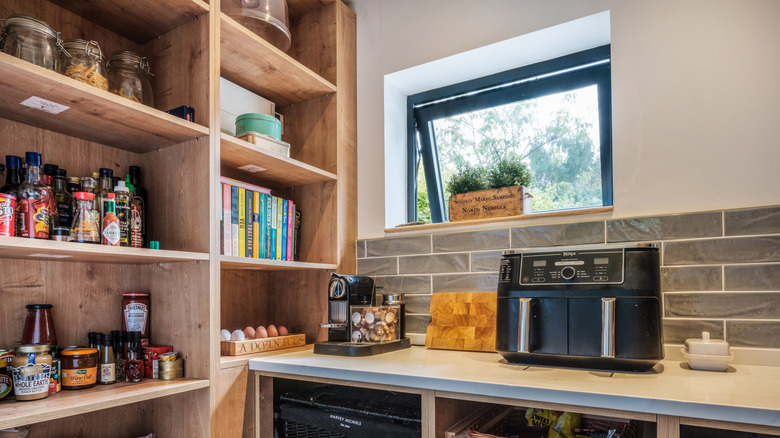
If your pantry does happen to be the size of some entire New York City kitchens, then congrats, your prize is figuring out what to do with all that room! In addition to their potentially vast culinary merits, these large spaces also tend to lend themselves to attractive presentations, so you might want to invest in some big glass containers to decant your cereal, spaghetti, and whatever else from its less pretty original packaging. Depending on your desired style, Mason jars can be terrific for food storage in the pantry. You'll also want a label maker to clearly delineate, say, your honey nut Cheerios from your banana caramel Cheerios.
Speaking of breakfast, how and when you use the pantry should also dictate its organization. Keep a.m. essentials toward the front so you don't start your day with a bleary-eyed reach. Spices should also be within grasp for when that pepper grinder runs out or you need paprika at the last minute. Similar principles apply to more petite pantries.
Organizing smaller pantries for a bigger impact
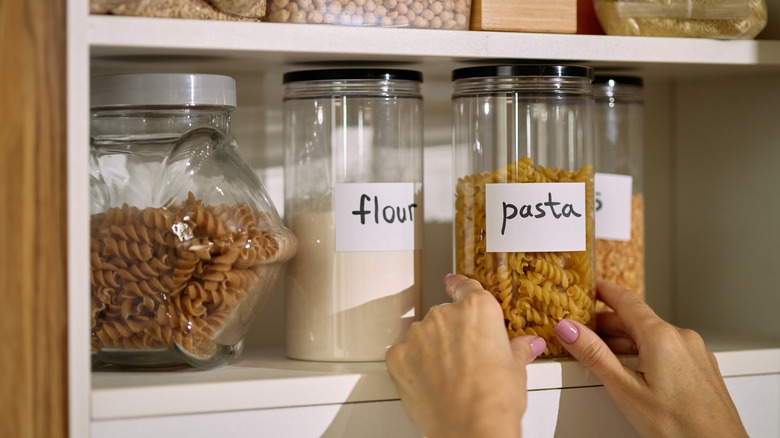
Do not give up on the idea of a useful pantry just because you're working with less space. Sure, you'll have room for fewer tinned fish staples, but even one or two will do. You also won't need to worry about their expiration dates as much when you're actually using them up (just don't forget to replenish). Decanting dry goods is a good idea for smaller pantries, too, as you can likely remove plenty of foodstuffs from their bulky manufacturer's packaging into slimmer containers. Labels might be less necessary in this case, as you'll probably want to avoid the kind of inventory overlap than a walk-in would accommodate.
Curation is the name of the small pantry game. Think about your go-to pantry dinner when you can't get to the store. Make those items your centerpiece, and then build around them. For instance, you might start with something like spaghetti and canned crab, and add red pepper flakes, marinated artichoke hearts, and one good olive oil for improved pantry dinners with a dainty footprint.
Like with a larger pantry, you should keep your most-used ingredients toward the front — most of the time. And while you might be able to get creative with storage solutions, like over-the-door shelves or shelf risers, you also want to assess what you can store elsewhere when necessary. It's lovely to have a pantry full of spices, for example, but excellent alternatives like Sevenblue's magnetic refrigerator spice racks abound when you need to make use of other space in your kitchen. Provided you can stick them to a part of your refrigerator that's away from heat and out of direct sunlight, this is an excellent way to free up space in your pantry for other staples.