

The Easy Way To Tell Your Trusty Whisk Is At The End Of Its Lifespan
We may receive a commission on purchases made from links.
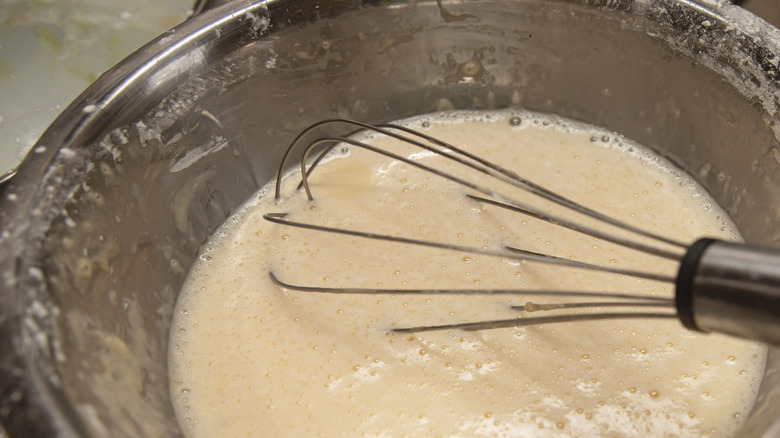
A whisk is one of those cooking tools you likely use frequently but probably don't think all that much about. However, a worn out one can be part of the reason for lumpy pancake batter and whipped cream that never whips. When you use the right kind, a good quality whisk can guarantee a clump-free batter and a smooth, creamy sauce. But these nifty little tools don't last forever. How do you know when you need a new one? There will be some obvious signs.
First, if the wires are misshapen or bent, no longer hold their shape, or are broken, it will make the whisk less effective at evenly mixing. Second, you should check for rust near the base where the wire meets the handle. This indicates that there's trapped moisture, which can introduce bacteria — something you most definitely don't want in your food — so it's time to toss. Finally, check your whisk's handle — if it's loose, wobbly, cracked, or melted, time to swap it with a fresh one.
What to look for in a whisk

Luckily, replenishing your whisk typically won't break the bank, as a good whisk can cost well under $10. Considering that there are different types of whisks, it's helpful to know how to choose the right whisk type depending on your recipe so you can determine which type(s) you really need before replacing your old one. The two most well-known types of whisks are balloon whisks and French whisks. Balloon whisks are generally recommended for whipped cream or egg whites because they bring in a lot of air, and will totally transform your next scrambled egg breakfast. A French whisk is narrower, making it better for sauces. Another useful shape to have in your stash is a flat whisk, which is great for gravies and so you can reach all parts of the pan. Since whisks typically don't cost a ton, you might event want to go for it and add all types to your arsenal.
When deciding which whisk to actually buy, you'll also need to consider which material to get. Many come in stainless steel, like the Stainless Steel Whisk Set, which gives you three size balloon whisks for just $7.99 so that you have options for various bowl sizes. Lots of pros recommend stainless steel whisks for many recipes because it is rust resistant, can stand up to heavy mixing, and won't react with acidic ingredients like lemon juice or tomato sauce. However, if you typically use your whisk on nonstick cookware, it may be worth considering a silicone-coated whisk that won't scratch pans, like the Chef Craft Premium Silicone Wire Cooking Whisk. An added benefit to silicone whisks is that they can usually handle high heat.