

The Right Oven Temperature For Juicy Baked Chicken Thighs Every Time
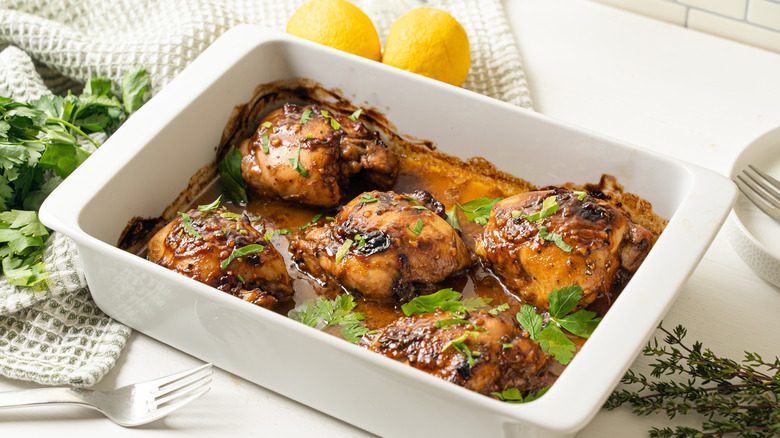
When it comes to simple, comforting meals, baked chicken thighs are the perfect easy protein to pair with flavorful sides, such as mashed potatoes infused with sour cream or French onion-style green bean casserole. Generally speaking, chicken thighs are more forgiving than their white meat counterparts because dark meat poultry is higher in fat and doesn't dry out as quickly. This is doubly true for bone-in, skin-on chicken thighs because both the bone and the skin help retain moisture and flavor.
However, one of the most common mistakes giving you flavorless, dry chicken thighs is baking them at the wrong temperature. Generally speaking, preheating your oven to about 400 degrees Fahrenheit is the best temperature for producing juicy, flavorful chicken thighs with crispy skin. Using higher temperatures risks them drying out or even burning in a short amount of time, while cooking them for longer at lower temperatures also risks them drying out. This is especially true if you're using boneless skinless chicken thighs, which actually do better at a slightly lower temperature of, typically, around 375 degrees Fahrenheit.
How long to oven roast your chicken thighs depends on a few factors. Boneless skinless thighs cook much faster, requiring about 30 minutes in the oven. Bone-in, skin-on thighs need about 40 minutes. In either case, a meat thermometer is the best way to judge doneness with 165 degrees Fahrenheit being the lowest safe consumable temperature. Ideally, you should cook them to about 180 degrees to account for heat lost during resting.
More secrets to cooking chicken thighs to juicy perfection
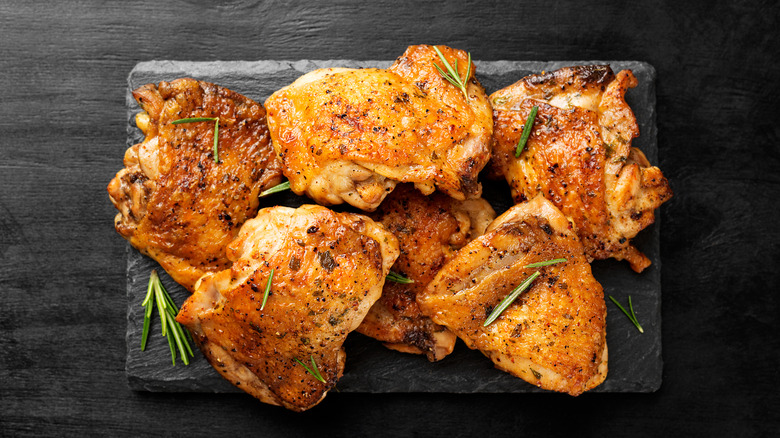
Though it's difficult to overcook chicken thighs, it's not impossible. If you're concerned your chicken thighs may get dry during their long cook times at 375 to 400 degrees Fahrenheit, a marinade may be the answer. Marinades infuse proteins with additional moisture and flavor, helping to protect that desirable juicy interior as they bake. You can also get double duty out of your marinade by turning it into a sauce in which you bake your chicken thighs. Just be sure not to cover the skin on bone-in thighs with liquid; this prevents them from getting crispy and produces an unpleasantly flabby texture. Boneless thighs can be slightly more submerged, but never fully covered; this boils them instead of roasting, which may make them mushy.
Additionally, if you're a little low on time, you can always turn the heat up about 25 degrees to reduce cooking time. Though lower and slower is best, turning up the heat just a bit means you can reduce the cooking time by about 10 minutes without much risk to the chicken thighs' texture or flavor. However, it's not recommended to raise the temperature any higher than 400 degrees Fahrenheit for boneless thighs and 425 degrees for bone-in. Temps higher than these may overcook your thighs or burn them, especially if you're using marinades or sauces with sugary ingredients, such as honey or maple syrup.