

Why People Used To Start Forest Fires Just To Find This Coveted Mushroom
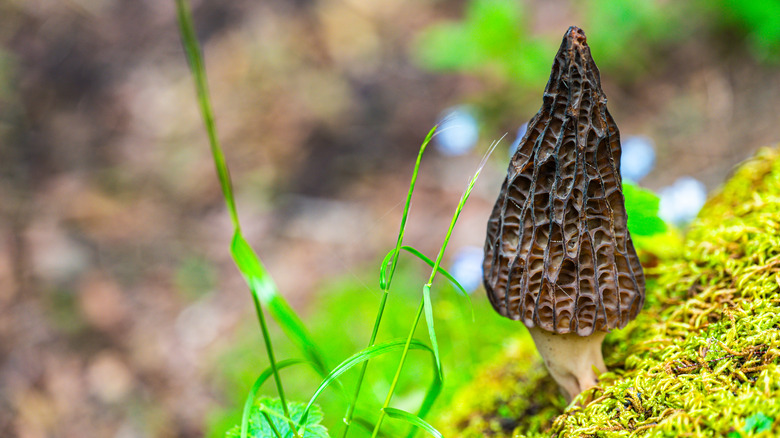
Mushrooms have a mystical reputation. They encompass a range of textures and flavors — there are even mushrooms that taste like chicken. Of all the edible fungi, perhaps none is more alluring than the morel. People spend hours foraging for these coveted fungi, and some are very secretive about the forage sites they find. There is one particular type, the burn morel (also known as the fire morel), that has an even stranger reputation. This mushroom appears in clusters after forest fires, and stories have circulated for years about people intentionally setting fire to forests to encourage their growth. In fact, it's said that centuries ago, sections of Germany's Black Forest were intentionally burned down in hopes of finding more fire morels before laws were created to protect the land.
Some stories of intentional burns may have been exaggerated, and certainly it is illegal and dangerous to start fires. What's interesting is that scientists are unable to explain with certainty the connection between these morels and wildfire. Experts theorize that fire reduces competition from other fungi or that it releases certain nutrients into the soil that help them grow. And as modern foraging culture continues to make wild foods more fascinating for people, this fire-growing morel only becomes increasingly coveted by those interested in finding it.
Morels are tied to an entire culture of foraging
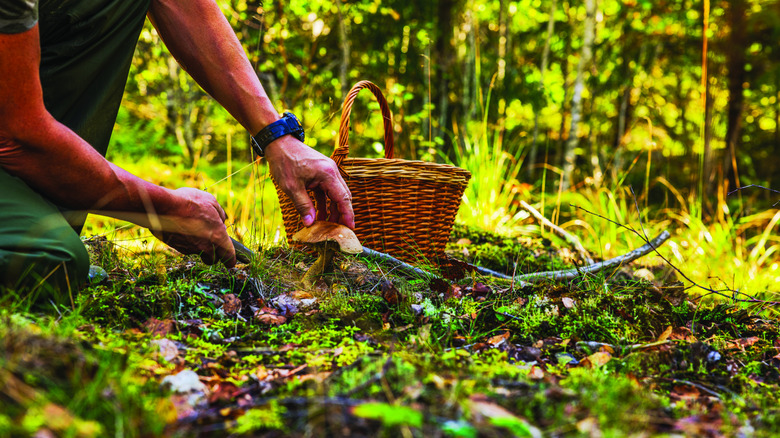
Unlike the supermarket mushrooms that we're so accustomed to, what makes these foraged mushrooms so intriguing is how both secretive and seasonal they are. For one, people guard foraging spots obsessively, and then throwing wildfires into the mix only heats up the appeal (literally). These morels grow across North America, Europe, and Asia, and intrepid hunters have been known to travel distances to forage after fires are finished burning. Foragers also search for morels near the roots of ash, elm, and sycamore trees, but burn morels specifically appear in landscapes affected by fire. And morels are also notoriously expensive when they do appear for sale, often costing significantly more than common supermarket mushroom varieties because they are so difficult to cultivate.
Outside of their incredible growing habits, they're also so coveted because of their taste. The burned landscapes where they grow are associated with a nutty, earthy, even smoky flavor. And truthfully, part of the appeal of foraging is discovering just how many edible ingredients exist outside traditional supermarkets. Many people are surprised when they learn that pine needles are edible and can be brewed into teas, or that foraged acorns are a versatile ingredient that can also be eaten. Burn morels are a great reminder that a lot of our traditional food knowledge has been lost over time, rediscovered now through a modern lens.