

Here's How Grocery Stores Kept Food Fresh Before Modern Refrigeration
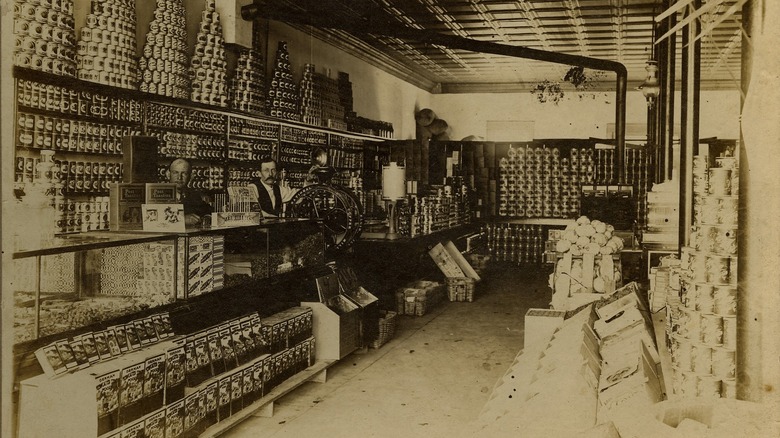
It's incredible that only about a century ago, in the 1920s and 1930s, did grocery stores start using modern refrigeration techniques to keep food fresh and cold. Before this, they relied on huge blocks of ice harvested from nearby bodies of water and ice plants.
Until the late 1700s and even early 1800s, individuals and businesses had to keep ice and perishable food underground in stone-lined pits (insulated with straw) or cellars, or above-ground in ice houses. In 1748, a Scottish doctor named William Cullen created a revolutionary cooling box. Interestingly, it was largely ignored until legendary American inventor and statesman Benjamin Franklin, along with John Hadley, experimented with its evaporative cooling technology in the 1750s, paving the way for refrigerant liquids like Freon to be used as coolants years later.
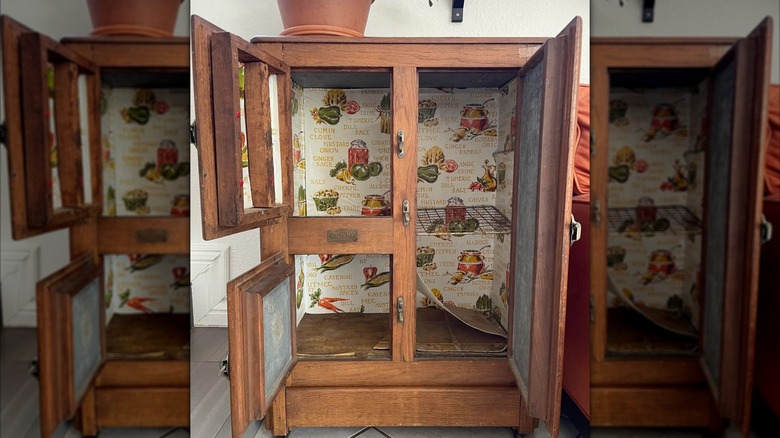
In 1802, American farmer and woodworker Thomas Moore invented the wooden icebox. Initially designed to keep butter from melting during transport, it had a tin container inside and was covered with rabbit fur and wool for insulation. A few decades later, around the mid-19th century, these game-changing iceboxes, the vintage appliances you never see anymore, began being mass-produced by companies like D. Eddy & Son for commercial and home use. They typically held a large block of ice in the top compartment to cool food stored below via air circulation.
After several early attempts, the true mechanical refrigerator was born in the early 1900s, and grocery stores no longer needed to rely on ice blocks. These units used a vapor compression-system that continuously vaporizes a liquid refrigerant to produce cold air. Unfortunately, they could be a health hazard if they leaked their toxic refrigerants like sulfur dioxide and methyl formate.
Other methods of keeping food from spoiling
There were other ways grocers kept food, especially meat and fish, from going bad before the advent of electric refrigeration. One included using salt (dry or brine) as a preservative to inhibit bacterial growth and remove excess moisture. Another common method was cold smoking to add a dehydrated layer that helped food last longer without spoiling. There were also pickling and fermentation, two different processes. Pickled foods are submerged in vinegar or other acidic solutions to prevent bad bacteria from forming; fermenting uses microbes to produce preservative compounds. Canning food or storing it in jars was yet another option. Unfortunately, the downside of these practices was that they couldn't preserve food's freshness as well as ice or refrigeration, as they relied on significantly altering the state of the food.
Because perishable foods and milk required frequent deliveries from local farmers and butchers to keep them fresh, grocers limited their inventory of such items, selling mostly dry goods with much longer shelf lives. Consumers would go directly to butcher shops, greengrocers, and dairies for their meat, produce, and milk, or they'd receive the latter via home delivery by a milkman. When it came to fresh produce, refrigerated railroad cars were in common use by the late 19th century. This method of cold transport (cooled by blocks of ice, of course, and insulated with natural materials) allowed consumers to access fruits and vegetables that once would have been limited to specific growing seasons.