

Forget Water, Poach Your Eggs In This Liquid For Way More Flavor

Conventional cooking methods are usually tried and true, but sometimes they are also a bit boring. Luckily, the kitchen is a great place to think outside the box, so the next time you poach eggs to make a classic eggs Benedict or to top off avocado toast, you can up your game with a creative twist. Instead of poaching the eggs in water, swap out the liquid for a pot of milk to give your breakfast a rich and decadent upgrade.
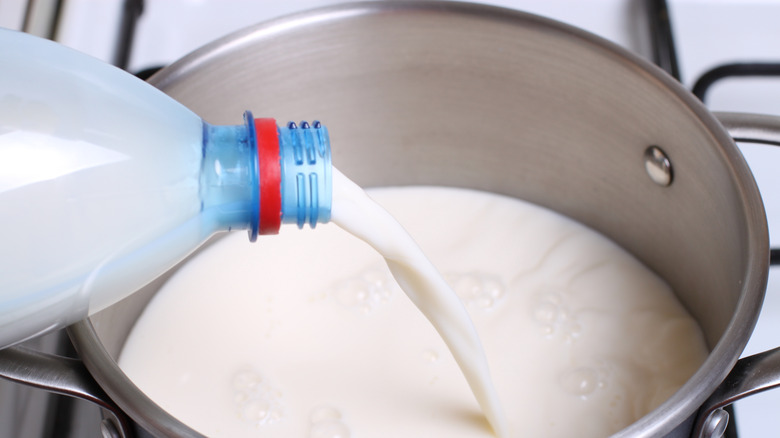
You wouldn't limit yourself to plain old water when poaching fish, so there's no reason not to explore other options with eggs, too. A delicate milk bath adds a whole new level of creaminess to an already rich dish, and the process is no different from using water. Simply add milk to a deep pot, bring it to a gentle boil, and carefully drop your eggs into the milk, one at a time. Give the eggs about four minutes to cook — this will give you the firm whites and runny yolks you expect from a perfectly poached egg.
Some cooks prefer to add a spoonful of vinegar to the poaching liquid, which can help to prevent whispy strands of egg white when you poach in water. But when you're working with milk, vinegar can denature the milk proteins and lead to curdling, so instead, strain the egg before you drop it in the pot. This will remove the watery portion of the white that turns stringy as it cooks so your egg comes out in a nice clean package. We already love eggs for their rich and creamy flavor, but the milk elevates that flavor, perfectly complementing it without overpowering it, so the egg remains the star of the meal.
A few tips and tricks to perfect your poach
Poaching eggs is a classic cooking technique whether you poach them in milk or water. But mastering it doesn't have to be difficult or intimidating when you know what to do. Professional chefs all have their preferred tricks for getting the perfect poach, like Julia Child, who had an interesting technique that involved a push pin. But some tricks are a bit more universal, like making sure to add one egg at a time, and don't overcrowd them in the liquid.
You also want to keep the temperature low and don't let the water boil too hard. This is especially important when using milk, since milk burns easily. You'll want to heat the milk over medium heat, then lower that heat so the eggs simmer gently in the milk until they are done.
You've got several options when it comes to milk, but your best bet is going to be whole milk. The high fat content will help stabilize the egg white so you don't end up with a stringy mess, a high pH to help ensure a nice soft texture, and a viscosity that will provide an even heat transfer and give the eggs a consistent cook.
You may feel like this is an incredible waste of milk, since it takes a good amount of liquid for poaching — and with the price of milk these days, who can blame you? But the good news is it doesn't have to get poured down the drain once the eggs are cooked. You can take the leftover liquid and drizzle it over your eggs, turning it into a creamy sauce that makes poached eggs comfort food to their core.