

A Gas Oven That Won't Light Doesn't Always Mean You Need To Call A Professional
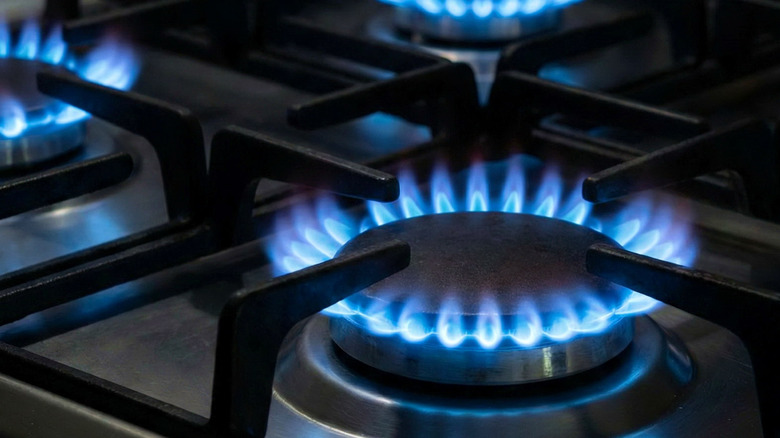
There are few things more frustrating than preheating your oven for dinner and realizing nothing is happening. No heat, no click, no ignition ... just a cold oven and a meal plan that's in jeopardy. Your gut reaction might be to assume something is seriously wrong and that you need to start looking up the number for the appliance repair service stat (and then popping one of the best frozen meal brands into your microwave), but that might not be necessary.
Gas ovens have a few different systems that all need to work together for them to ignite properly: mainly, the gas supply, the igniter, and the burner assembly. If just one piece of the puzzle isn't working right, the whole thing fails. The good news is that the most common culprits are usually pretty easy to diagnose at home, no repair tech required. You just need to know what to look for. This guide will cover the four most common reasons a gas oven won't light and what you can do about each one. Plus, we've got a final section on recognizing when to wave the white flag because the problem might actually be beyond your DIY skills.
The igniter is dirty
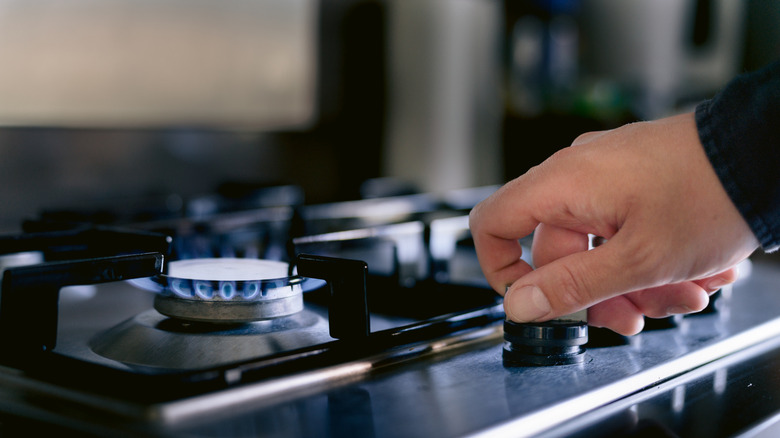
This is the most common reason a gas oven won't light. Fortunately, it's also the easiest to fix. The igniter is that small part near the burner that creates the spark to get the flame going. Over time, it collects grease, food residue, and general cooking grime — especially if you've had more boil-overs than you can count. A dirty igniter can't spark, which means no flame.
To clean stovetop igniters, unplug your unit, remove the burner caps and bases, and wipe the igniters with a damp cloth. To clean an igniter in the oven, remove the oven racks and the bottom panel inside the unit (usually you can lift it out, or it has a couple of screws). The igniter should be visible by the burner. If you can see the grime and yuck covering it, that's probably the issue. Clean it gently with a soft brush or a toothbrush, skipping the water and harsh cleaners. The goal is to remove buildup without damaging the small part.
Keeping the igniter clean is one of the best ways to prevent ignition issues. So let this serve as a reminder to keep up with regular cleaning. Knowing how to clean gas stove grates, oven surfaces, and other parts goes a long way toward preventing ignition issues before you're scrambling at 5 o'clock.
The burner ports are clogged
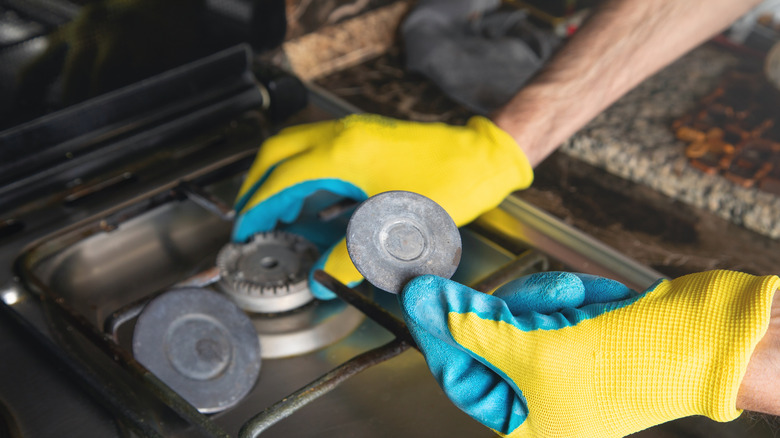
Even if the igniter gives you a spark, the oven won't light if gas can't actually get through to the burner to meet it. The burner has small holes, called ports, that gas flows through. And surprise, surprise, they can get clogged with food debris over time.
Take a look at the burner itself. Just like with igniters, if there is visible debris and grime it's probably the culprit. The fix is also just as easy. As with locating the igniter, take off the burner cap and base. This time, look for the holes or slots around the stove's burner head — these are the burner ports. Use a straight pin or needle to carefully clear the debris out of each port. Hands off the toothpick: They can break off inside and make things worse.
Once the ports are clear, give it another go. Do we really have to reiterate? Not cleaning regularly and letting spills sit is one of those common gas oven mistakes people make that lead to blockages and unworking appliances. A quick wipe-down post-cooking goes a long way.
The gas supply is interrupted
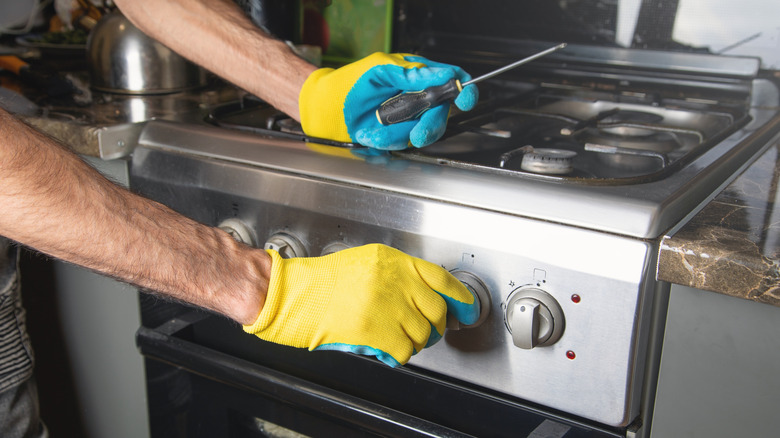
Before assuming anything is wrong with the oven, check whether gas is actually reaching it. We're not talking about through the ports, but the rest of the system. Is the gas shutoff valve behind the stove fully open? It should be parallel to the gas pipe. If it was bumped or partially closed for some reason, that could be the answer to your problem.
If you have other gas appliances in your home, you can try using one as a quick check. For example, if the stovetop burners come on just fine but the oven won't heat, gas is flowing, so the problem is specific to your oven. But if nothing gas-powered is working, it can be a good idea to check that your gas tank isn't low. Then see whether there's a wider outage in your area or an issue with your account.
It's also worth making sure that the oven's power supply is working. Not so obviously, gas ovens still need electricity for the igniter to function. So if the outlet or circuit breaker has tripped, the oven won't light even though the gas is fine. Check the breaker box if in doubt.
The igniter is weak or failing
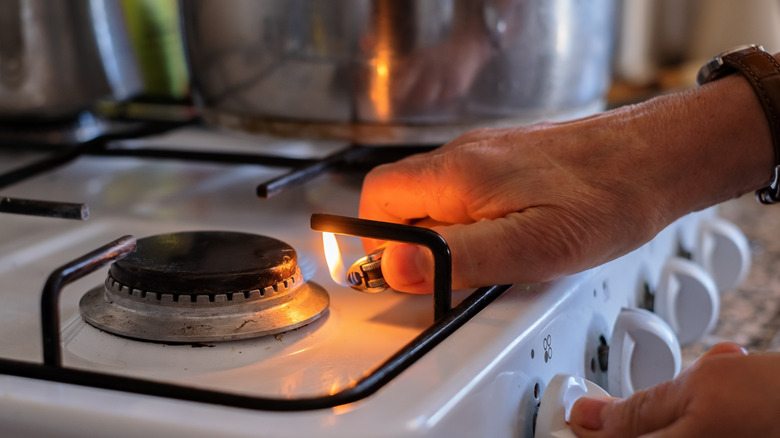
If the igniter is clean but still not giving you a strong enough spark to light the burner, it could be wearing out. One that's in proper working order will glow bright orange and ignite the gas within about 30 to 90 seconds. If it's slow to glow, or is pretty dim, it's probably weakening. Not glowing at all, just clicking without igniting, means it's probably failed. You can confirm this by watching carefully when you try to start the oven. Fortunately, it's typically fixable without having to toss out the entire appliance and buy a new one.
If you're a confident DIYer, you can handle replacing the igniter. The replacement part is widely available, and the swap is usually straightforward — just make sure you shut off your oven's power and gas first. But, if working with appliance components, especially those involving gas, isn't your jam, this is a reasonable thing to have a tech handle. It's a relatively inexpensive repair either way, costing in the range of $150 to $325 depending on various factors (per Home Guide).
When to actually call a professional
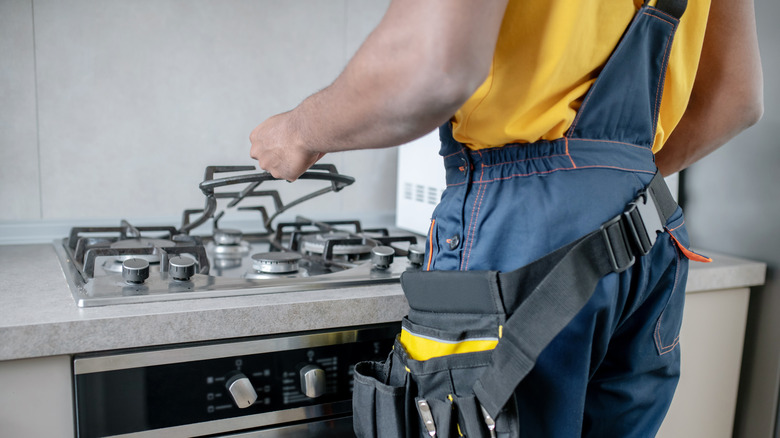
You might not want to hear it, but some oven problems really do need a professional. And it's important to know when you've crossed the line from DIY to "Don't touch it! Call for help!" If you smell gas when the oven isn't on, do not test things, open windows, or use any light switches or other electronics — including cell phones or landlines. Leave the house immediately, then call emergency services and your gas company.
If it's a failure-to-light issue and you've checked the igniter, cleared the ports, and confirmed you have gas supply, there could be a bigger problem, such as with the gas valve itself, the oven control board, or the wiring. These components require proper inspection, diagnosis, and replacement by someone trained to work on gas appliances. Trying to fix a gas valve or line with zero experience (or professional tools) is genuinely dangerous.
The same applies if you hear unusual sounds, smell something burning (beyond your cookies), or notice the igniter sparking even when the oven's off. These signs mean, stop, don't pass go, and call your appliance technician. Even if you're unsure about whether something is safe to address yourself, just err on the side of caution and call someone. A technician can tell you what's up and how to fix it — or, if it comes to it, that you need to read up on choosing the best cooktop for your kitchen because it's time to buy a new one.