

Why You're Told To Poke Holes In Potatoes Before Baking
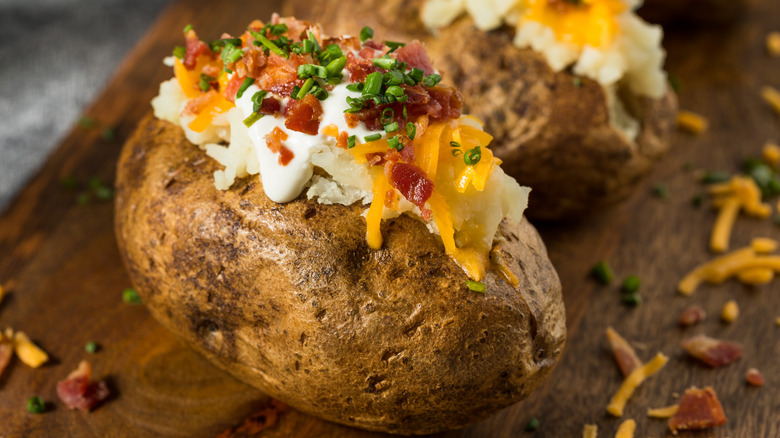
Whether you're following a recipe or just doing what your mother taught you, poking holes in a potato before baking it is an automatic move for most of us, and there is a practical reason behind it. Potatoes contain a lot of water, which turns to steam when heated in the oven. That steam needs a place to escape, and if it doesn't have an easy way out of the potato, it runs the risk of building up until the skins split. Dramatic potato explosions are not common, though they can happen. Piercing the potato skin is more about mitigating the risk of it bursting and splitting.
All you need are a few gentle pokes with a fork, just enough to let some of the steam inside escape gradually. This results in a fluffy interior, but if you cut your potato too deeply, too much moisture will escape and lead to a dry potato. There is a happy medium, and finding it is one important step in mastering the right way to make a baked potato. Managing the internal pressure ensures the skin remains intact when you pull it from the oven, yielding the ideal canvas for whatever fats and seasonings you choose to add next.
The fork trick works best when the potato is baked properly
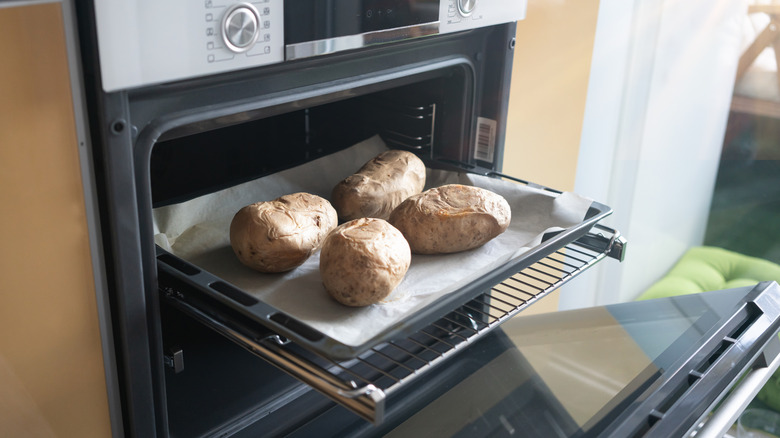
Poking holes in a potato before baking is a non-negotiable, but picking the right potato also plays a role. You'll notice this trick works best with russet potatoes, which are the classic baked potato choice for a reason. They have a high starch content, and the steam generated in the oven helps separate the starch granules, making the center light and airy. Other good choices are waxier red potatoes or Yukon Golds, which have a lower starch content, so they hold their shape but stay a little denser inside.
You may have seen people wrap their baked potatoes in foil, but it's not generally advised. The foil acts as a second skin, trapping moisture and steaming the exterior of the potato until it's soft and soggy. This is a mistake that leads to bland baked potatoes because the exterior fails to develop a crisp texture and an earthy, nutty flavor. For the best baked potato results, cook them uncovered, with a few fork holes and a light coating of oil and salt. Whether you're going classic with sour cream and bacon or making an Italian-style baked potato, it's the simplest route to a perfect spud.