

Classic Chinese Takeout Containers Once Served A Very Different Purpose
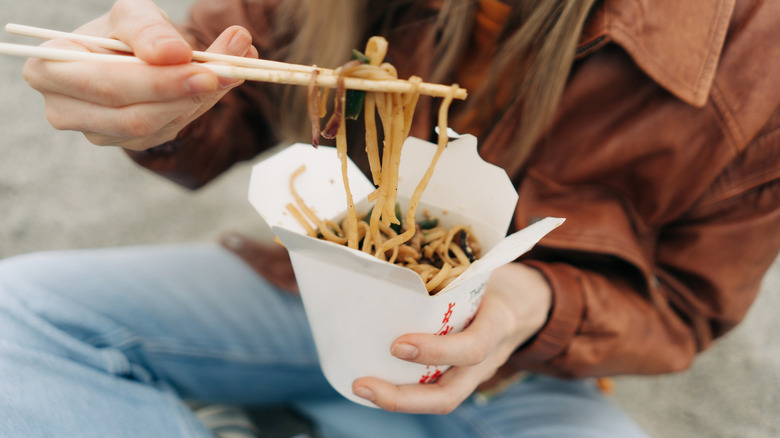
There are few types of food packaging as immediately recognizable as a Chinese food container, with its white folded paper body and handy lift-up wire handle. Well, add this to your "I was today years old when I found out" list: This widely recognizable vessel was invented to hold oysters.
Way back in 1894, long before people were regularly placing to-go orders from their local Chinese restaurant, Frederick W. Wilcox was issued a patent for "oyster pails." The origami-esque invention was cleverly designed to hold wet items, namely oysters, which New Yorkers were eating at the time by the pailful. Somewhat surprisingly, because of high availability, low price, and improvements in harvesting techniques, wealthy and working-class New Yorkers were consuming lots of oysters.
It was only over time, particularly as more Chinese immigrants began to arrive, that Chinese food began to flourish and the moisture-retaining containers usage morphed to hold portable and filling dishes, such as chop suey and lo mein. Many credit Chinese food, often packaged in these easily transportable containers, as the precursor to modern fast food with its big brands and standard menus.
Chinese food containers today
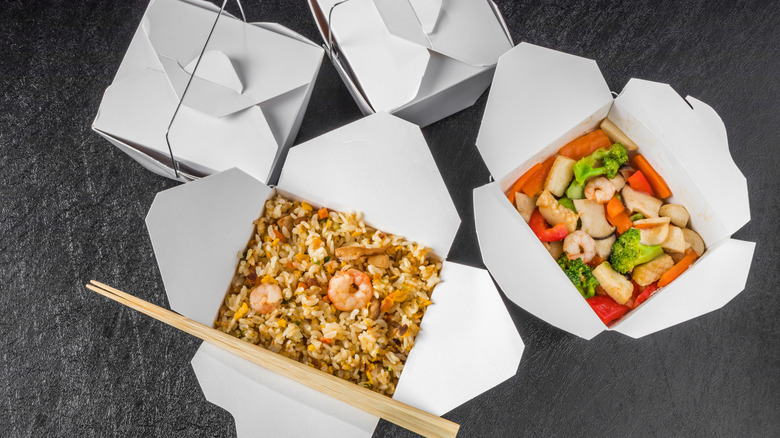
Amazingly, these 19th century white paper pails continue to be used daily by Chinese restaurants in New York and beyond. Although plastic containers with tight-fitting lids are increasingly common, steamed rice often still comes in these forgiving boxes. Beyond its unique design that keeps liquids inside, folded paper containers beat out plastic ones since you can put them in the microwave (provided you remove the handle). What's more, in a pinch, customers can unfold them and create an impromptu plate of sorts.
Whether you eat your fill in the Chinese restaurant and box up what's left, or simply place an order for pick up or delivery, a pail likely factors into the equation. While white paper boxes, likely with some sort of Asian-inspired art in red ink, may have started in urban hubs, such as New York, they have become standard fare, and you're apt to find them at the best Chinese restaurants in every state. It's one of those rare holdovers of food nostalgia (minus the oysters) that's the same today as it was for your grandparents.