

Most People Organize Their Kitchen In The Wrong Order (It's Simpler Than You Think)
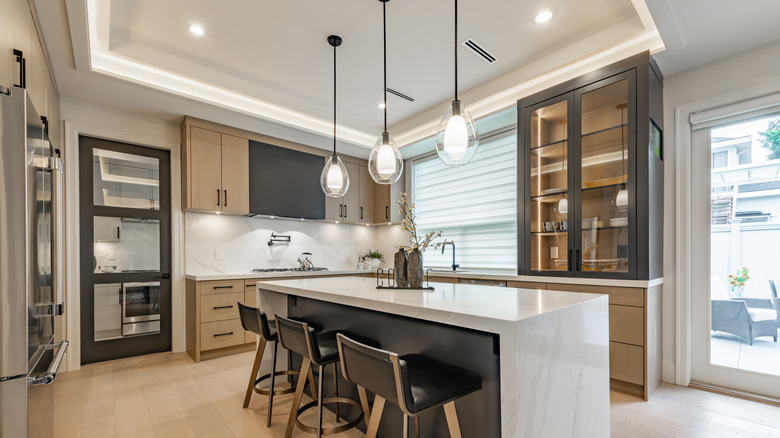
While techniques like dividing your workspace into zones can make the task of declutterring your kitchen less daunting, it certainly doesn't make it an easy job. Particularly because you still have to choose what to keep and decide on where the heck you should put it, which makes it's very difficult to know where to start. Should you prioritize the items you use most often, or begin with things you only haul out for special celebrations? For the most successful reorganization, it's best to start by identifying items you literally can't function without. Some examples of this may be silverware, your favorite coffee mug, and the frying pan you use regularly to make French omelettes using Julia Child's technique. Using the "didn't know" decluttering hack also works well here. After all, if you forgot you had that set of fancy china, chances are low you'll use it in the future.
The next step is putting everything away, starting with items that must be stored in a particular space because of their size or function, regardless of whether they're stored in the same area you use them. For instance, maybe your favorite slow cooker only fits in the cabinet next to your dishwasher, or you prefer to corral cleaning supplies under the sink to avoid contaminating food and cookware. Once each of these items has a dedicated space, you can then put away everything else according to its function. Perhaps you use a handheld milk frother for homemade lattes almost every morning; it should have a dedicated storage space close to where you prepare your coffee, while the muffin tin you use once a week can go in the back of a lower cabinet.
Deciding what to keep and what must go
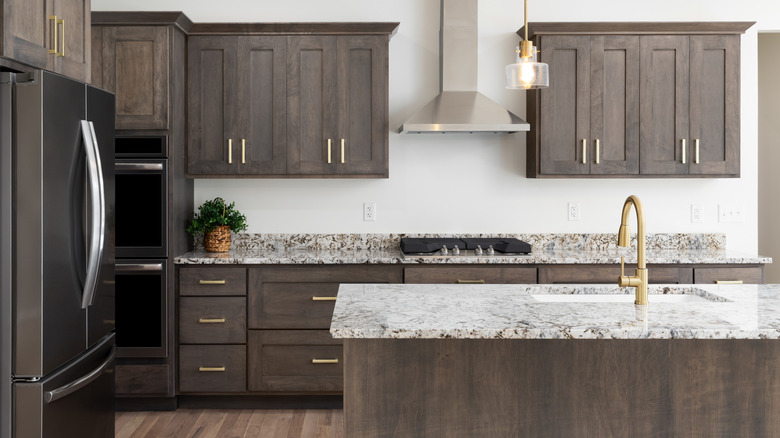
Once you've identified and put away your "have-tos," you may still find yourself low on storage space. As mentioned, utilitarian items like plates, cutlery, and cookware are top priority on the "keep" list as it's more difficult to use your kitchen without them. However, you may be able to pare down the number of plates and bowls you actually need to function, and the same goes for cookware. If you're only cooking for one or two people, you can likely easily get away with having smaller sets of everything without feeling the pinch.
After that comes things that you could, in fact, live without, but that make tasks easier, such as citrus reamers and breakfast sandwich makers. Prioritizing items like this that are specific to your personal needs and routines helps make your kitchen work for you. If you're determined to keep these items, you could slip them into wire organizers screwed into the inside of cabinets or store them in decorative baskets on the counter. If there's just no space left, you might also consider finding multi-purpose items to replace several tools, such as a Magic Bullet to replace your blender and milk frother, or a compact, self-sharpening knife block.
Next up is stuff you don't use regularly but may still be essential. For instance, your electric roaster may only come out at Christmas, but it's essential to making that meal happen. Perhaps your friends have specific coffee mugs they use when you host brunch at your place. These items are perfect for storing in out-of-the-way places, such as in lower drawers or in that extra space above your kitchen cabinets. This frees up easy-to-reach spaces for the things you use much more often.