

Add This Tiny Vegetable To Your Diet For A Major Fiber And Protein Boost
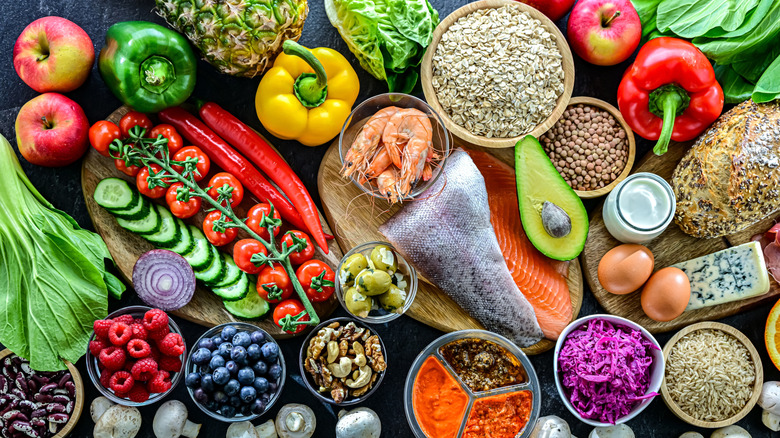
Fiber and protein, protein and fiber. Everyone, it seems, is trying to maximize their intake of these two dietary staples, and for good reason. Protein is essential for building muscle and maintaining bone mass, while fiber aids in digestion and soluble fiber can even help lower cholesterol levels. This is all to say: fiber and protein are important. However, many find it difficult to pack their diet with enough of these nutrients on a daily basis. Luckily, there's a veggie that can help you boost your intake of both, and you're probably already familiar with it.
We're talking about peas: delicious, green, and slightly sweet. This staple has found a home on many a dinner plate, served as an accessory to meatloaves and bobbing within a delicious pan of chicken, mushroom, and winter squash pot pie. While its ubiquity has made it easy to overlook, we think it more than deserves its own moment in the sun. Not only are peas delicious, but they're a great source of fiber. Frozen peas contain 6 grams of fiber per 100 gram serving, while fresh and canned peas contain 5 grams of fiber per 100 gram serving. Oh, and that includes both soluble and insoluble fiber, both of which are essential to a healthy diet. Plus, that same serving size of frozen and fresh peas contains 5 grams of protein, and a serving of canned peas contains 4 grams. This isn't as much as certain other protein sources, but it's still a great supplement to your protein intake. It's low in essential amino acids, so you should eat it combination with other protein sources in order to get adequate intake. Still, they make a great addition to any dinner, especially if you want an extra fiber or protein boost.
Have your peas and eat them too
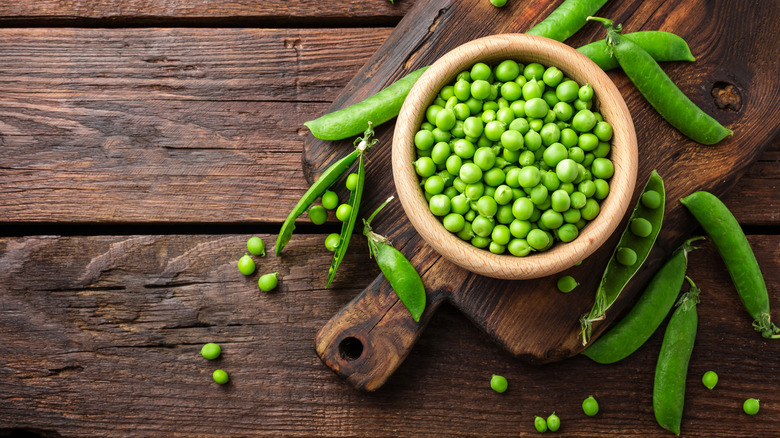
You can find peas in four primary forms: fresh, frozen, canned, and dried. Each of these are delicious in their own right and provide similar nutritional profiles. However, depending on preservation method, your peas may contain slightly more vitamins and minerals. For instance, if you're looking for higher levels of vitamin C or K, go for fresh. Or, if it isn't pea season (spring and early summer), go for frozen, as they are frozen when still quite fresh. Fresh peas will also give you a bright, green taste and a nice, firm texture. Frozen has a fresh taste and nice texture as well, but the experience isn't identical to fresh.
Canned peas are softer, so if you're adding them, to, say, a pasta primavera, you might want to skip the can. Canned peas also tend to be higher in sodium than frozen or fresh. You can find canned versions without added salt, so look out for these if you're on a low sodium diet.
As for dried peas, you can find them in whole or split varieties. Split peas are peas that have been split open and hulled. Both varieties have about 8 grams of protein and fiber per 100 gram serving size, which is more than that of fresh, frozen, or canned peas. Cooked dry, whole peas generally have similar amounts as split peas. Dried and split peas also have a super long shelf life, so you can keep them on hand for years at a stretch.
How to use those peas
Now that we know the ins and outs of peas, it's time to get down to the work of cooking and serving them. If you're stumped for ideas on pea-centric dishes, don't worry, we've got you covered. Perhaps the easiest way to serve peas is as a side dish: blanched and then sautéed with butter and a bit of salt. Or, you can add them to a casserole, such as tuna noodle casserole or even a nice Minnesota hot dish (canned peas work beautifully here). You can also add some peas to a pasta carbonara, though this might be controversial to some pasta purists.
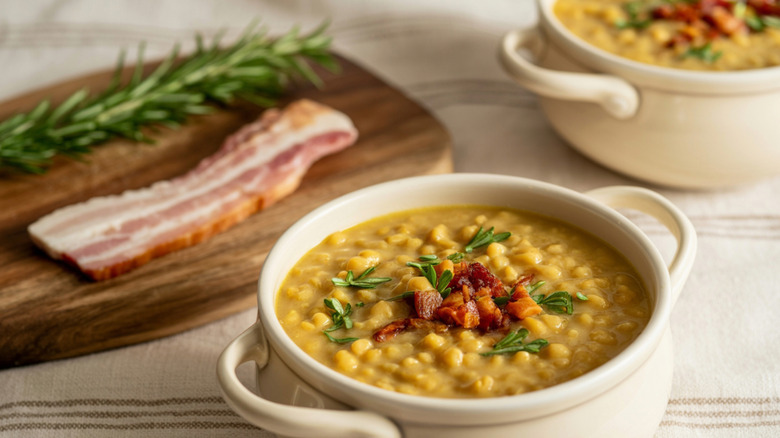
Peas work incredibly well in curries, soups, stews, roasts, or even a nice cottage pie. If you're using fresh peas, you can even add them to a lovely garden salad. Or you can make them into delicious, crispy fritters. If you want a really pea-centric dish, you can even make a pea soup. The split pea's texture works beautifully as a creamy soup base and its flavor is dynamic enough to adapt to many seasoning additions. For example, you can add potatoes and spices in order to make a samosa-inspired soup. Or you could make a cozy split pea and ham hock soup for heartier option.