

Freshwater Or Saltwater Salmon: Which Should You Choose?
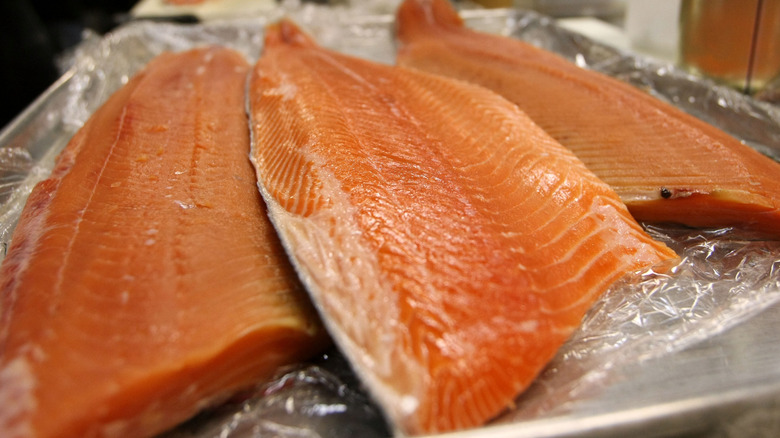
Explaining the difference between freshwater and saltwater salmon can be a messy task — in reality, salmon typically spend time in both. They're born in freshwater, migrate to saltwater, and then back to freshwater to spawn. So, fresh- and saltwater salmon are the same species. To make things a little more confusing, there are various salmon species: One Atlantic and five Pacific, including Sockeye and Chinook. Yet, all species make the same transition between water bodies.
However, salmon caught in freshwater are typically in a different life stage to those caught in saltwater, and this shows up when you're cooking and eating them. When living in saltwater, salmon eat themselves silly, making them larger and fattier; when they migrate back to freshwater, their focus is reproduction rather than eating, and they burn up that fat.
In turn, there are flavor differences. Saltwater salmon is fattier and richer in taste, as well as firmer. When they burn that fat off going back upstream, their flesh becomes softer and less appealing. Saltwater salmon also has a salty taste thanks to the water they're in (this is generally the case with any saltwater fish) and a more elaborate flavor profile, while freshwater salmon are milder. This is partly because saltwater prompts the fish to produce certain amino acids that add a hint of sweetness and savory layers to their flavor. Some argue that saltwater salmon are superior due to this more varied flavor profile, although others may not love the brinier taste.
Other differences to know between saltwater and freshwater salmon
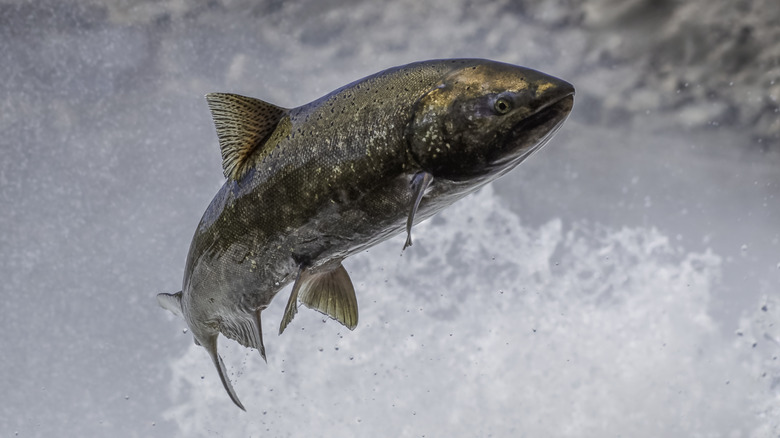
There are a lot of gray areas; for example, some salmon species don't go into the ocean, and instead migrate to large lakes (such as the Great Lakes). However, they still follow the same pattern of feeding when in those large bodies of water, and burning it off when they swim back upstream. Salmon can also be fattier depending on where they live, with colder waters generally leading to fattier fish.
Then there's the question of farmed versus wild salmon. It's hard to nail down precise differences since it may depend on the farming approach. Some farmers move salmon back and forth between salt- and freshwater, and some don't, so any difference really depends on this. That said, farmed salmon do tend to be fattier overall, since their diets can be controlled to fatten them up.
If you're trying to eat sustainably, you may wonder which salmon variety is environmentally friendlier. Unfortunately, there's no clear answer, but wild salmon tends to be considered more sustainable (although it depends on how the fishery is managed, and this applies more to Pacific salmon than overfished Atlantic salmon). If sustainability is your concern, it's not so much about saltwater versus freshwater, but how they're raised. Otherwise, you should make your decision on flavor. If you like milder salmon, go freshwater, but for fat and flavor, saltwater is the better bet.