

Some Pork Labeled Ham Isn't The Meat You Know And Love
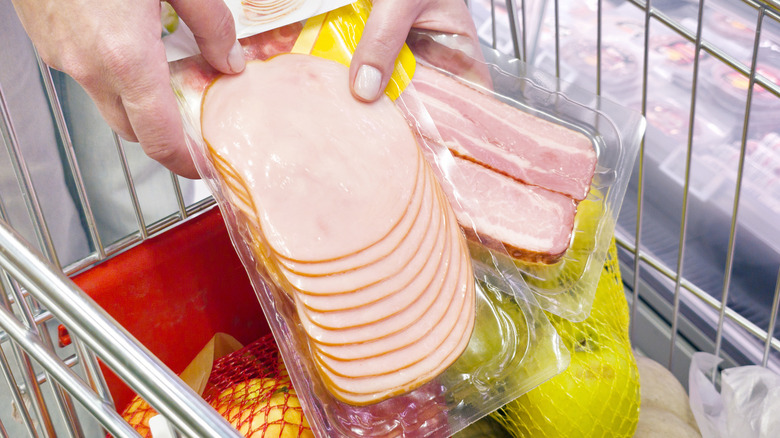
This isn't a riddle: Sometimes, when you're at the grocery store, the ham you're buying isn't totally ham. The trick is there are various labels that distinguish "real" ham from ham that is effectively padded with water or brine. These labels are regulated by the U.S. Department of Agriculture. The four labels are "ham," "ham with natural juices," "ham with water added," and "ham and water product."
Unsurprisingly, plain old ham is the hammiest. It needs to have a 20.5% protein content in the leanest part of the ham. Next is "ham with natural juices," which is arguably the most deceptive-sounding label since it has water added to it (around 7% to 8% of the weight is from added water). It also has to have a protein content between 18.5 and 20.5%. Although adding water is considered a ploy to make more money by adding weight to the meat, there are some advantages to this type of ham. While "regular" ham has the meatiest taste, it can dry out, particularly if you're cooking it, so you may want to opt for the natural juices version in this case. "Ham with water added" can have up to 10% water weight, and must be at least 17% protein. More water means less hammy flavor, but it can be easier to slice this variety.
What ham and water product means, and how water is added to ham
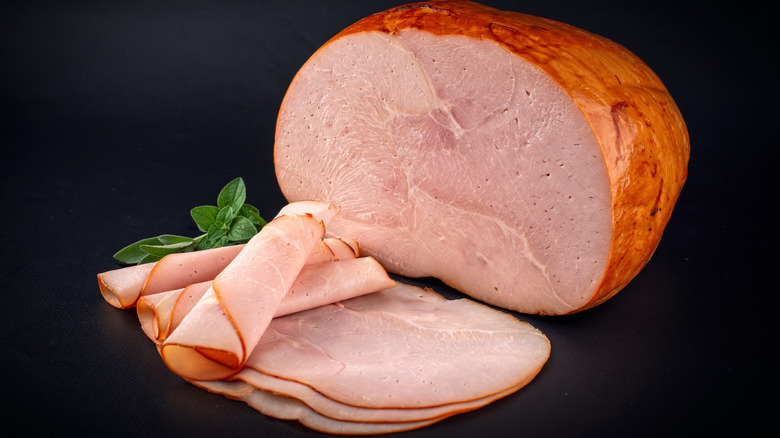
Generally, the more water that's added to ham, the cheaper it is. For example, at Walmart, 1 pound of the natural juices ham can be around $6.50, while the water-added variety is around $4.50. The cheapest of the bunch is "ham and water product." It can have over 10% water and less than 17% protein — in fact, the USDA states that it can have any amount of water, but the amount should be marked on the label. This is why it doesn't even get called "ham," but the linguistically slippery "ham and water product." It tastes processed, not very meaty, and it's hard to find anyone genuinely recommending it.
If you're wondering how the water gets into the ham, it's part of the curing process. While all ham is cured, dry-curing, used for so-called "country ham," means the ham doesn't take on extra water. Then, there's wet-curing (putting it in a brine of salt and nitrates, and sometimes sugar for flavor), where it soaks up some water. But that process takes time, so some producers inject the brine straight in and spin the ham around so it distributes quickly within the meat (a similar process is used for some types of bacon). If that doesn't appeal to you, look carefully for labeling that says "ham" and nothing else — or you may literally get watered down ham.