

The Strict Rules Coca-Cola Has For Selling Its Beverages In Schools
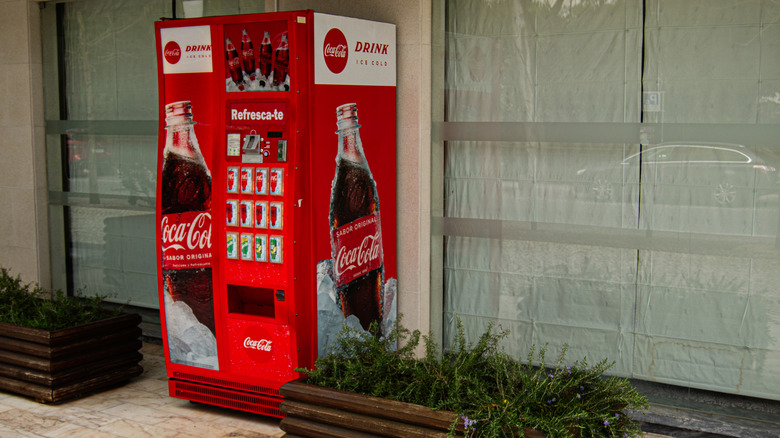
Coca-Cola soda may be nearly everywhere, although you won't find Coke in Cuba or North Korea — and you also won't find it in the hands of younger children at school. That's because unless the student brought it from home, Coca-Cola has established a long list of strict guidelines regarding which of its products can be sold at primary schools vs. secondary schools. These apply to more than just the company's signature soda, but its other brands as well, including Simply, Vitaminwater, Minute Maid, Gold Peak, Powerade, Fairlife, and more.
According to company corporate policy, only a limited amount of Coca-Cola products can be sold at primary schools, or elementary and middle schools in the U.S. The comprehensive list includes still or sparkling water (think Dasani or Smartwater), 100% fruit and vegetable juices, smoothies, low- or no-fat dairy drinks, and plant-based beverages. Notably, the company's sodas wouldn't be considered eligible for sale at primary schools.
This reflects Coca Cola's Global School Beverage Policy, which states the nutrition criteria the company follows. It includes detailed guidelines that juice, dairy, and plant-based beverages are limited to 8-ounce servings, all drinks must contain no added trans fats, and plant-based drinks must be identical to dairy beverages in calcium and protein content. When it comes to sugar, water and 100% juice cannot contain added sugars, and added sugars in dairy and plant-based beverages are capped at 15% daily value per serving.
Fewer restrictions at secondary schools and some exceptions
The Coca-Cola company recognizes a difference between younger children and older students, and therefore at secondary schools, or high schools, the options are broader. The company works with schools to determine what beverages it will offer, which may include its products in both regular and low-or no-sugar versions like Coke Zero as well as sports drinks and teas, depending on local school guidelines. Additionally, if both primary and secondary schools share a common area, Coca-Cola decides what to offer based on which maintains a larger share of the student population.
There are a couple exceptions to the company's guidelines, including one for teachers and other staff members. Coca-Cola may offer all of its products in teachers' lounges or in other areas that students don't have access to. As for extracurricular events, Coca-Cola may adapt its policies to accommodate requests from schools. While '80s parents begged their kids not to drink sodas like Jolt, today, even soda companies are keeping kids' nutrition in mind.