

How Longhorn Steakhouse Seasons Its Meat According To An Executive In-House Chef
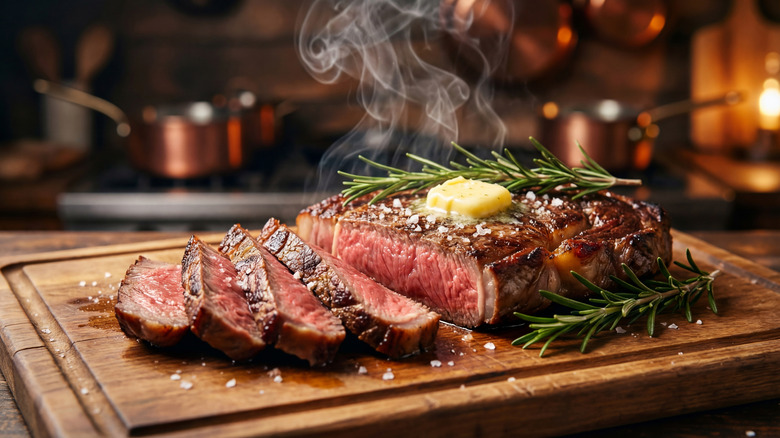
When you walk into Longhorn Steakhouse, you know you're about to enjoy a juicy slab of beef (the Outlaw ribeye is, in our opinion, the best Longhorn Steakhouse steak — just FYI). The Longhorn seasoning blends are a key part of what makes its steaks so delicious, so we reached out to the chain directly to learn more about how steaks are seasoned in the restaurant's kitchens. It turns out that the exact spice blends used at Longhorn are proprietary, so we couldn't find out exactly what seasonings the chain uses — but we were able to learn how the rubs are applied.
According to Michael Senich, vice president and corporate executive chef at Longhorn Steakhouse, it's important to dry off your steak before you start the cooking process. It makes sense — failing to dry your steak before you start grilling can result in you accidentally steaming your steaks. "A dry surface is best for grilling because it allows the steak to react immediately to the heat and creates the high-quality sear we look for in an expertly grilled steak," Senich says. He also recommends waiting until the last second to season your steak. "Seasoning too early and letting it sit can bring moisture to the surface of the steak," he says.
Replicating Longhorn-style seasonings at home: What you need to know
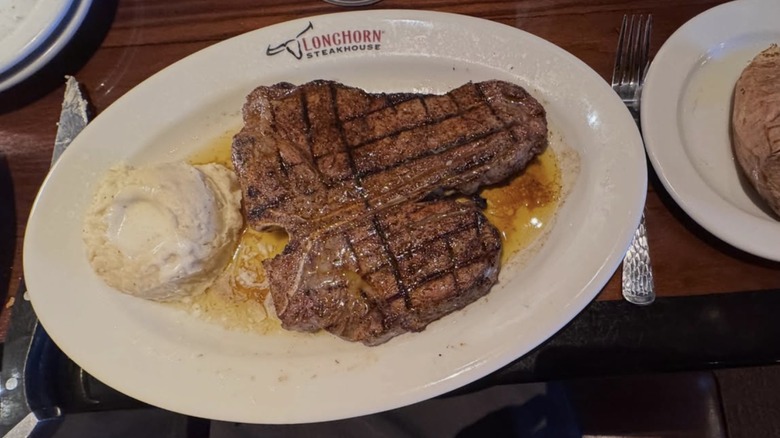
As we mentioned, Longhorn doesn't share the ingredients of the blends it uses for flavoring meat, but the chain did share which ones are used for which dishes. The restaurant uses a charbroil seasoning for items that are cooked over an open flame, including the New York strip, Porterhouse, and Outlaw ribeye steaks. Grill seasoning is used for the 12-ounce ribeye and the Flo's filet, and prairie dust seasoning is used for chicken, pork chops, sirloin steaks, and fried items (including fries).
Seasoning sleuths online have taken matters into their own hands to try to recreate the proprietary blends, and we were able to find some decent information on what might be in Longhorn's grill seasoning and prairie dust seasoning. The grill seasoning starts with salt and a serious dose of pepper and paprika. Onion powder and garlic powder are key as well. For the prairie dust seasoning, copycat recipes suggest a similar base of salt, pepper, and paprika, plus a bit of cayenne pepper and turmeric. High-quality salt is crucial for both mixtures. Table salt is a lackluster choice for seasoning steaks, so you'll want to stick with kosher salt to maximize flavor. No matter what seasoning blend you use, follow Michael Senich's advice of making sure your steak is dry before cooking and seasoning at the last moment to create a Longhorn Steakhouse-esque result.