

Don't Impulse Buy A Silicone Baking Sheet Until You Have This Info On Hand
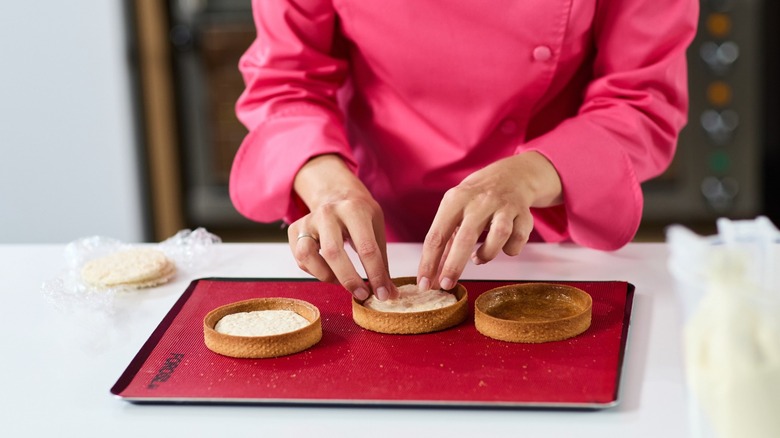
If you've browsed the bakingware aisle in recent years, you've probably seen silicone baking sheets. They're often cute, colorful, modern-looking, and appear worlds better than those ugly old metal sheets and traditional cookware you've been relying on your whole adult life. But, before you impulse buy some to liven up your kitchen, beware. Although they're nice-looking, silicone baking sheets — and silicone muffin pans, mats, cake pans, and other cookware of the silicone variety — come with some very real downsides that can wreak havoc on your baked goods, your oven, and even your health. At least, that's if you buy them before knowing their safe temperature limits.
While you may know that you should never use a silicone mat as a cutting board, the reality is too-high temperatures also degrade silicone, potentially releasing toxic substances into your food and the surrounding air, creating further safety dangers. Plus, silicone can also melt in your oven under too-high heat (which is difficult to clean off), resulting in even more toxic risks. While it may seem like sticking to temperature guidelines is enough, there's actually more you need to know before buying silicone bakeware.
There's widespread disagreement on what a safe temperature for silicone really is
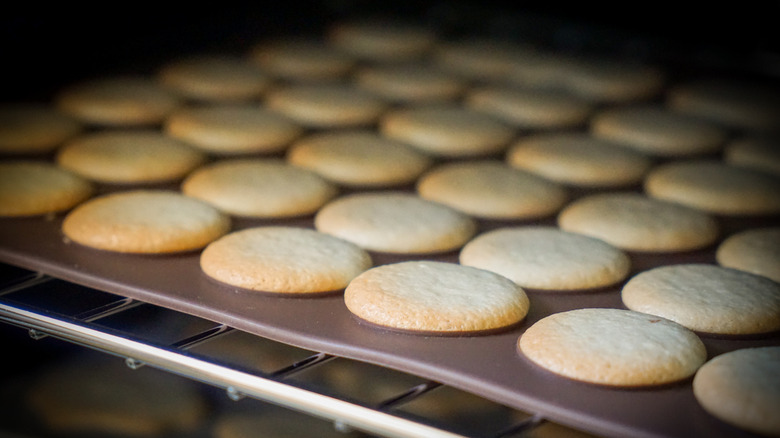
Not to put you off buying silicone baking sheets even more, but it's a little more complicated than just looking at the temperature rating on the packaging. If there is no temperature rating, like silicone sheets at your local Goodwill, it's best to skip that purchase because there isn't even one firm temperature guide you can follow online — the purported heat levels silicone baking sheets can withstand in your oven depend on where you're reading.
For example, Silco, a silicone products manufacturer, states on its website that silicone bakeware can handle temperatures up to 450 degrees Fahrenheit. However, a review of other silicone products makers, baking blogs, kitchen tools retailers, and others reveals wildly varying maximum temp claims: 300 degrees Fahrenheit, 400 degrees Fahrenheit, 450 degrees Fahrenheit, and higher. That's not to say they're all wrong or misleading, but it's clear the jury's still out.
Regardless, it's not just high oven temperatures you have to worry about with a silicone baking sheet. It's important to learn how to clean silicone baking mats properly, including taking extra precautions if you're running them through the dishwasher (that is, wash them on the top rack only).
What to look for before buying silicone cookware
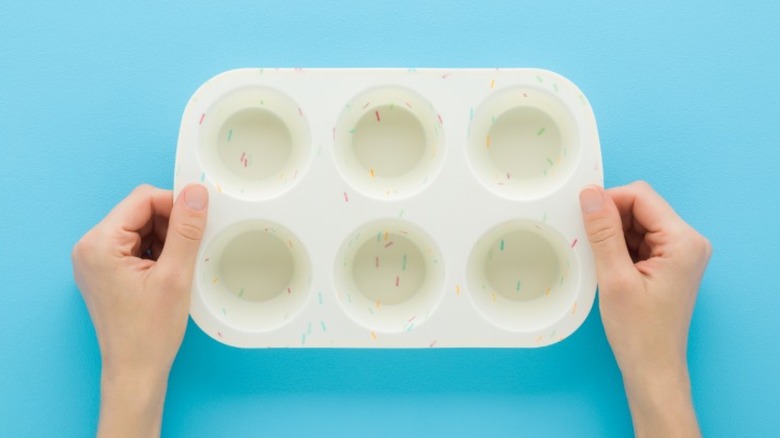
If your heart is set on getting that cute silicone bakeware, take a closer look in-store — it's wise to shop in-store instead of relying on online descriptions — to determine whether or not the silicone in question is food-safe. Some say to use the "pinch test," which dictates that if you pinch a small portion of the silicone and it turns white, it's not food-grade and shouldn't be used. However, this test isn't accurate. Instead, check out the product packaging to see if it is FDA-approved for food use.
Even if the silicone mat or cookware does pass muster, remember that even the best still have temperature limits. Preferably, you should only use them with room temperature or cold foods, such as when making frozen treats. Also, just like that rubber spatula red flag, replace silicone products once they start showing cracks and other signs of wear. Face it: Silicone baking sheets may be cute for a while, but no sheet lasts forever, heated or not. Happy shopping!