

The Dangerous Cost Of Storing Oily Foods Inside Plastic Containers
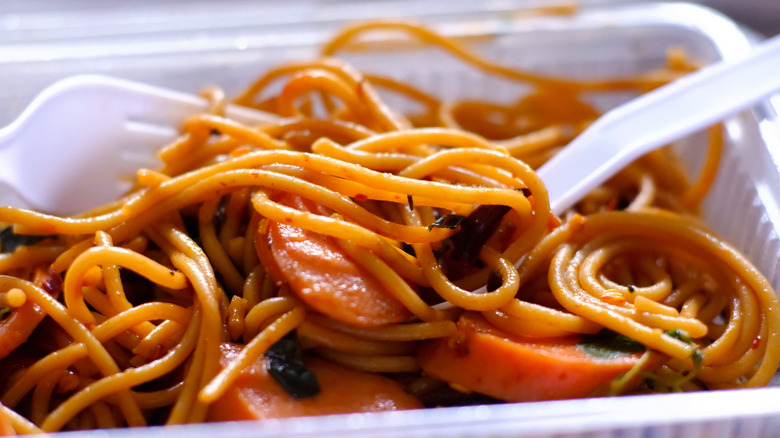
Putting away leftovers is always a bit of a hassle. Whether you're on the hunt for a lid to fit your container or simply deciding if a bit of cling wrap will do, it can all be a logistical nightmare. So, understand that we aren't aiming to dull your shine when we say that you might want to reconsider storing those cooked burger patties or chicken Alfredo in a plastic container. This isn't about aesthetics — it's an issue of safety.
Storing greasy or oily foods in plastic can be a health hazard because fats and oils speed up the break down of plastic materials, which can cause harmful chemicals to seep into your food. Chemicals, such as phthalates, which are often found in plastics and might be hiding inside lined cans, pose a particular risk to one's health. Phthalates are tied to certain cancers and are a known endocrine disruptor. BPA, or Bisphenol A, another common plastic additive, is also an endocrine disruptor and is linked to several health issues, such as cardiovascular issues and diabetes.
Storing oily foods in plastic containers that contain either of these plastic additives can cause these chemicals to leak into your food. Additionally, microplastics can also suffuse into foods. Though we don't know the full extent of microplastics' impact on health, they have been linked to many issues, from cancer to cardiovascular complications. You definitely want to limit exposure.
More on plastics
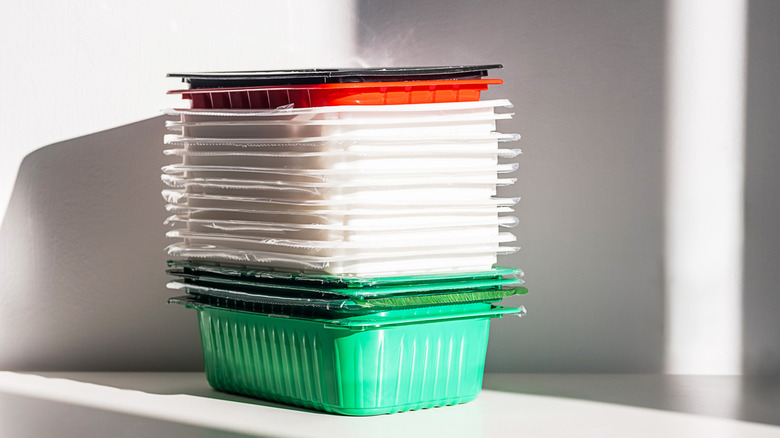
Fatty and oil-rich foods aren't the only dishes you have to worry about when using plastic containers. Acidic foods, such as tomato sauces, and hot foods fresh from the oven or stovetop can also cause plastic to break down and leach harmful chemicals. For this reason, you should always wait for your food to cool before placing it in a container, and microwaving foods in plastic is a no-go — this, too, can cause chemicals within your plastic to seep into your food, even if your plastic is marked as microwave safe.
Of course, not all plastic containers are built equally. Many plastics are labeled 1 through 7, for example, with each number indicating a material's physical and chemical makeup. Plastic labeled with 5 tends to be safer to use for foods since it's less likely to cause chemical transfer. So, if you still use plastic containers, go for number 5.
Choosing better packaging
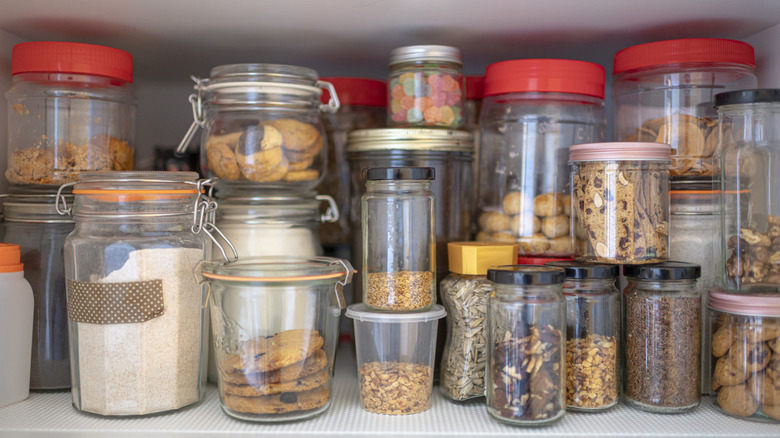
How, then, should you store your fat-rich leftovers? There are a few options, but a great choice for plastic-free food storage is glass. You can use oven-safe borosilicate glass containers to store leftovers since glass doesn't leech chemicals the same way plastic does. However, many glass containers do come with plastic tops, so check the materials before purchasing, or don't microwave with the cap on to avoid chemical transfer. You can also look for glass containers that use alternative materials for tops, such as bamboo, if you prefer to avoid plastic entirely.
Stainless steel is another great option for food storage since it doesn't contain the same potentially harmful chemicals as plastic. Plus, unlike glass, it's pretty sturdy. However, you should avoid microwaving stainless steel since it's quite dangerous — it can spark and start fires. Instead, transfer your food to a plastic-free microwave-safe plate or bowl before you heat it up. Ceramic is another great option, but it can shatter and chip like glass. Plus, some ceramic products can contain lead (though the U.S. Food and Drug Administration does limit the amount of acceptable lead contents). No lead is the only safe amount, so you might want to skip ceramic, or do some extra digging to make sure your container is lead free — you can purchase an at-home lead testing kit to see your item's lead content for yourself.