

The Historic New York Restaurant That Reshaped Dining For Women In The 19th Century
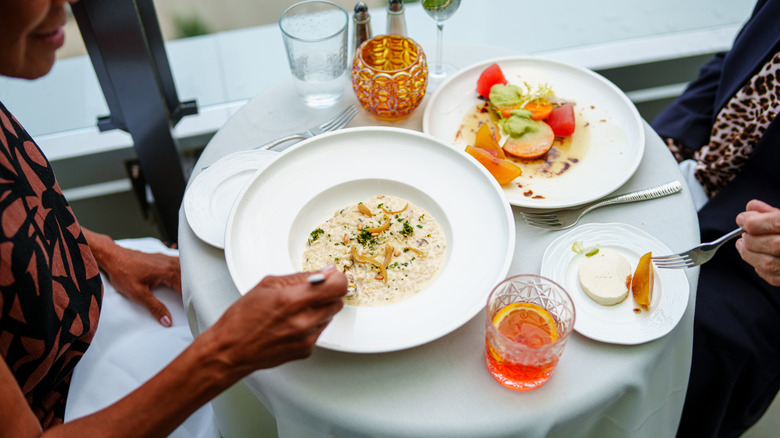
While the modern climate is far from being perfect, there's an obvious disparity between the present and the 19th century, especially when it comes to women's rights. Back in mid-1800s America, women were discouraged from dining at a restaurant without a man's company. It wasn't illegal per se, but it was frowned upon. So, rather than facing a social stigma, women might've felt more inclined to just follow the norm. But Delmonico's, a historic NYC restaurant, opened its doors to women — even while not being accompanied by a man — and it was the first one to do so in America. As such, Delmonico's shaped American fine dining, making a lasting impact on today's scene.
What sparked change was Jane Cunningham Croley — a journalist who was also known as Jennie June — after not being allowed to go into the New York Press Club banquet, which was supposedly only open to men. In response to the unjust treatment, she took her plans to host an all-women banquet to Delmonico's, to which the two male owners agreed. This created the Sorosis club, which had the goal of supporting the various pursuits of women, and started the group's first luncheon. It symbolized a quiet protest, which Delmonico's supported by offering them a private room, including a dollar-per-person menu. And even though they still weren't welcomed in the main dining room, it created an opportunity for women to socialize at the restaurant, and it was a spark that helped drive change. Now considered a historic location, Delmonico's continues to operate today.
Women's dining in the 19th century
While men could freely wine and dine, women were pressured to stay at home in the 19th century. The unwritten rule of women not being allowed to dine alone usually applied to less fancy places, and there were some sophisticated dining places that welcomed it. However, they'd be put in a separate private room, segregated from where men dined and socialized, much like what happened at the Sorosis' luncheon.
Women were also arrested for drinking and spending time with men they didn't know, and Black women faced the brunt of this discrimination, as they were more likely to be arrested. Law enforcement was extra strict due to racist beliefs that these women needed to be more diligent as household staff, and proclivities toward recreation were in the way of that. So, while the luncheon at Delmonico's paved the way for change, there was still much more work to be done.
Naturally, it wasn't the sole dining-related movement that advocated for women's rights. For instance, there are several cookbooks that fought for women's right to vote, which are like a piece of history just as much as they are pages with recipes for a Lady Baltimore cake. Today, solo dining is starting to become more popular, and thanks to the women of Sorosis and everyone who came after, it can now be a choice.