

When Is It Best To Cook With Silicone Vs Wooden Utensils?
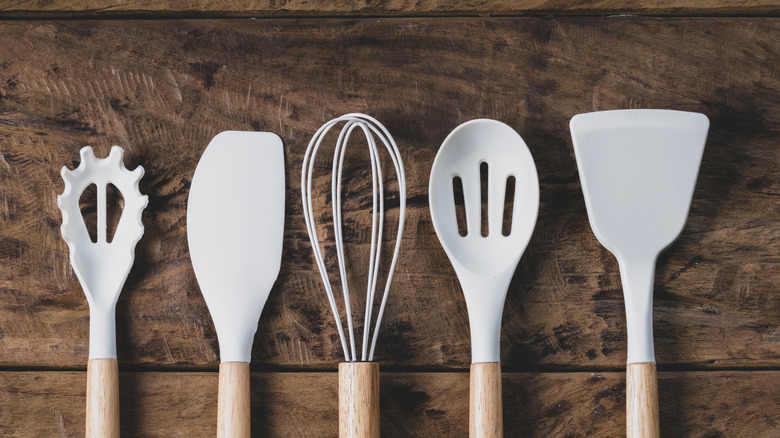
In the search for the perfect set of kitchen utensils, there are many factors to consider, especially with such a wide array of choices available in our modern world. With rising concern over microplastics and a desire to properly maintain your nonstick pans so they remain nonstick, most people end up choosing between old-school wooden utensils and modern silicone ones.
Both are less brittle than plastic, more heat resistant than stainless steel, and suitably aesthetically pleasing when displayed next to your stove. Additionally, neither silicone nor wood scratch up nonstick or enamel cookware, which is a definite plus when using your favorite Le Creuset Dutch oven. They also make nonstick pans coated with Teflon safer to use since the only real risk when cooking food in these pans occurs when the coating is overheated (or otherwise damaged) and begins to flake off into your food.
Since both materials are fairly durable, which you choose mostly comes down to two factors: convenience and preference in terms of appearance. Silicone utensils are generally more convenient to use than wooden ones since you can throw them in the dishwasher. Meanwhile, wooden utensils offer a cozy, vintage, natural aesthetic that may make them more pleasant to use while putting together your favorite recipes.
Pros and cons of silicone utensils
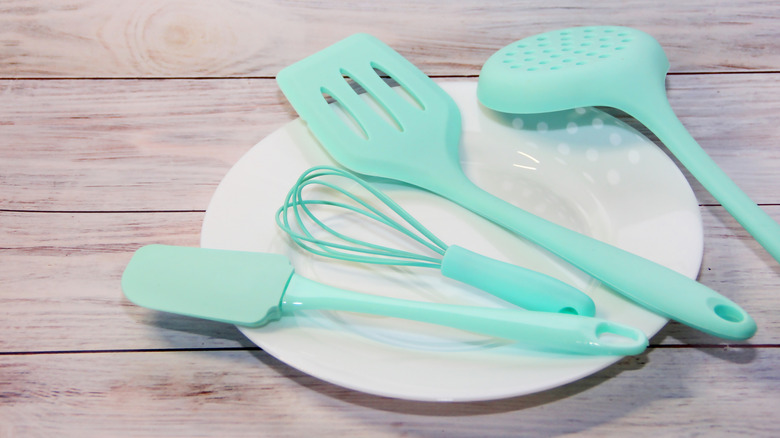
Since most silicone cooking utensils are made from food-grade silicone, they're incredibly heat resistant, meaning they're not prone to melting or scorching unless exposed to open flames and don't leach toxins into your food if not exposed to heat above about 425 degrees Fahrenheit. Silicone is also nonporous, stain resistant, and easy to clean since most utensils are dishwasher-safe. This makes it convenient to maintain a sanitary, germ-free kitchen since you can be certain your silicone cookware isn't harboring germs and causing cross contamination from one dish to another.
Silicone utensils are also versatile. As mentioned, they can be used in all kinds of cookware without scratching it, and silicone spatulas' flexible edges make them the preferred tool for bakers to scrape every last dollop of cake batter or whipped cream from one container into another. Utensils coated in silicone are also easier to grip, making them an excellent choice for little ones learning to cook or those with limited hand strength.
The biggest cons when it comes to silicone cookware is that some tools are better than others. Low-quality tools may contain fillers that aren't food grade or heat safe, meaning your silicone spatulas may need to be replaced more often due to cracking and warping, which reduce their usefulness. Additionally, utensils made with silicone heads fitted onto plastic handles could develop mold where head and handle meet, making them less sanitary than fully coated silicone utensils.
Pros and cons of wooden utensils
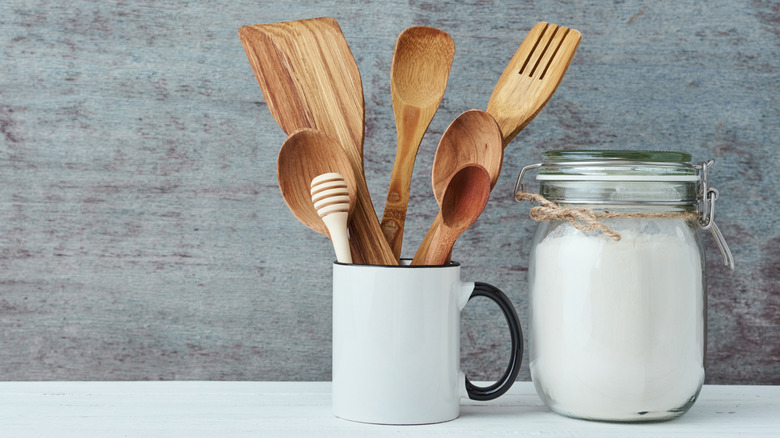
Possibly the biggest advantage of wooden cooking utensils is they're completely nontoxic, provided you choose untreated pieces and maintain them with food-grade mineral oil. Wooden utensils are also natural, renewable kitchen tools that don't require lots of extra energy and chemical processes to produce. They're also biodegradable, meaning they can be safely disposed of at the end of their natural life without adding potentially toxic materials to the earth. If you're on a quest to make your home more sustainable, wooden utensils are definitely the way to go.
When properly maintained, wooden utensils can last up to a decade or more. Regular oiling is crucial since it helps seal the utensils against absorbing liquids and harboring germs, in addition to keeping them from drying out and becoming warped or brittle. Polishing everything up on a monthly schedule should be enough to keep your pieces in good condition, though you can certainly give your favorite spoon an additional shine if it's looking dry. You can also lightly sand smooth chipped or rough areas and keep using them as normal, unlike silicone, which must be discarded if it cracks.
Of course, this regular maintenance schedule is also one of wooden utensils' disadvantages, especially if you're usually low on time or energy. Wooden utensils must also be handwashed and air-dried since the high heat and moisture inside the dishwasher can dry them out and cause them to split.