

How To Make Restaurant-Quality Sushi Rice At Home
We may receive a commission on purchases made from links.
You might think that making great-tasting sushi begins and ends with your choice of fish. That may be partially true; however, properly prepared rice will take your sushi to the next level. Luckily, JD Alewine, food blogger/influencer at Them Bites and former sushi chef under restaurateur Kazuhiro Sato, shared some pro tips exclusively with Chowhound to help home cooks make restaurant-quality sushi rice.
According to Alewine, one of the most important things you need for good sushi rice is the correct type, which is short-grain Japanese rice. "The easiest brand to find in most stores for entry-level sushi is Nishiki, and it works just fine," Alewine suggested. To give your rice the best possible texture, he also suggested using a rice cooker. "Having a rice cooker takes out all of the guess work and allows you to simply measure 2 cups of rice, wash it until it's clear, add your water to the 2-cup indicator inside the bowl of the rice cooker, then click one button," Alewine said.
Washing the rice is also important. This step removes excess starch from the outside of the grains, called amylopectin, which is what makes sushi rice so sticky. Short grain rice has the most amylopectin of the rice varieties. Of the numerous of sushi types you can make, temarizushi, nigiri, and onigiri benefit especially from this sticky quality, which makes rice easy to mold and form into blocks, balls, and other shapes. However, having too much amylopectin will cause the rice to be overly sticky, so don't skip washing.
Additional steps and tools needed to make sushi rice
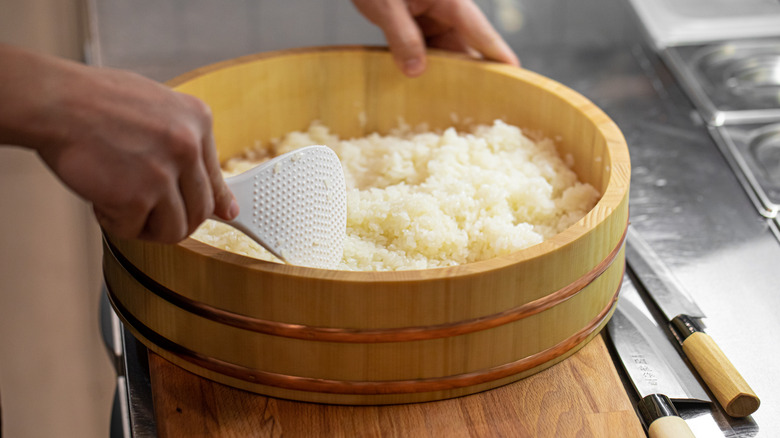
Once your rice has been prepared, the next step is to add sushi vinegar, usually made of rice vinegar blended with salt and sugar. This turns white rice into the perfect sushi base. To blend the vinegar into the rice, JD Alewine suggested using a hangiri bowl. "The hangiri bowl is made of wood, which absorbs the rice vinegar mixture. The rice is then able to absorb the vinegar out of the wooden bowl," Alewine explained. To blend the vinegar into the rice and make sure it's evenly distributed, he said to make wide cutting motions across its surface and to fluff it frequently, turning the rice over multiple times. Then, cover the rice-filled bowl with a damp rag while letting it cool.
Using a hangiri bowl is the most desirable option, though Alewine admitted that it takes up space in your kitchen, so it might not be worth it unless you make sushi often; any mixing bowl can be effective for blending vinegar into sushi rice. However, if you're interested in purchasing a hangiri bowl, Alewine recommended the Kichgather Wooden Sushi Rice Bowl with Lid on Amazon, which costs about $41 for the 10.6-inch diameter size. For easy rice preparation, he also recommended the Oster 6-Cup Rice Cooker With Steamer Tray, a dependable mid-range brand sold on Amazon for about $31. "We've had ours for eight-plus years, and it's still working well and making great rice!" he said.