

A Garden Tomato Can Go From Perfect To Ruined Overnight If You Ignore This
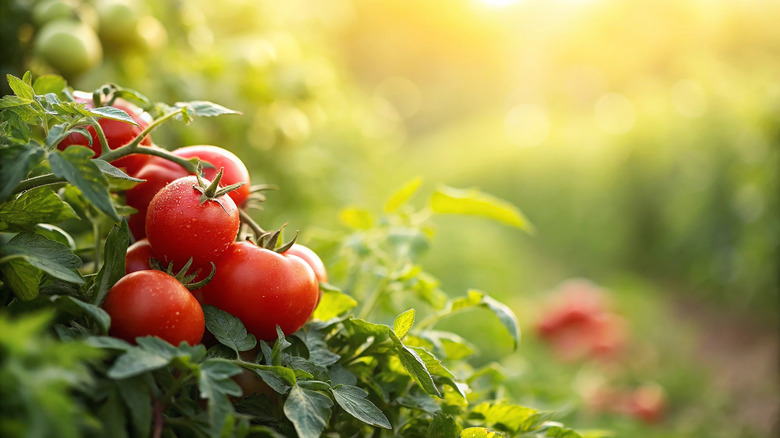
Provided you water your tomatoes correctly to avoid blight, they're the perfect crop for beginners to plant in their vegetable gardens. Tomatoes grow fairly quickly, moving from a tiny germinated seed to heavy, ripe fruit in just a few months. They're also versatile as ingredients, offering a fresh, delicious base for homemade salsas and traditional Southern-style tomato sandwiches alike. Of course, that's provided you watch them closely and harvest them before they split themselves.
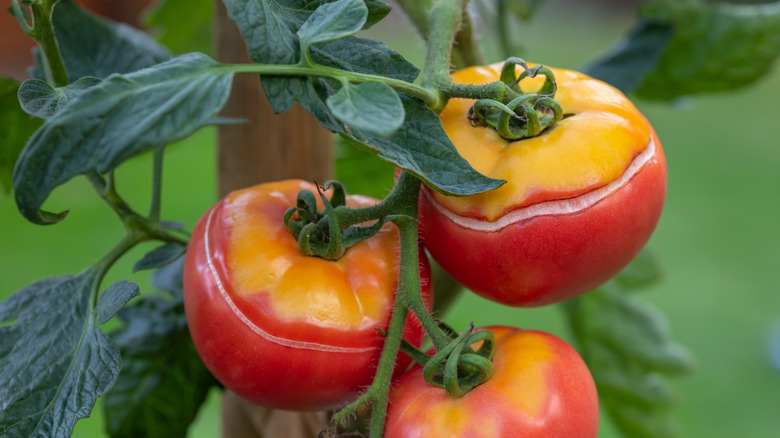
Once your tomatoes show the first blush of red (or yellow or purple, depending on the variety) against the immature green, it's a signal that they have reached the breaker stage, are full sizes, and can't absorb any more nutrients. During this stage, their skin is also more likely to tear unless you harvest them. Once a tomato splits, it's more vulnerable to bacteria and fungal spores, and will rot on the vine if not harvested. Since tomatoes continue to ripen after harvesting, it's preferable to pluck them even if they're still a bit green rather than ignore the color change and wait for them to fully change hues on the vine.
You should also pay attention to your tomatoes' watering schedule and weather patterns when your tomatoes are close to producing ripe fruit. Keeping the soil evenly moist is important at this stage because allowing it to dry out and then saturating it all at once can cause too much water to flood into your tomatoes at once, causing them to burst open. This can also happen after a heavy rain, so harvesting fruit at the breaker stage should be part of your storm prep.
Ripening off the vine and what to do with split tomatoes
If you have a bunch of harvested tomatoes still showing green striations, you can get them to uniform red simply by placing them in a clean cardboard box on your kitchen counter. The cardboard box helps trap the ethylene gas that speeds up ripening, which should give you red tomatoes within a few days. This is also a handy tip if you're worried the temperatures outside will dip below 65 degrees Fahrenheit or rise above 85 degrees, as you can ripen your tomatoes indoors off the vine and avoid losing your entire crop.
Of course, even if you're vigilant, you may miss a few tomatoes hiding among the leaves or a surprise rainstorm may flood your tomato plants before you have a chance to water them properly. The best thing to do in this situation is harvest as many tomatoes as you can, as the only thing worse than a split tomato is a split tomato that's left on the vine to succumb to pests or rot.
Provided you cut away the cracked area, it's best to eat these tomatoes right away, say, on a sandwich, in a pasta sauce, or as pico de gallo, but potential contamination makes them unsafe for canning. Unfortunately, torn green tomatoes are more likely to go bad even faster than ripe ones, so you'll have to choose between making a ton of fried green tomatoes topped with pimento cheese, or pulling and tossing them to protect the rest of the plant.