

How Often Should You Really Clean Your Kitchen Garbage Can?
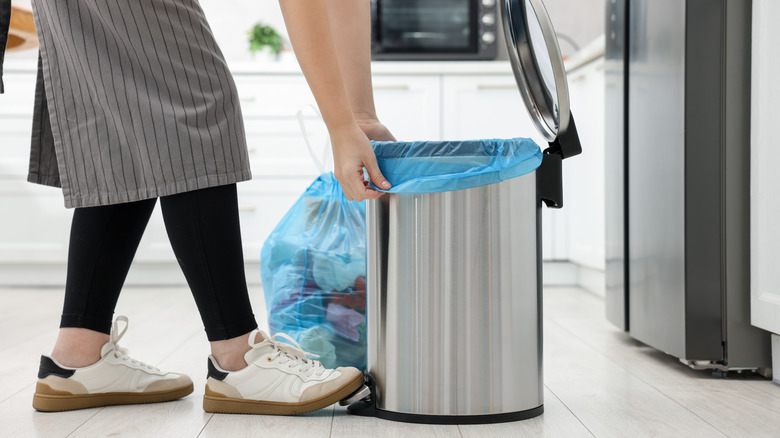
One of the key factors to make sure your kitchen always smells its best is to have a regular schedule for cleaning your garbage can. While clearing your fridge of expired food and keeping your counters and floors mess and germ-free are also huge factors, nothing will ruin your efforts at keeping your kitchen smelling fresh like a stinky garbage can. These receptacles are more prone to harboring bacteria and developing unpleasant odors than any other area of your kitchen. For this reason, it's recommended to disinfect the outside of your kitchen trash can almost daily, eliminating any spills or collected grime that could stain and contribute to funky odors.
It's also a good idea to spray the inside of the can with disinfectant when changing the bag to inhibit bacteria growth, with deep cleanings happening a minimum of once a month. The best way to deep clean your kitchen trash can starts with removing the liner, donning gloves, and getting in there with cleanser and a scrubber, just like you would any other messy area of your home.
Once everything is clean and fully dried (damp areas can attract grime) both inside and out, use baking soda to deodorize your garbage can simply by sprinkling a little of it into the bottom before adding the liner. This helps absorb moisture and neutralize odors, potentially lengthening the time between deep cleanings, provided you're vigilant about spot cleaning and disinfecting in the meantime.
Prevention is the cure: keeping smells from developing
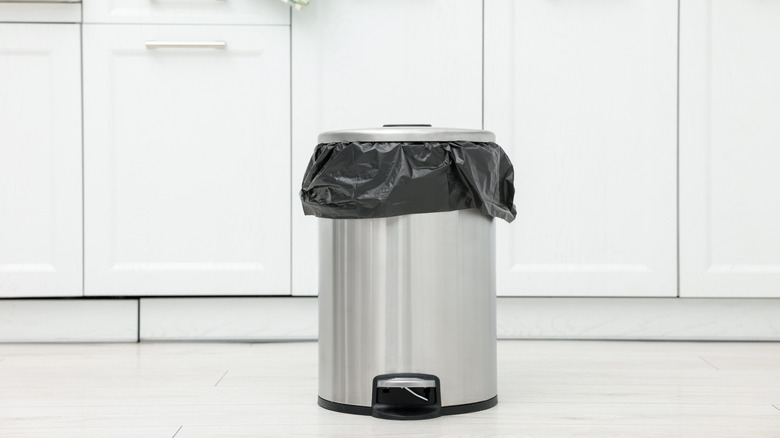
Though a smelly trash can isn't the end of the world and is fairly easy to fix, the best way to deal with this problem is to prevent it from becoming an issue to begin with. In addition to choosing a trash can designed to keep out flies and smells, regular maintenance is a great way to avoid the experience of entering your kitchen and covering your nose. Perhaps the most important rule of regular maintenance is to always use a trash bag inside your trash can. Not only do liners make it easier to take out the trash (no hefting or dumping needed), they're crucial in the battle to keep the inside of your can clean.
Without a bag, the inside of your trash can is fully exposed to all kinds of gross, germy messes, making it necessary to deep clean it almost every time you empty it. Even with a liner, you should glance inside your can every time you empty it to check whether the bag leaked or trash snuck past the bag into the can itself. If you're getting rid of something wet or moldy, put it in a smaller plastic bag before throwing it in the main bin.
It's also crucial to avoid overfilling your trash can, especially if it has a lid. Lidless cans can overflow and take the mess to your floor, while trash can easily stick to and leave residue on the underside of a lid. Emptying your trash regularly eliminates both problems.