

Giada De Laurentiis Gives Her Pesto A Creamy Twist With 2 Tasty Swaps

Giada De Laurentiis is our sage for all things Italian. The celebrity chef and cookbook author became a household name thanks to her series "Everyday Italian," which helped make Italian cooking approachable. And more than two decades later, she's still showing us new and exciting twists on classic foods. On Instagram and her lifestyle website Giadzy, she puts a fresh spin on pesto sans basil and the sauce's signature pine nuts. Now, this may seem jarring for some pesto-lovers, but De Laurentiis isn't opposed to taking an unconventional approach to food. She does, after all, prefer to eat her pasta as leftovers.
According to De Laurentiis' Giadzy post, all you really need for pesto is a combination of crushed ingredients. So, no, you will find no basil here (outside of a garnish). Instead, this pesto consists of ricotta and toasted walnuts, along with garlic, Parmesan, olive oil, salt, and lemon zest. Without basil, this pesto has a heartier, richer (rather than herbaceous) flavor. And swapping pine nuts for walnuts gives the sauce a unique complexity. Plus, there's no risk of pine mouth when you leave out those tiny pinoli.
As the chef describes it on Instagram: "This white pesto is similar to a creamy Alfredo, but super fresh." Simply toast walnuts and blend them in a food processor. Then add the remaining ingredients and blend until smooth, toss with your favorite pasta, and enjoy. Simple as that. The ricotta is creamy and fresh, perfectly balanced by the Parm, and given a warm, toasty edge thanks to the walnuts, with the lemon zest's citrusy twang shining through.
How to get the best out of your pesto
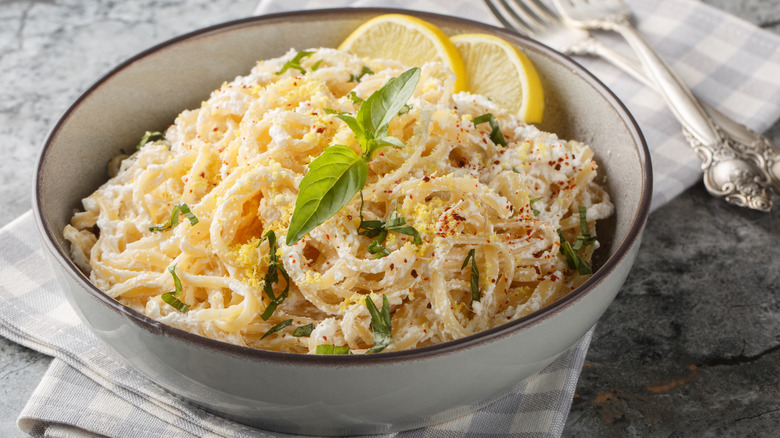
There are a few things you'll want to keep in mind when making Giada De Laurentiis' creamy white pesto. Let's start with the nuts. The celebrity chef's version specifies toasted walnuts rather than raw, which helps to both express the nuts' oils and mellow their inherent bitterness. She also calls for whole milk rather than skim or part-skim ricotta. This full-fat ricotta will give you a milkier, more robust flavor profile and a lusher texture.
As for the final, and perhaps most essential, step, De Laurentiis spoons the pesto onto freshly made pasta, along with a small amount of pasta water, which dilutes the sauce just enough to make it silky rather than dense, mixing until the pasta is fully coated before serving. The starch from the pasta water helps the sauce adhere to the noodles. De Laurentiis favors wavy, ribbon-like mafaldine for this rendition, but you could just as easily use another wide, flat noodle like fettuccine or tagliatelle, or even ridged tubular shapes like rigatoni, both of which are great for creamy sauces. Oh, and you should definitely freeze any leftover pasta water for future cooking endeavors. There's a reason so many cooks consider it to be "liquid gold."